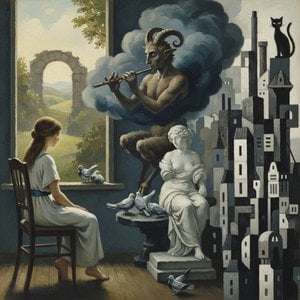
Gabriel Cornelius Ritter von Max: En visionær inden for mystik og antropologi
Gabriel Cornelius Ritter von Max (1840-1915) var en dybt enestående skikkelse i det 19. århundredes østrigske kunst, en kunstner hvis værker trodser enhver simpel kategorisering. Han blev født i Prag af en skulptørfader og en musikerModer, og hans tidlige liv nærede en dyb værdsættelse for både kunstnerisk udtryk og intellektuel nysgerrighed. Han var ikke blot en maler; han var en samler af antropologiske artefakter, en studerende af esoteriske filosofier og en omhyggelig iagttager af den menneskelige tilstand – alle disse facetter har gennemgribende formet hans unikke kunstneriske vision. Max' samlede værker er karakteriseret ved en hjemsøgende skønhed, ofte gennemtrængt af en følelse af melankoli og åndelig længsel, hvilket afspejler hans fascination af mystik, symbolisme og de mørkere aspekter af den menneskelige erfaring. Hans særprægede stil, som af kritikere blev døbt “unglücksmalerei” (ulykkesmaleri), benyttede en bevidst mørk palet og psykologisk ladet billedsprog til at udforske temaer som dødelighed, tro og eksistensens mysterier.Tidligt liv og kunstnerisk uddannelse
Max’s kunstneriske rejse tog sin begyndelse hos hans far, Josef Max, en billedhugger, der indprentede ham en tidlig forståelse for form og teknik. Men det var ved Kunstakademiet i Prag, at han for alvor opdagede sine intellektuelle passioner. Her fordybede han sig i emner, der lå langt fra det traditionelle akademiske maleri – parapsykologi, darwinisme, asiatisk filosofi og Schopenhauers skrifter. Denne eklektiske dannelse, vejledt af hans mentor Eduard von Engerth, lagde fundamentet for hans senere udforskning af mystiske allegorier. Han flyttede derefter til akademiet i Wien, hvor han studerede under skikkelser som Karl von Blaas og Karl Mayer, og opsugede deres tekniske færdigheder, mens han samtidig banede sin egen distinkte vej. Afgørende betydning havde mødet med idéerne fra Franz du Prel og Albert Keller, som var nøglefigurer i den spirende spirituel-mystiske bevægelse, der skulle få en dyb indflydelse på hans værk. Piloty-skolen, hvor han kortvarigt studerede under Karl Theodor von Piloty, gav ham et solidt fundament i komposition og teknik, men Gabriel Von Max bevægede sig hurtigt væk fra de herskende tendenser og etablerede sin egen unikke stil, der var dybt forankret i psykologisk dybde og symbolsk rigdom.Udviklingen af en særpræget stil
Max’s kunstneriske udvikling kan spores gennem en fascinerende evolution af både farvepalette og motivverden. I sin tidlige fase var han præget af “unglücksmalerei” – den mørke og dyster æstetik, som blev fremhævet af Karl Theodor von Piloty – og han benyttede denne teknik til at skildre religiøse og mytologiske scener med en intens emotionel resonans. Hans tidlige mesterværk, "Martyr ved korset" (1867), eksemplificerer dette skifte, hvor han transformerer et traditionelt motiv til en psykologisk kompleks meditation over lidelse og tro. Men i modsætning til Piloty blot kopierede Max ikke mørket; han brugte det snarere til at skabe en dyb følelse af atmosfære og psykologisk dybde. Senere i sin karriere bevægede han sig mod en mere dæmpet palette, hvor han foretrak subtile farvenuancer og fokuserede på det komplekse samspil mellem lys og skygge. Hans malerier fremviser ofte eteriske skikkelser badet i et blødt lys, hvilket formidler en følelse af overjordisk skønhed og spirituel transcendens. Indflydelsen fra hans omfattende samling af antropologiske artefakter er ligeledes tydelig i hans værker, især i fremstillingerne af dyr – nogle gange gengivet som menneskelignende figurer – som afspejler hans fascination af den dybe sammenhæng mellem naturen og menneskeheden.Værk og indflydelse
Flere malerier står frem som vidnesbyrd om Gabriel Von Max's unikke kunstneriske vision. "The Last Token" (Metropolitan Museum) er et fremragende eksempel på hans evne til at gennemtrænge tilsyneladende enkle motiver med en dyb symbolsk betydning, mens "Light" (Odessa Museum of Western and Eastern Art) udviser hans mesterskab over atmosfæriske effekter og hans udforskning af spirituelle temaer. Hans fascination af aber – han opretholdt en samling i sit hjem i München i mange år – er levende skildret i flere værker, hvor grænserne mellem arterne udviskes og vækker refleksioner over den menneskelige natur. Ud over sine egne kunstneriske undersøgelser var Gabriel Von Max dybt påvirket af Der Blaue Reiter-bevægelsen, selvom han bevarede en distinkt identitet inden for denne bredere cirkel af kunstnere. Den omhyggelige dokumentation af hans abesamling – bestående af hundredvis af fotografier og skitser – afslører hans dedikation til observation og hans ønske om at transformere virkeligheden til kunst.Arv og historisk betydning
Gabriel Von Max’s kunstneriske eftermæle er præget af en stille intensitet og en dyb introspektion. Selvom han ikke opnåede udbredt berømmelse i sin egen levetid, er hans værker sidenhen blevet anerkendt for deres originalitet og følelsesmæssige dybde. Hans udforskning af mystiske temaer, kombineret med hans antropologiske interesser og hans helt særlige stil, etablerede ham som en betydningsfuld skikkelse i Secessionismen og som en forløber for ekspressionismen. Hans samling af artefakter, som i dag er indhøstet på Reiss Engelhorn Museum i Mannheim, tilbyder et fascinerende indblik i hans intellektuelle stræben og giver en værdifuld kontekst til forståelsen af hans kunstneriske vision. Max’s liv og virke tjener som en påmindelse om, at kunsten kan være både en refleksion af den verden, der omgiver os, og et vindue ind til de dybeste mysterier i den menneskelige erfaring.Spørgsmål og svar
Findes der et overblik over alle de motiver, som Gabriel Von Max har malet?
Emneoversigt for Gabriel Von Max er en side, der kortlægger kunstnerens værker efter deres motiver.
Hvilke andre navne er Gabriel Von Max kendt under?
Gabriel Von Max optræder under de alternative navne Gabriel Cornelius Ritter Von Max, Gabriel Cornelius Von Max, Gabriel Max, Gabriel Cornelius Max, Prof. Gabriel Max.
Findes der en kronologisk gennemgang af Gabriel Von Max?
Kronologi for Gabriel Von Max er en rullevenlig tidslinje, der præsenterer kunstnerens værker i kronologisk rækkefølge, opdelt i kapitler efter karriereperioder.