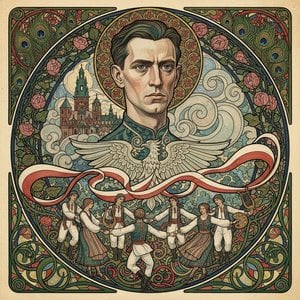
Konstanty Wojtyński: The Chronicler of Warsaw’s Golden Age
Konstanty Wojutyński (1872 – 1939) stands as a singular figure in Polish art history, primarily recognized for his prolific contribution to the realm of postcards—a medium that served not merely as a souvenir but as an invaluable visual record of late nineteenth and early twentieth-century Warsaw. Born in Warsaw, Poland, Wojutyński’s artistic journey began with a fascination for photography and swiftly transitioned into establishing K. Wojutyński i S-ka, a publishing house that quickly ascended to prominence as one of the most productive Polish publishers of postcards during its era. Unlike many artists of his time who practiced their craft independently, Wojutyński skillfully leveraged collaborations with other photographers, meticulously selecting and disseminating images that captured the essence of Warsaw’s grandeur and beauty.
- Early Life & Influences: Wojutyński's formative years were steeped in the intellectual ferment of Warsaw’s artistic circles. He studied at the Warsaw Academy of Fine Arts, absorbing influences from Impressionism and Pictorialism—movements that championed capturing fleeting moments of light and color with unprecedented sensitivity.
- The Rise of K. Wojutyński i S-ka: Recognizing the burgeoning demand for visual documentation of urban landscapes, Wojutyński founded his publishing house around 1900. This venture proved remarkably successful, fueled by a dedication to quality and an astute understanding of market trends.
- A Photographer’s Eye: While Wojutyński himself wasn't a photographer, he possessed a discerning eye for selecting exceptional images—primarily those produced by fellow artists—and skillfully adapting them for widespread dissemination through postcards. This collaborative approach ensured the publication of stunning visuals that faithfully represented Warsaw.
His company’s catalog boasted an impressive array of series dedicated to showcasing iconic landmarks like St. John's Cathedral and Łazienki Palace, alongside panoramic views of the city’s sprawling streets and vibrant marketplaces. Wojutyński’s meticulous retouching techniques elevated these photographs beyond mere reproductions; he imbued them with a warmth and vibrancy that conveyed not just what was seen but also what it felt like to inhabit Warsaw during its zenith—a period marked by cultural flourishing and architectural innovation. The resulting postcards became treasured possessions, preserving memories of a bygone era for generations to come.
Notable Achievements & Artistic Style
Wojutyński’s artistic style can be characterized as meticulously detailed and imbued with Impressionistic sensibilities. He prioritized capturing atmospheric conditions—particularly light—to convey the emotional resonance of his subjects. Wojutyński's dedication to preserving Warsaw’s visual heritage cemented his legacy as a pivotal figure in Polish art history, ensuring that future generations would appreciate the beauty and grandeur of its past.
- Postcard Series: Wojutyński’s most enduring contribution lies in his meticulously crafted postcard series—particularly those depicting Warsaw's historic buildings and landscapes. These prints are celebrated for their exceptional clarity and artistic refinement.
- Photographic Collaborations: Wojutyński skillfully partnered with prominent photographers, securing rights to disseminate their images widely through K. Wojutyński i S-ka’s publishing endeavors.
His work continues to resonate today as a testament to the power of visual storytelling and the importance of preserving cultural memory—a remarkable achievement considering the turbulent political landscape of his time.