

Wolves in the Gorge (1764) er det mest berømte maleri af Johnson Carr, som er i Reading Public Museums samling i Reading. Udvalgt fra de 1 værker af Johnson Carr i vores katalog er her de 1, som samlere og museumsgæster oftest opsøger, inklusiv årstal, museum og historien bag hvert værk.
Rangordnet efter vores popularitetsscore, som kombinerer søgninger, besøg og ordrer for hvert værk. Opdateret november 2026. Hvert mesterværk på denne side kan bestilles som en håndmalet oliereproduktion i museumskvalitet eller som et kunsttryk i den størrelse, du vælger.

Det museum, der rummer flest af malerierne på denne side.
| Museum | By | Værker af Johnson Carr | Malerier fra denne liste |
|---|---|---|---|
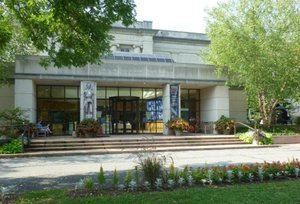 Reading Public Museum |
Reading | 1 | Wolves in the Gorge |
1764 er året for hvert dateret Johnson Carr mesterværk på denne side: her er de, i rækkefølge efter berømmelse.
Wolves in the Gorge (1764)
21 år gammel: Wolves in the Gorge er fra 1764, og Johnson Carr blev født i 1743.
Vores katalog indeholder 1 værker af Johnson Carr.
De fleste af dem findes i Reading Public Museum (Reading). Tabellen ovenfor lister museerne enkeltvis.
Ja. Hvert maleri på denne side kan bestilles som en håndmalet oliereproduktion i museums kvalitet eller som et kunstprint i den størrelse, du ønsker, direkte fra maleriets egen side.
In the annals of eighteenth-century British art, few names evoke as much poignant mystery as that of Johnson Carr. Born in 1743 in the rugged landscapes of Northern England, Carr was a talent whose meteoric rise was tragically cut short by the onset of consumption. His life, though spanning only twenty-two years, serves as a haunting testament to the fleeting nature of genius. Emerging from a respected family, he possessed an innate ability to capture the atmospheric nuances of the English countryside, a skill that earned him early and significant acclaim within the prestigious artistic circles of his era.
The trajectory of Carr’s development was profoundly shaped by his apprenticeship under Richard Wilson, widely regarded as the preeminent exponent of British landscape painting during the mid-1700s. Between approximately 1757 and 1763, Carr worked alongside Wilson, absorbing the master's sophisticated approach to light, composition, and the dramatic interplay of shadow and form. This mentorship was so intimate that contemporary accounts suggest Carr’s hand was often indistinguishable from his teacher's; even later artists noted that certain delicate details in Wilson's landscapes appeared to bear the unmistakable touch of Carr’s meticulous brushwork.
Despite his youth, Carr achieved a level of professional validation that many seasoned painters struggled to attain. His talent was not merely anecdotal but was formally recognized by the most influential institutions of the day. The Society of Artists bestowed an award upon him as early as 1759, when he was a mere sixteen years old. This momentum continued through the early 1760s, as he secured multiple medals from the Society of Arts for his exceptional landscape drawings. These accolades were not merely honors of participation but were specifically awarded for excellence in depicting the natural world, marking him as a rising star in the genre of landscape art.
The scarcity of Carr's surviving oeuvre adds a layer of preciousness to the works that do remain. His technical prowess is evident in pieces such as Westminster Abbey from Pimlico, an exquisite drawing executed in black and white chalk on blue paper. This work demonstrates his ability to manipulate tonal values to create depth and architectural grandeur. Furthermore, the oil painting Wolves in the Gorge, held within the Reading Public Museum, offers a rare glimpse into his capability with much heavier media, showcasing a dramatic, almost primal energy that suggests a deep emotional connection to the wilder aspects of nature.
The suddenness of Carr's death in York on January 16, 1765, left the art world mourning a potential master. Because his life ended so abruptly, much of what we know of his contribution is filtered through the lens of his contemporaries and the surviving fragments of his output. He remains a figure of intense interest for historians seeking to trace the lineage of British landscape painting and the influence of the Wilson school.
To contemplate the work of Johnson Carr is to engage with a lost chapter of art history. His legacy is defined by: