
1
The Parrot Addresses Khujasta at the Beginning of the Sixth Night, from a Tuti-nama (Tales of a Parrot)
Håndmalet oliereproduktion fra $181 26 × 39 cm

The Parrot Addresses Khujasta at the Beginning of the Sixth Night, from a Tuti-nama (Tales of a Parrot) (1560) er det mest berømte maleri af Daswanth, som er i Cleveland Museum of Arts samling i Cleveland. The wounded monkey bites the hand of the prince, his chessmate, in the presence of guests, from a Tuti-nama (Tales of a Parrot): Fifth Night (1560) og The parrot mother cautions her young on the danger of playing with foxes, from a Tuti-nama (Tales of a Parrot): Fifth Night (1560) er de næste to værker, som verden kender bedst. Udvalgt fra de 4 værker af Daswanth i vores katalog er her de 4, som samlere og museumsgæster oftest opsøger, inklusiv årstal, museum og historien bag hvert værk.
Rangordnet efter vores popularitetsscore, som kombinerer søgninger, besøg og ordrer for hvert værk. Opdateret november 2026. Hvert mesterværk på denne side kan bestilles som en håndmalet oliereproduktion i museumskvalitet eller som et kunsttryk i den størrelse, du vælger.


De 2 museer, der rummer flest af malerierne på denne side.
| Museum | By | Værker af Daswanth | Malerier fra denne liste |
|---|---|---|---|
 Cleveland Museum of Art |
Cleveland | 3 | The Parrot Addresses Khujasta at the Beginning of the Sixth Night, from a Tuti-nama (Tales of a Parrot), The wounded monkey bites the hand of the prince, his chessmate, in the presence of guests, from a Tuti-nama (Tales of a Parrot): Fifth Night, The parrot mother cautions her young on the danger of playing with foxes, from a Tuti-nama (Tales of a Parrot): Fifth Night |
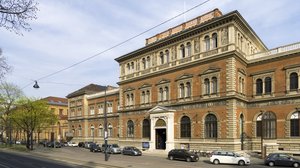 MAK – Museum of Applied Arts |
Wien | 1 | Umar Defeats a Dragon |
Daswanth arbejdede i 18 år, fra 1560 til 1577: her er den lange karriere år for år, gennem de mest kendte malerier.


The Parrot Addresses Khujasta at the Beginning of the Sixth Night, from a Tuti-nama (Tales of a Parrot) (1560), Cleveland Museum of Art, Cleveland. Derefter følger The wounded monkey bites the hand of the prince, his chessmate, in the presence of guests, from a Tuti-nama (Tales of a Parrot): Fifth Night (1560) og The parrot mother cautions her young on the danger of playing with foxes, from a Tuti-nama (Tales of a Parrot): Fifth Night (1560).
60 år gammel: The Parrot Addresses Khujasta at the Beginning of the Sixth Night, from a Tuti-nama (Tales of a Parrot) er fra 1560, og Daswanth blev født i 1500.
Vores katalog indeholder 4 værker af Daswanth, dateret fra 1560 til 1577.
De fleste af dem findes i Cleveland Museum of Art (Cleveland) og MAK – Museum of Applied Arts (Wien). Tabellen ovenfor lister museerne enkeltvis.
I 1560: 3 af de 4 værker på denne side stammer fra denne periode, herunder The Parrot Addresses Khujasta at the Beginning of the Sixth Night, from a Tuti-nama (Tales of a Parrot).
Det tidligste på denne side er The Parrot Addresses Khujasta at the Beginning of the Sixth Night, from a Tuti-nama (Tales of a Parrot) (1560), det seneste Umar Defeats a Dragon (1577).
The Parrot Addresses Khujasta at the Beginning of the Sixth Night, from a Tuti-nama (Tales of a Parrot), The wounded monkey bites the hand of the prince, his chessmate, in the presence of guests, from a Tuti-nama (Tales of a Parrot): Fifth Night og The parrot mother cautions her young on the danger of playing with foxes, from a Tuti-nama (Tales of a Parrot): Fifth Night er blandt de 3 værker på denne side, som er i Cleveland Museum of Art, Cleveland's samling.
Ja. Hvert maleri på denne side kan bestilles som en håndmalet oliereproduktion i museums kvalitet eller som et kunstprint i den størrelse, du ønsker, direkte fra maleriets egen side.
Daswanth was a Mughal-era painter serving under the emperor Akbar. Born the son of a palanquin-bearer, he was a Hindu who demonstrated a natural talent for painting and drawing on walls. This talent led him to be taught by the Persian master painter Khwāja 'Abd al-Samad. While 'Abd al-Samad's work was traditional and conservative, Daswanth's own works were noted for being imaginative and original. He was recognized in the Ain-i-Akbari as one of the three most important artists of his period, and the Akbarnama also credited him with great artistic talent.
His artistic style was characterized by a chaotic and creative energy that distinguished him from his contemporaries. His illustrations often appeared otherworldly, sometimes described as scary, with figures that were proportionally inconsistent and weightless. He possessed a unique technique involving the free application of wet pigment and a beautiful understanding of perspective through the use of character size, architectural details, and backgrounds. His work often focused on storytelling, depicting gods, demigods, courtly figures, and warriors, frequently portraying scenes of battle and gory violence.
Daswanth contributed significantly to several major works, including the Hamzanama and the Tarikh e Khandan e Timuriyah. He is also associated with the Razmnama, a Persian translation of the Hindu epic the Mahabharata, where he drew as many as 31 full-page miniatures. His work in this collection included diverse compositions, such as:
His repertoire also included illustrations for the Tūtīnāma, such as The Wounded Monkey Bites the Hand of the Prince. His style occasionally incorporated elements from other traditions, such as Chinese-style clouds or Western techniques and idioms. His life ended in 1584 after he wounded himself with a dagger.