Sælg her
x
Se i fuld skalaSe i fuld skala AR-forhåndsvisningAR-forhåndsvisning Køb print Køb printKøb billede Køb billede DelDel
DetaljerDetaljer Tilføj til favoritter Tilføj til favoritter DownloadDownload Lignende værkerLignende værker RøntgenundersøgelseRøntgenundersøgelse DiasshowDiasshow

Vodnik

Valentin Vodnik (1758-1819): Slovenian priest, poet & journalist of the Enlightenment. Pioneer in standardizing Slovene language & early geological research. Explore his literary contributions & mineral collection.

Håndlavet oliereproduktion

Håndmalet olie på lærred i din valgte størrelse og ramme, udført efter bestilling af vores kunstnere. (Køb print Køb printKøb billede Køb billede)

Standard
custom
CM
INCH

Vælg mellem vores forudindstillede størrelser, der matcher kunstværkets originale proportioner.

bredde
højde

Du kan indtaste dine egne mål for at passe til en bestemt ramme eller plads. Hvis den valgte størrelse ikke stemmer overens med det originale billedes proportioner, vil vi enten beskære kunstværket eller udvide maleriet med yderligere håndmalede elementer. En digital skitse sendes til din godkendelse, før produktionen påbegyndes.
Bemærk venligst, at forhåndsvisningen på skærmen ikke afspejler den faktiske beskæring eller udvidelse. Kun skitsen vil nøjagtigt vise den endelige komposition.
Selvom specialmål er mulige, anbefaler vi at vælge en dimension fra den foruddefinerede liste for at bevare de originale proportioner.

Eksempler på hvad der kan ændres: Udskift ansigt med kundens eget foto; Tilføj kæledyr (f.eks. udskift kat med hund); Inkluder en skjult besked i baggrunden; Ændr baggrundslandskab eller elementer.
Efter bestilling vil WahooArt.com team sende en e-mail til kunden for at få instruktioner og levere et udkast til en skitse.

Levering i hele verden () på 3/4 uger i stedet for de standard 5 uger. (16 august). Ingen kompromiser med kvaliteten.

why_choose_icon
Gratis ekspresforsendelse til hele verden
why_choose_icon
Lærred af linned i høj kvalitet
why_choose_icon
Fuld transportforsikring
why_choose_icon
Garanti for refusion af told og importafgifter
why_choose_icon
Garanti for præcis farvegengivelse
why_choose_icon
60 dages returret (kun ved fabrikationsfejl)
why_choose_icon
100% Tilfredshedsgaranti
why_choose_icon
Mængderabat tilgængelig

Samlet pris

$ 272

reproduction

Vodnik

Reproduktionsmetode

Størrelse på reproduktion

-

Samlet pris

$ 272

Beskrivelse af kunstværket

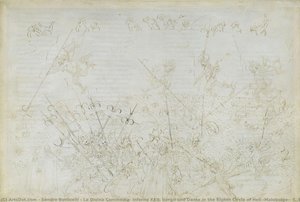
The Tabula Peutingeriana is a 33 cm high and 668.2 cm long parchment scroll showing a road map of the Roman Empire, which was redrawn in the twelfth or thirteenth century from an earlier version. The original was created in Roman times, probably during the reign of Caesar Augustus and was supplemented in the third, fourth, fifth and probably also sixth centuries. The original is kept in the Austrian National Library (Österreichische Nationalbibliothek) in Vienna and was first printed entirety in 1598 in Antwerp. The Archeological Department of the National Museum of Slovenia holds a copy of the Tabula Peutingeriana that Valentin Vodnik, prominent Slovenian poet and historian, made in 1809 in Ljubljana from the 1753 printed edition and amended in Vienna six years later by comparison with the original Tabula Peutingeriana. He made a list at that time of inaccuracies of the 1753 edition of the Tabula, which were taken into account in the next edition (K. Mannert: Tabula Itineraria Peutingeriana, Lipsiae 1824). Vodnik

Kunstnerens biografi

The Architect of the Slovene Soul


In the twilight of the Enlightenment, amidst the rugged and verdant landscapes of Carniola, there arose a figure whose intellect was as multifaceted as the Alpine peaks he so admired. Valentin Vodnik was far more than a mere priest or a man of letters; he was the linguistic architect of a burgeoning nation. Born in 1758 in Zgornja Šiška, his life became a profound crusade to elevate the Slovene tongue from a collection of disparate regional dialects into a unified, prestigious medium of culture, science, and administration. Through his tireless efforts, he breathed life into a standardized language designed to bridge the gaps between communities, fostering a sense of shared identity that remains the bedrock of Slovenian nationhood today.

A Literary and Journalistic Renaissance


Vodnik’s pen was an instrument of both instruction and inspiration, used to weave the fabric of a new literary tradition. He understood that for a culture to truly flourish, its literature must reach the hands of the common folk, making the complex accessible and the profound relatable. His contributions were remarkably diverse, spanning the realms of news, pedagogy, and even the domestic arts:

  • The Birth of Journalism: In 1797, he founded Lublanske novice, the first Slovenian newspaper, providing a vital window into the world for a population previously isolated by language barriers.

  • Poetic Resonance: His poetry, characterized by its patriotic and often satirical spirit, included masterpieces like Dramilo, which served as a stirring call to pride in one's ancestral heritage.

  • The Art of the Everyday: He even authored the first Slovenian cookbook, Kuharske bukve, demonstrating that the language was capable of expressing the most intimate and domestic aspects of human life.


By translating complex Enlightenment ideals into a simple, intelligible tongue, he ensured that the light of knowledge reached every corner of the Slovene lands, transforming a peasant dialect into a vessel for high culture.

The Scholar of Earth and Stone


Beyond the written word, Vodnik possessed a deep, tactile connection to the physical world. He was a man of science, a dedicated mineralogist who found profound beauty in the geological foundations of his homeland. Collaborating with the renowned Sigmund Zois, he delved into the mysteries of the Julian Alps, seeking to understand the very origins of the earth beneath his feet. His meticulous curation of over three hundred mineral specimens stands as a testament to his scientific rigor and his curiosity about the natural order.

This passion for the landscape was not merely academic; it was deeply symbolic. As an intrepid mountaineer who ascended the mighty Triglav, he helped transform these geological giants into enduring national symbols. In doing so, Vodnik intertwined the rugged terrain of Slovenia with the very spirit of its people, ensuring that the mountains and the language would forever be seen as inseparable parts of a single, resilient identity.
valentin vodnik

valentin vodnik

1758 - 1819 , Slovenia

Kort om kunstneren

  • Artistic Movement Or Style: Enlightenment
  • Date Of Birth: February 3, 1758
  • Date Of Death: January 8, 1819
  • Full Name: Valentin Vodnik
  • Nationality: Slovenian
  • Notable Artworks:
    • Dramilo (A Pick-me-up)
    • Pesme za pokušino
    • Kuharske bukve
  • Place Of Birth: Zgornja Šiška, Slovenia