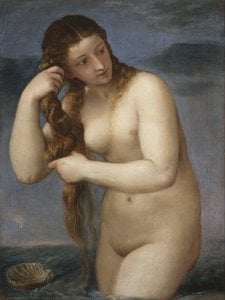
Tiziano Vecellio: En Venetians Farveglade – Livet og Kunsten bag Titian
Tiziano Vecellio, kendt verden over som Titian, står som en af de mest monumentale figurer i den italienske Renæssance – måske endda dens mest fejrede farvemester og en mester, der omskrev mulighederne for oliemaleri. Hans liv, fra ydmyge begyndelser i Pieve di Cadore, en dramatisk bjerglandsby i de venetianske Alper, er et vidnesbyrd om enestående talent og en utrættelig dedikation til kunstnerisk innovation. De præcise detaljer omkring Titian’s tidlige liv forbliver delvist skjulte i mystik, men vi ved, at han var en af flere børn født til Gregorio Vecellio, en militærmand, og Lucia. Familien sørgede for, at både Tiziano og hans bror Francesco blev lærte hos en kunstner i Venedig – et valg, der uundgåeligt skulle ændre kunsthistorien.
Venedig ved afslutningen af det 15. århundrede var et pulserende centrum for handel, kultur og kunstnerisk fermentering. Titian’s tidlige uddannelse fandt sted i Sebastiano Zuccatos værksted, en mosaikmester, efterfulgt af korte perioder under Gentile Bellinis vejledning og, vigtigst af alt, hans bror Giovanni. Det var dog hans forbindelse med Giorgione – en venetiansk maler, hvis arbejde besad en æterisk poetisk kvalitet – der viste sig at være mest formative. De to kunstnere samarbejdede om flere projekter, herunder de ydre fresker til Fondaco dei Tedeschi, et travl handelssted for tyske købmænd. Selv i disse tidlige værker var Titian’s exceptionelle talent tydeligt, hvilket gav ham anerkendelse blandt sine samtidige og varslede den kommende glans.
En Kunstners Udvikling – Fra Giorgiones Skygge til Titans Lys
Titian’s kunstneriske udvikling kan karakteriseres ved en bemærkelsesværdig alsidighed og en løbende udforskning af maleriske teknikker. Hans tidlige værker, stærkt påvirket af Giorgione, udviser en delikat lirik og en mesterlig brug af farve til at skabe atmosfæriske effekter. Malerier som *A Man with a Quilted Sleeve* (ca. 1509) demonstrerer hans spirende talent for portrættering, hvor han ikke kun fangede sit subjects fysiske udseende, men også deres indre karakter. Efterhånden som han modnede, begyndte Titian at bevæge sig væk fra Giorgones’ subtile nuancer og omfavne en mere dramatisk farvepalet. *The Visitation of Mary and Elizabeth* (nu i Accademia, Venedig) illustrerer denne skift, hvor han demonstrerede sin voksende selvtillid i at håndtere komplekse kompositioner og livlige farver.
Gennem hele sit lange liv eksperimenterede Titian konstant med forskellige penselstrøg – fra glatte, blandede overflader til løse, udtryksfulde markeringer – og udviklede en unik teknik for at lagre farver for at skabe lummere effekter. Hans portrætter blev kendt for deres psykologiske dybde og realistisk gengivelse af teksturer og stof. Samtidig udmærkede han sig i mytologiske og religiøse emner, hvor han indgydede dem med en sensualitet og dramatisk intensitet, der fangede publikums opmærksomhed. Et fremragende eksempel er *Venus of Urbino*, et mesterværk, der omskrev portrætteringen af den nøgne kvinde og etablerede Titian som en førende figur i venetiansk kunst.
Patroner, Prestige og Varig Indflydelse
Titian’s talent tiltrak opmærksomheden fra magtfulde patroner over hele Europa. Han fungerede som hofmaler for kejser Karl V, konge Filip II af Spanien og pave Paul III, blandt andre. Denne patronage gav ham ikke kun økonomisk sikkerhed, men tillod ham også at skabe monumentale værker, der viste hans kunstneriske kunnen i stor skala. Hans evne til at tilpasse sin stil til forskellige hoffs smag, samtidig med at han bevarede sin egen distinkte stemme, er et vidnesbyrd om hans exceptionelle talent og diplomatiske finesse.
Titian var en af de første malere, der udnyttede den nye teknik med *terrazzo*, hvor farverne blev lagt i flere lag for at skabe dybde og lummere effekter. Han eksperimenterede også med forskellige typer pigmenter og blandinger for at opnå specifikke farvetoner og teksturer. Hans arbejde var ofte præget af en følelse af bevægelse og dynamik, hvilket bidrog til hans unikke stil.
Titian’s karriere blev succesfuld fra starten, og han blev anerkendt blandt sine samtidige som en af de mest talentfulde malere i Venedig. Han var kendt for sine portrætter, der ofte fremstillede sit subjects personlighed og status. Hans evne til at fange essensen af sit subjects karakter gjorde ham til en eftertragtet kunstner blandt adelen og den velhavende overklasse.
Et Arv, der Varer gennem Århundreder
Titian døde i Venedig i 1576 under en udbrud af pest. Hans værker findes i museer rundt om i verden, herunder Galleria Palatina i Firenze, Prado-museet i Madrid og National Gallery i London. Titian’s kunst er et vidnesbyrd om hans evne til at skabe varige værker, der fortsat inspirerer og fanger opmærksomheden hos publikum over hele verden. Hans bidrag til kunsten er uovertruffen, og hans navne vil altid være forbundet med farve, lys og den menneskelige sjæls dybde.
Yderligere Ressourcer
- Museer & Samlinger: Opdag Titian’s værker i Scuola del Santo i Padua og San Salvador i Venedig, hvor hans betagende fresker kan opleves.
- Relaterede Kunstnere: Udforsk Giorgiones indflydelse på Titian’s tidlige stil og Rubens’ og Delacroix’ senere påvirkning.
- Historisk Kontekst: Fordyb dig i den italienske Renæssance og venetiansk kunst for at fuldt ud værdsætte Titian’s kunstneriske præstationer.



 Se i fuld skala
 Switch to Print
 Del
Del Del
Del
 Detaljer

 Download
 Lignende værker
 Røntgenundersøgelse
 Diasshow
 Stats
Stats


 Se mere