


Giclée- eller lærredstryk i museumskvalitet med hurtig produktion og fleksible muligheder for finish. ( Køb håndlavet maleri Køb billede)
Vælg mellem vores forudindstillede størrelser, der matcher kunstværkets originale proportioner.

Du kan indtaste dine egne mål for at passe til en specifik ramme eller et bestemt område. Hvis den valgte størrelse ikke stemmer overens med det originale billedes proportioner, vil vi enten beskære kunstværket eller udvide billedet med en spejlet eller ensfarvet kant. En digital mockup vil blive sendt til din godkendelse, før produktionen påbegyndes.
Bemærk venligst, at forhåndsvisningen på skærmen ikke afspejler den faktiske beskæring eller udvidelse. Kun mockuppen vil nøjagtigt vise den endelige komposition.
Selvom specialmål er tilgængelige, anbefaler vi at vælge et mål fra den foruddefinerede liste for at bevare de originale proportioner.
Verdensomspændende levering () på 2 uger i stedet for de sædvanlige 4/5 uger. (7 september)


Saint Lawrence
Størrelse på reproduktion
Tilman Riemenschneider’s “Saint Lawrence,” crafted around 1502–8, stands as a testament to the enduring power of medieval Christian iconography and artistic mastery. This sculpture, alongside fragments of a larger altarpiece destined for Rothenburg ob der Tauber (later demolished), embodies the spirit of late Gothic art—a period characterized by profound spiritual contemplation and an unwavering commitment to conveying biblical narratives with palpable emotion.
Historical Context: Created during a turbulent era marked by religious reformations and political instability – specifically amidst the Peasants’ War—Riemenschneider's sculpture reflects the anxieties and aspirations of his time. The altarpiece project itself was conceived in response to the Dominican convent’s desire for a monumental artwork that would inspire devotion and proclaim Christian faith.
Symbolism: Beyond its depiction of martyrdom, “Saint Lawrence” is laden with symbolic elements. The book held by Saint Lawrence represents knowledge—a cornerstone of Christian theology—while the grill symbolizes his sacrificial death—a poignant reminder of Christ’s suffering for humanity's salvation. These symbols resonate deeply within the Gothic aesthetic, communicating spiritual truths through visual imagery.
Emotional Impact: Viewing “Saint Lawrence” evokes a sense of solemn reverence and profound contemplation. The sculpture’s rough texture—resulting from traditional wood carving techniques—adds to its tactile quality, grounding the viewer in the materiality of art history. Lines are predominantly organic, mirroring the contours of the figure and chair, creating a harmonious balance between form and space. The muted brown palette—dominated by shades ranging from beige to umber—reflects the natural color of the wood and contributes to the sculpture’s overall atmosphere of solemn piety.
Further Research: Examining related artworks by Riemenschneider, such as “Saint Stephen” (1959.43) and two female saints preserved in Frankfurt, reveals a consistent stylistic approach—characterized by expressive faces and meticulous attention to detail—underscoring Riemenschneider’s mastery of Gothic sculpture.
Provenance: The sculpture's journey through history began with Richard von Passavant-Gontard, who acquired it from Bennebroek in the Netherlands. Subsequently, it entered the collection of Rosenberg & Stiebel Inc., New York, before finding its permanent home at the Cleveland Museum of Art.
Accession Number: 1959.42


1460 - 1531 , Tyskland
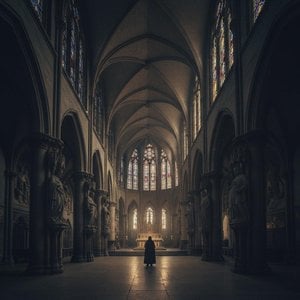
Embark on a journey through the dramatic era of Gothic art. Discover the profound beauty of illuminated manuscripts, sacred gold leaf masterpieces, and the transition to naturalism in this expert-led exploration of medieval artistry and historical grandeur.

 Del
Del Del
Del
 Detaljer

 Download
 Lignende værker
 Diasshow


 Se mere




































 Glasmulighed er kun tilgængelig i størrelser under 110 cm


