GRATIS KUNSTRÅDGIVNING

x
Bestil maleri Bestil maleriKøb højopløseligt billede Køb højopløseligt billede DelDel
DetailsDetails Tilføj til favoritter Tilføj til favoritter DownloadDownload Lignende værkerLignende værker X-RayX-Ray DiasshowDiasshow

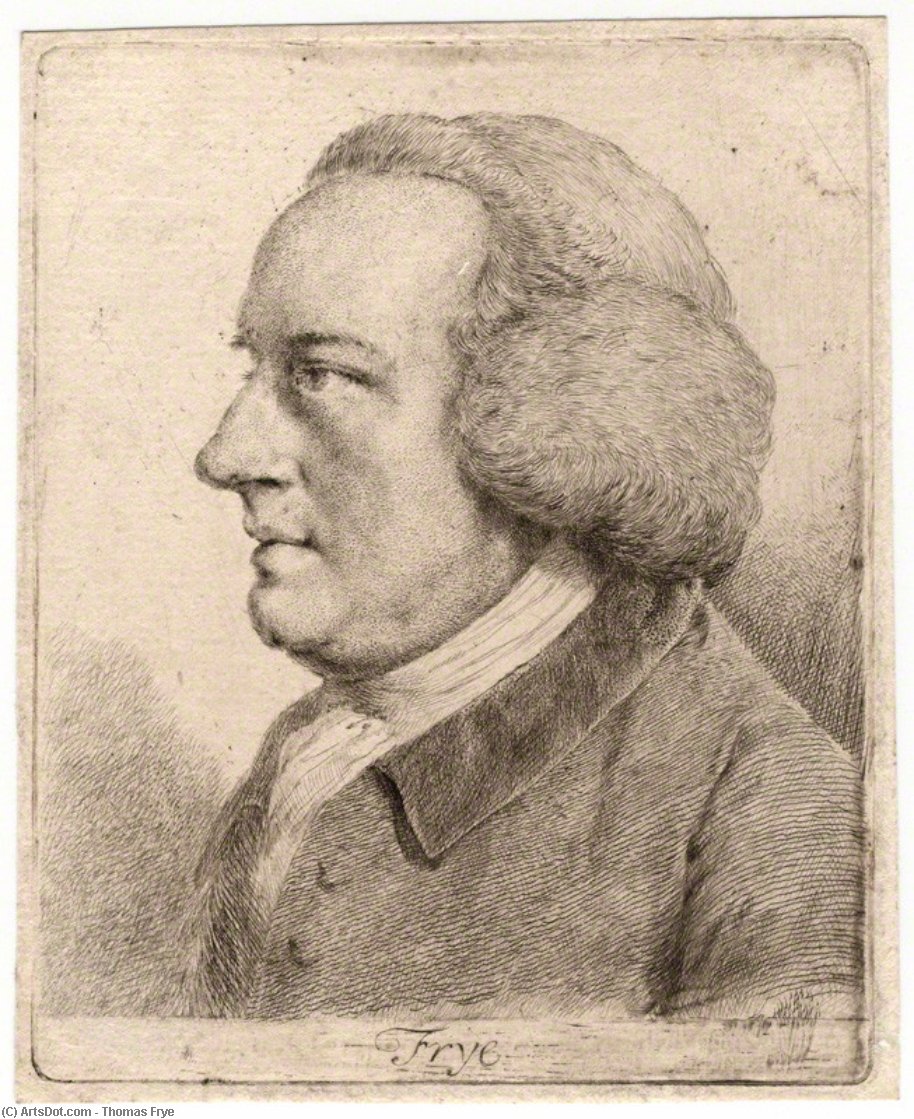
Untitled

Thomas Frye (1710-1762) was an Anglo-Irish artist known for oil & pastel portraits, early mezzotint engravings, and his role as the patentee of Bow Porcelain Factory. Explore his diverse artistic contributions and legacy in English porcelain manufact

Giclée / Kunsttryk

Giclée- eller lærredstryk i museumskvalitet med hurtig produktion og fleksible muligheder for finish.

Standard
custom
CM
INCH

Vælg mellem vores forudindstillede størrelser, der matcher kunstværkets originale proportioner.

bredde
højde

Du kan indtaste dine egne mål for at passe til en specifik ramme eller et bestemt område. Hvis den valgte størrelse ikke stemmer overens med det originale billedes proportioner, vil vi enten beskære kunstværket eller udvide billedet med en spejlet eller ensfarvet kant. En digital mockup vil blive sendt til din godkendelse, før produktionen påbegyndes.
Bemærk venligst, at forhåndsvisningen på skærmen ikke afspejler den faktiske beskæring eller udvidelse. Kun mockuppen vil nøjagtigt vise den endelige komposition.
Selvom specialmål er tilgængelige, anbefaler vi at vælge et mål fra den foruddefinerede liste for at bevare de originale proportioner.

Verdensomspændende levering () på 2 uger i stedet for de sædvanlige 4/5 uger. (2 juli)

why_choose_icon
Gratis ekspresforsendelse til hele verden
why_choose_icon
Lærred af linned i høj kvalitet
why_choose_icon
Fuld transportforsikring
why_choose_icon
Garanti for refusion af told og importafgifter
why_choose_icon
Garanti for præcis farvegengivelse
why_choose_icon
60 dages returret (kun ved fabrikationsfejl)
why_choose_icon
100% Tilfredshedsgaranti
why_choose_icon
Mængderabat tilgængelig

Samlet pris

-

reproduction

Untitled

Giclée / Kunsttryk

Størrelse på reproduktion

-

Samlet pris

-


Kunstnerens biografi

John Baptist Medina: A Scottish Portraitist Bridging Worlds

Born around January 1, 1659, in Brussels – a city steeped in Flemish artistic tradition – John Baptiste Medina’s life and career represent a fascinating confluence of cultures and influences. His origins, rooted in Spanish military service within the Habsburg realm, ultimately led him to establish himself as one of England's most prominent portrait painters during the late 17th and early 18th centuries. Medina wasn’t merely a painter; he was an interpreter of identity, skillfully blending Baroque techniques with a distinctly English sensibility, and his work offers a unique window into the social and political landscape of his time.

Initially trained by François Duchatel in Brussels, a master known for his refined portraiture, Medina’s artistic journey took him to London in 1686. This relocation marked a pivotal moment, transitioning him from the established artistic circles of continental Europe to the burgeoning art scene of England. His early years in London were characterized by a focus on Scottish clientele – a strategic choice that proved remarkably successful. He cultivated relationships with influential figures within the Scottish court and aristocracy, securing commissions that solidified his reputation and provided a steady income. This preference for Scottish subjects speaks volumes about his understanding of the prevailing social dynamics and his ability to capture the character and status of his sitters.

Medina’s most enduring legacy lies in his illustrations of John Milton's *Paradise Lost*. Commissioned by Sir Robert Harley, Warden of the Rolls Office, Medina undertook this monumental task in 1688, producing a series of engravings that accompanied the first English edition of the epic poem. This undertaking was not simply a matter of artistic skill; it demonstrated Medina’s versatility and his willingness to engage with ambitious literary projects. The illustrations themselves are notable for their dramatic compositions and skillful rendering of Milton's vivid imagery – a testament to Medina’s ability to translate complex narratives into visual form.

The Style and Technique of a Bridging Artist

Medina’s artistic style is often described as a synthesis of Flemish and English influences. He inherited the meticulous detail, rich colors, and dramatic lighting characteristic of Flemish portraiture from his early training with Duchatel. However, he adapted these techniques to suit the tastes of his English patrons, incorporating elements of naturalism and informality that were becoming increasingly popular in England. His portraits are distinguished by their relaxed poses, expressive gazes, and a subtle sense of intimacy – qualities that set them apart from the more formal and stylized portraits produced by some of his contemporaries.

A key element of Medina’s technique was his use of color. He favored bright blues, rose-reds, and other vibrant hues, which he skillfully layered to create a sense of depth and luminosity. His backgrounds were typically dark, providing a dramatic contrast to the richly colored clothing of his sitters. While some scholars have suggested that assistants may have contributed to the execution of certain details, Medina’s overall artistic direction and stylistic choices are undeniably evident throughout his oeuvre.

Scottish Portraits and Courtly Patronage

Medina's success in Scotland was inextricably linked to his connections with powerful figures within the court. He was particularly close to the Earl of Melville, a prominent Whig politician who served as Secretary of State for Scotland during the reign of William III and Mary II. Melville’s patronage provided Medina with numerous commissions and opportunities to showcase his talent. The portraits he produced of Melville and other members of the Scottish elite offer valuable insights into the social and political dynamics of the period – reflecting the influence of the Whig faction and the importance of courtly connections.

His portraiture wasn’t merely decorative; it served as a powerful tool for asserting status and projecting authority. The careful attention to detail, luxurious fabrics, and symbolic gestures within these portraits conveyed messages about wealth, power, and social standing. Medina's ability to capture the essence of his sitters – their personalities, aspirations, and political affiliations – made him one of the most sought-after portraitists in Scotland.

Legacy and Historical Significance

Sir John Baptist Medina died on October 5, 1710, in Edinburgh. His death marked the end of an era in Scottish portraiture, as he had been the dominant figure in the field for decades. His work continues to be studied by art historians and scholars today, offering a valuable glimpse into the cultural and artistic landscape of 17th and 18th-century Britain.

Beyond his technical skill and stylistic innovations, Medina’s legacy lies in his ability to bridge cultures and synthesize diverse influences. He was a product of both Flemish and Spanish traditions, yet he ultimately established himself as a distinctly English artist – a testament to his adaptability, ambition, and artistic vision. His portraits remain treasured examples of British art, offering enduring insights into the lives and times of those who shaped the nation’s history.

thomas frye

thomas frye

1710 - 1762 , Ireland

Kort om kunstneren

  • Artistic Movement Or Style: Flemish-Spanish
  • Artists Or Movements Influenced By This Artist: ['Scottish portraiture']
  • Artists Who Influenced This Artist:
    • François Duchatel
    • Godfrey Kneller
  • Date Of Birth: c. 1659
  • Date Of Death: 1710
  • Full Name: John Baptist Medina
  • Nationality: Scottish
  • Notable Artworks:
    • Paradise Lost Illustrations
    • Oval bust portraits
  • Place Of Birth: Brussels, Belgium