


Giclée- eller lærredstryk i museumskvalitet med hurtig produktion og fleksible muligheder for finish. ( Køb håndmalet maleri Skift til digitalt billede)





























Vælg mellem vores forudindstillede størrelser, der matcher kunstværkets originale proportioner.

Indtast den bredde og højde, du har brug for, så det passer til din ramme eller din væg. Et print kan kun beskæres, aldrig gøres større end selve billedet, så en størrelse med et andet format vil medføre, at dele af motivet går tabt. Vi sender dig en digital mockup til godkendelse, før vi printer noget. Billedet vist på denne side viser ikke den faktiske beskæring — det er kun mockuppen, der gør.
Verdensomspændende levering () på 2 uger i stedet for de sædvanlige 4/5 uger. (11 november)
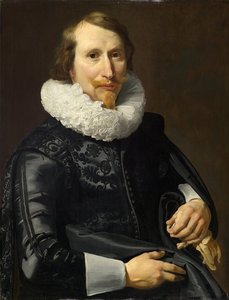
A Lady
Størrelse på reproduktion
The year is 1632. Amsterdam thrives as the epicenter of the Dutch Golden Age, a period brimming with artistic innovation and opulent patronage. Within this vibrant scene emerges Thomas de Keyser, a painter whose skill lay not merely in capturing likeness but in distilling the very essence of his subjects – a talent brilliantly showcased in his captivating portrait, “A Lady.” This oil-on-oak panel painting, currently residing within the esteemed Staatliche Museen in Berlin, is more than just a depiction; it’s an invitation into a world of refined elegance and subtle psychological depth.
De Keyser's style, heavily influenced by both the meticulous detail of Flemish masters like Anthony van Dyck and the dramatic lighting favored by Rembrandt, results in a remarkably lifelike portrayal. The lady before us is presented with a poise that speaks volumes – her posture relaxed yet undeniably regal, her gaze direct and engaging. Notice how De Keyser masterfully employs chiaroscuro, the masterful use of light and shadow, to sculpt the figure, drawing attention to her face and hands while subtly enveloping the background in a veil of mystery. The dark interior, punctuated by the warm glow emanating from an unseen window, creates a sense of intimacy and draws the viewer into the scene.
A closer examination reveals a wealth of detail that speaks volumes about the era. The lady’s attire is a testament to the fashion of 17th-century Holland – a black bodice adorned with intricate gold trim and delicate lace, suggesting both wealth and status. The elaborate headwear, a white ruff collar framing a dark hat embellished with what appear to be feathers or decorative elements, further emphasizes her position within society. These aren’t merely decorative choices; they are carefully selected symbols of power, refinement, and social standing.
The background, far from being mere decoration, plays an integral role in the painting's narrative. The dark room, with its wooden floor featuring a subtle checkered pattern, evokes a sense of luxury and opulence – a space designed for contemplation and quiet enjoyment. The glimpse of a red velvet drape hints at hidden treasures and adds a touch of dramatic flair. De Keyser’s brushwork is remarkably precise, particularly evident in the rendering of the lace and the folds of the fabric. He utilizes layering techniques to create texture and depth, ensuring that every element contributes to the overall sense of realism.
Understanding “A Lady” requires a glimpse into the context of its creation. Thomas de Keyser was a prominent figure in the Dutch art world during this period, renowned for his portraits and genre scenes commissioned by wealthy merchants and nobility. His work reflects the prosperity and cultural flourishing of the Netherlands – a nation at the forefront of artistic innovation and trade. The painting offers a fascinating window into the lives of the elite, revealing their values, aspirations, and aesthetic sensibilities.
Furthermore, De Keyser’s connection to Hendrick de Keyser, his father—a celebrated architect and sculptor who shaped Amsterdam's skyline—provides an intriguing layer of familial legacy. This lineage undoubtedly influenced Thomas’s artistic development, imbuing his work with a sense of technical mastery and architectural awareness. The painting stands as a testament not only to De Keyser’s individual talent but also to the enduring influence of his family’s artistic heritage.
Today, “A Lady” continues to captivate viewers with its timeless beauty and psychological depth. WahooArt offers meticulously crafted hand-painted reproductions that faithfully capture the essence of De Keyser's masterpiece. These reproductions are not mere copies; they are artistic interpretations imbued with the same attention to detail, technique, and emotional resonance as the original. Whether adorning a grand salon or a more intimate space, a reproduction of “A Lady” brings a touch of Dutch Golden Age elegance and sophistication to any setting.
For those seeking further information on Thomas de Keyser and his remarkable oeuvre, we encourage you to explore resources such as WahooArt.com and the Staatliche Museen in Berlin’s website. And for a deeper dive into the life and works of this pivotal artist, Wikipedia offers a comprehensive overview of his biography and artistic contributions.
Håndmalede kopier af "A Lady" af Thomas De Keyser kan købes hos denne hjemmeside: en håndmalet oliereproduktion på lærred af hør, via deres Håndmalet reproduktion-side.
I Thomas De Keysers samlede værk placerer "A Lady" sig i Dutch Golden Age-stilen, sammen med temaerne omkring rembrandt influence, dutch realism, courtly life, social status, wealthy elite, patronage system, portraiture tradition, idealized beauty.
"A Lady" har en Reflective stemning inden for Dutch Golden Age-bevægelsen.

I det livlige, pulserende hjerte af det syttenende århundredes Amsterdam, en periode defineret ved hidtil uset velstand og kulturel blomstring, trådte Thomas de Keyser frem som en formidabel kraft inden for portrætkunsten. Han blev født i 1596 ind i et miljø gennemsyret af arkitektonisk storhed som søn af den legendariske Hendrick de Keyser, arkitekten hvis hånd formede selve Amsterdams skyline. Denne arv af håndværksmæssig ekspertise gav ham mere end blot et navn; den tilbød en grundlæggende forståelse for struktur, rum og objekters fysiske tilstedeværelse, hvilket senere skulle definere hans tilgang til den menneskelige form. Ved at vokse op blandt stenhuggerier langs Amstel-floden blev De Keyser opslugt af en verden, hvor kunst og arkitektur var uadskilleligt forbundne, hvilket fremdyrkede en teknisk præcision, der skulle blive hans varemærke.
Hans kunstneriske rejse blev yderligere forfinet gennem formel træning under Cornelis van der Voort, en uddannelse der introducerede ham til tidens humanistiske idealer og sofistikerede kompositionsteknikker. Som han modnedes, begyndte De Keysers stil at smelte sammen til noget helt unikt – en bro mellem den sene renæssances minutiøse detaljerigdom og den dramatiske, psykologiske intensitet i den spirende barokbevægelse. Selvom hans tidlige værker udviste en skarp interesse for forgængernes formelle elegance, udviklede han snart en evne til at indfange sine subjekters levede virkelighed, og bevægede sig hinsides det rene lighedstræk for at berøre selve essensen af deres karakter.
For at forstå De Keysers genialitet må man navigere i det komplekse forhold mellem hans arbejde og værkerne fra Rembrandt van Rijn. Ofte beskrevet som en samtidig, der delte tidens revolutionære ånd, genlød De Keysers tilgang til lys og skygge – den berømte chiaroscuro – de dramatiske innovationer, som Rembrandt var fortaler for. Dog besad De Keyser en unik klarhed; hvor Rembrandt kunne lade en form opløses i dybe, mystiske skygger, bevarede De Keyser ofte en skarphed i linjen og en lysende kvalitet i sine teksturer. Han var en mester af det taktile, og gengav silkens tunge glans, de indviklede mønstre i kniplinger og den subtile, vejrbidte hud hos en aldrende købmand med næsten videnskabelig nøjagtighed.
Denne forpligtelse til realismen gjorde ham til den foretrukne portrætmaler for den fremstormende købmandsklasse i Den Hollandske Republik. Hans evne til at balancere sine modelers prestige med en dyb følelse af psykologisk sandhed gjorde det muligt for ham at skabe værker, der fungerede både som statussymboler og intime karakterstudier. I sine gruppeportrætter udviste han en ekstraordinær evne til at organisere komplekse arrangementer af figurer, hvilket sikrede, at hvert individ bevarede sin distinkte identitet, mens de bidrog til en sammenhængende fortælling om kollektiv borgerlig stolthed. Hans penselstrøg føltes, selvom de var præcise, aldrig statiske; der findes en rytmisk vitalitet i hans kompositioner, som indblæser liv i det syttenende århundredes fastfrosne øjeblikke.
Thomas de Keysers bedrifter rækker langt ud over lærredet og repræsenterer et vitalt kapitel i den nordeuropæiske kunsthistorie. Hans karriere faldt sammen med højdepunktet af den hollandske guldalder, en tid hvor Nederlandene hævdede sin identitet gennem handel, videnskab og kunst. Ved at dokumentere denne æras ansigter – fra de velhavende borgere til de indflydelsesrige samfundsledere – leverede han en visuel registrering af et samfund i transition. Hans arbejde fungerer som et vindue ind til de sociale hierarkier, moden og værdierne i en tidsalder defineret ved maritim magt og protestantisk flid.
Gennem hele sit liv og sit eftermæle defineres hans bidrag til kunstverdenen af flere nøgleelementer:
Selvom historien nogle gange placerer ham i skyggen af Rembrandt, forbliver De Keysers betydning uformindsket. Han var ikke blot en efterligner af storhed, men en pioner i egen ret, der bidrog med en specifik form for klarhed og strukturel elegance til den hollandske tradition. I dag fortsætter hans værker med at fange både forskere og kunstelskere, og står som vedvarende vidnesbyrd om en mester, der kunne indfange både den ydre pragt og sin tids indre sjæl.
1596 - 1667 , Holland

Embark on a sophisticated journey through the Dutch Golden Age. Unveil the dramatic brilliance of Rembrandt’s chiaroscuro and the expressive landscapes of 17th-century masters in this authoritative exploration of light, shadow, and enduring artistic legacy.
 Se i rummet
 Del som kort
 Del
Del
 Detaljer
 Guide
Guide

 Download
 Lignende værker
 Røntgenundersøgelse
 Diasshow
 Spørgsmål og svar
 Statistikker


 Vis mere









 Glasmulighed er kun tilgængelig i størrelser under 110 cm


