


x

 Bestil tryk Køb højopløseligt billede
 Del
Del
 Details
 Tilføj til favoritter
 Download
 Lignende værker
 X-Ray
X-Ray
 Diasshow
Håndmalet olie på lærred i din valgte størrelse og ramme, udført efter bestilling af vores kunstnere.





























Vælg mellem vores forudindstillede størrelser, der matcher kunstværkets originale proportioner.

Du kan indtaste dine egne mål for at passe til en bestemt ramme eller plads. Hvis den valgte størrelse ikke stemmer overens med det originale billedes proportioner, vil vi enten beskære kunstværket eller udvide maleriet med yderligere håndmalede elementer. En digital skitse sendes til din godkendelse, før produktionen påbegyndes.
Bemærk venligst, at forhåndsvisningen på skærmen ikke afspejler den faktiske beskæring eller udvidelse. Kun skitsen vil nøjagtigt vise den endelige komposition.
Selvom specialmål er mulige, anbefaler vi at vælge en dimension fra den foruddefinerede liste for at bevare de originale proportioner.
Levering i hele verden () på 3/4 uger i stedet for de standard 5 uger. (1 juli). Ingen kompromiser med kvaliteten.


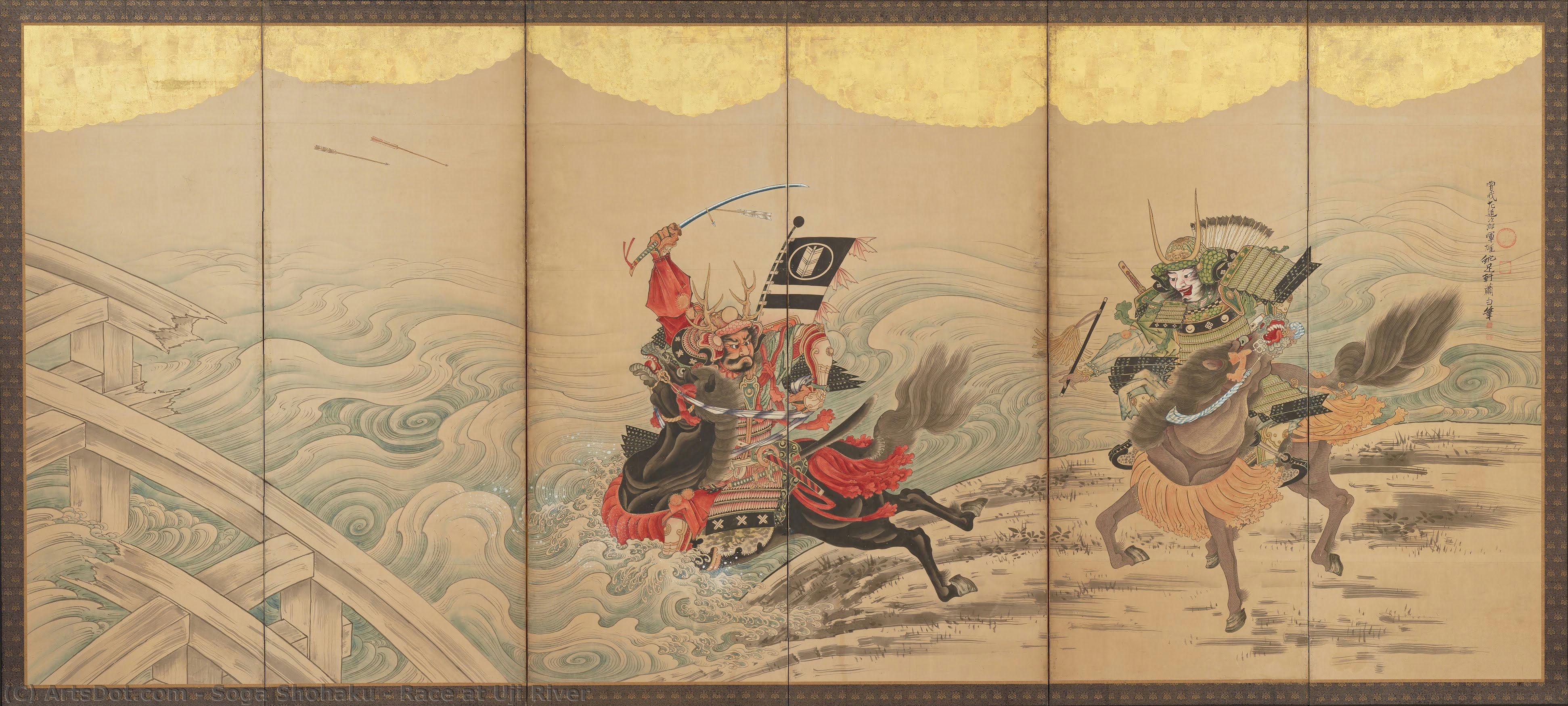
Race at Uji River
Størrelse på reproduktion
In the swirling, turbulent currents of the Uji River, a moment of profound historical drama is frozen in time through the eccentric genius of Soga Shōhaku. This rare polychromatic screen serves as a breathtaking window into the 14th-century war epic, The Tale of the Heike, capturing a high-stakes race that is as much about psychological warfare as it is about physical prowess. As the viewer’s eye traverses the churning waters, they are thrust into the heart of a legendary competition between the warriors Kagesue and Takatsuna. The scene is thick with tension; the destruction of the bridge has turned the river into a treacherous obstacle, transforming a simple crossing into a desperate struggle for honor and glory.
The brilliance of Shōhaku lies in his ability to weave narrative complexity into a single, dynamic composition. While the surface of the painting depicts the frantic energy of riders navigating the riverbank, there is a deeper, more sinister layer of storytelling at play. The artist masterfully illustrates the moment of betrayal: Takatsuna, draped in green, employs a cunning trick to unseat his rival, Kagesue. Through subtle shifts in posture and the placement of figures, Shōhaku guides us through this deceptive maneuver, making the viewer an accomplice to the trickery. It is a work that demands close inspection, rewarding those who look past the splashing water to find the quiet, calculating malice beneath the surface.
Soga Shōhaku was a true iconoclast of the Edo period, an artist who looked backward to the Muromachi style to forge a path that was entirely his own. This particular work is a pinnacle of his "pictorial grotesquerie," a term used to describe his fascination with the distorted, the exaggerated, and the uncanny. Unlike the polished, serene aesthetics favored by many of his contemporaries, Shōhaku embraced a rugged, almost unsettling energy. This is most strikingly realized in the depiction of Takatsuna’s horse, Ikezumi, whose fangs are rendered with a terrifying, predatory detail that suggests the animal itself is part of the unfolding chaos.
The technique employed in this polychromatic screen is nothing short of extraordinary. The use of color is vibrant yet controlled, providing a rich texture to the horses' coats and the flowing garments of the riders. Shōhaku’s brushwork possesses a rhythmic vitality; one can almost feel the spray of the river and the thundering hooves against the earth. For the collector or interior designer, this piece offers more than just visual beauty; it provides a profound sense of movement and character. The contrast between the pale, mask-like face of Takatsuna and the wild, untamed elements of the landscape creates a psychological depth that makes the artwork feel alive, making it an unforgettable centerpiece for any sophisticated collection.
Owning a reproduction of such a significant historical work allows one to bring the spirit of Japanese legend into a modern living space. The Race at Uji River is not merely a depiction of a battle; it is an exploration of human nature—the duality of bravery and deceit, the chaos of war, and the triumph of wit. Its presence in a room commands attention, acting as a conversation piece that bridges the gap between 18th-century Japanese artistry and contemporary aesthetic appreciation.
For those seeking to curate an environment filled with narrative depth and historical resonance, this artwork offers unparalleled inspiration. The dramatic interplay of light, color, and motion provides a focal point that can anchor a room, whether paired with minimalist modern decor or more traditional, classical furnishings. To display this piece is to celebrate the enduring power of the "eccentric" spirit—a reminder that true art lies in the courage to defy convention and capture the beautiful, the strange, and the unforgettable.


1730 - 1781 , Japan
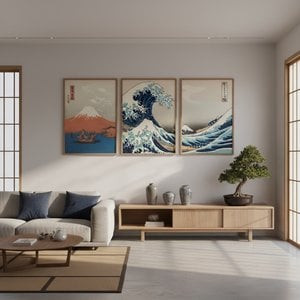
Oplev Katsushika Hokusais 25 mest ikoniske kunstværker – fra 'The Great Wave' til smukke Fuji-landskaber. Udforsk japansk ukiyo-e, træsnit og historisk kunst på WahooArt.com. Find din perfekte vægkunst i dag!


Hold dig opdateret med de seneste kunstnyheder, eksklusive tilbud og indretningsideer.
Fortæl os om dit projekt, og vores kunsteksperter vil give dig 3 personlige kunstforslag.
Vi kuraterer 3 valgmuligheder kun til dig – Gratis!
 Del
Del









 Læs mere
 Glasmulighed er kun tilgængelig i størrelser under 110 cm


