Giclée- eller lærredstryk i museumskvalitet med hurtig produktion og fleksible muligheder for finish. ( Køb håndlavet maleri Køb billede)





























Vælg mellem vores forudindstillede størrelser, der matcher kunstværkets originale proportioner.

Du kan indtaste dine egne mål for at passe til en specifik ramme eller et bestemt område. Hvis den valgte størrelse ikke stemmer overens med det originale billedes proportioner, vil vi enten beskære kunstværket eller udvide billedet med en spejlet eller ensfarvet kant. En digital mockup vil blive sendt til din godkendelse, før produktionen påbegyndes.
Bemærk venligst, at forhåndsvisningen på skærmen ikke afspejler den faktiske beskæring eller udvidelse. Kun mockuppen vil nøjagtigt vise den endelige komposition.
Selvom specialmål er tilgængelige, anbefaler vi at vælge et mål fra den foruddefinerede liste for at bevare de originale proportioner.
Verdensomspændende levering () på 2 uger i stedet for de sædvanlige 4/5 uger. (6 september)


The Annunciation (L'Annonciation)
Størrelse på reproduktion
René Magritte’s “The Annunciation” (1930) isn't merely a depiction of biblical narrative; it’s an exquisitely crafted meditation on perception itself, firmly rooted in the burgeoning Surrealist movement and imbued with a profound sense of unease. Painted during Magritte’s formative years—a period profoundly shaped by his mother’s tragic death—the artwork embodies a preoccupation with hidden realities and the elusive nature of truth that would characterize his entire oeuvre.
The scene unfolds against a backdrop of stark simplicity: a rocky outcrop dominates the composition, punctuated by three towering white columns. From this barren landscape sprouts a solitary tree, its branches reaching upwards towards an overcast sky—a visual motif frequently revisited by Magritte to represent aspiration and vulnerability. However, it’s the central figure – a man standing silently before the tableau – that truly captivates the viewer's attention. He observes the surreal panorama with a gaze devoid of emotion, furthering the artwork’s unsettling ambiguity.
Magritte employed meticulous oil paint technique on canvas to achieve remarkable textural detail and luminosity. The muted tones of grey and white create an atmosphere of contemplative stillness, contrasting sharply with the vibrant hues of the tree—a deliberate choice designed to draw the eye and heighten the sense of drama. Careful brushstrokes contribute to a palpable feeling of solidity and permanence, juxtaposed against the ethereal quality of the sky.
Beyond its formal artistry lies a rich tapestry of symbolism. The white columns represent stability and authority – institutions that Magritte questioned throughout his life—while simultaneously concealing what is hidden beneath their surface. The tree symbolizes hope and regeneration, yet it’s dwarfed by the immensity of the rock formation, suggesting the insignificance of human endeavor against the forces of nature. Most powerfully, however, the man embodies the viewer's own role in interpreting the artwork; he represents our conscious awareness confronting an inexplicable scene.
“The Annunciation” resonates deeply with viewers because it compels them to confront their assumptions about reality. Magritte’s masterful manipulation of visual language invites contemplation on how we perceive the world around us and challenges us to question whether what we see is truly what exists. It's a testament to his genius that this seemingly straightforward landscape continues to provoke discussion and inspire artistic interpretation decades after its creation—a timeless exploration of doubt, revelation, and the enduring fascination with the subconscious.


1898 - 1967 , Belgien

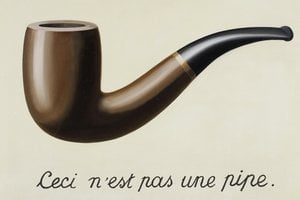
Delve into the profound mysteries of René Magritte’s Surrealism. Explore an expert analysis of 'The Treachery of Images,' decoding the philosophical paradoxes and visual subversions that redefined modern art history for collectors and connoisseurs alike.

Discover the profound serenity of timeless pastoral landscapes. From Impressionist masterpieces to bespoke oil commissions, explore how curated fine art brings the enduring beauty and tranquility of nature into your luxury home interior.

 Se i fuld skala
 Del
Del Del
Del
 Detaljer

 Download
 Lignende værker
 Røntgenundersøgelse
 Diasshow
 Se mere







 Glasmulighed er kun tilgængelig i størrelser under 110 cm