x
Impressionism
33.0 x 49.0 cm
Royal Scottish Academy of Art - ArchitectureKøb et højopløst, forbedret digitalt billede, der er langt bedre end online-forhåndsvisningen.
Hver fil er omhyggeligt forberedt af vores interne specialister ved hjælp af avancerede værktøjer og ekspertmæssig manuel retuschering. Vi sikrer, at hvert billede har enestående klarhed, præcis farvegengivelse og fine detaljer.
Den endelige fil leveres via e-mail inden for 72 timer og er optimeret til øjeblikkelig brug i professionelle, redaktionelle og trykte miljøer. Det er den samme kvalitet, som førende designstudier, forlag og gallerier har tillid til.
Download en højopløselig fil til personlig fremvisning, print og kreative projekter.
Når du vælger WahooArt.com, får du ikke blot et billede – du modtager et professionelt optimeret digitalt kunstværk, skabt med præcision og sikret med en tilfredshedsgaranti. Her er alt, hvad din ordre automatisk indeholder:
Din højkvalitets digitale billedfil vil blive sendt til din e-mail inden for 72 timer efter bestilling – klar til øjeblikkelig brug.
Dit kunstværk optimeres professionelt ved hjælp af avancerede AI-værktøjer og manuel redigering, hvilket sikrer maksimal detaljegrad, klarhed og farvenøjagtighed.
Har du ved en fejl slettet eller mistet din fil? Ingen bekymring – vi sender den igen til enhver tid, helt gratis.
Nyd dit kunstværk med det samme uden told, afgifter eller leveringsgebyrer – digitale downloads er altid skattefrie.
Vi sikrer, at dit digitale billede gengiver de originale farver så præcist som muligt ved hjælp af professionelle værktøjer og farvestyring.
Hvis du ikke er tilfreds med dit digitale billede, vil vi revidere det eller refundere 100% inden for 60 dage – uden spørgsmål.
Ik tilfreds? Få fuld refusion inden for 60 dage efter modtagelse af din digitale fil – uden spørgsmål.
Køb 3 billeder, spar 10% - Køb 5, spar 15% - Køb 10+, spar 20%. Ideelt til kreative projekter, gallerier og bureauer.
The canvases of Peter Wishart, a Scottish artist working primarily in the late 19th and early 20th centuries, aren’t merely depictions of landscapes; they are profound meditations on light, memory, and the enduring spirit of the Highlands. Born in 1846, Wishart's life was inextricably linked to the rugged beauty of his homeland – a connection that profoundly shaped his artistic vision. He wasn’t simply an observer of nature; he seemed to inhabit it, translating its moods and textures onto canvas with remarkable sensitivity. His work offers a poignant glimpse into a vanishing world, capturing not just the physical appearance of the Highlands but also the emotional resonance of its wildness.
Early influences on Wishart’s style are somewhat elusive, though his training at the Royal Academy in London undoubtedly provided him with a foundational understanding of academic painting. However, it was his time spent living and working amongst the crofters and shepherds of Sutherland – a region he revisited throughout his life – that truly ignited his artistic passion. He wasn't interested in romanticized depictions of Highland life; instead, he sought to portray the honest realities of rural existence: the weathered faces of farmers, the tireless labor of tending flocks, and the ever-changing drama of the weather.
Wishart’s most distinctive characteristic is his masterful manipulation of light. He possessed an almost preternatural ability to capture the fleeting effects of sunlight on water – rivers, lochs, and streams – transforming them into shimmering ribbons of color. His watercolors, in particular, are renowned for their luminous quality, achieved through a delicate layering of washes and subtle gradations of tone. He wasn’t interested in photographic realism; rather, he aimed to evoke the *feeling* of light, its warmth, its coolness, its ability to both illuminate and conceal.
Consider his series of paintings depicting Highland rivers. These aren't static scenes; they are dynamic compositions filled with movement and energy. The water isn’t merely a reflective surface; it’s an active force, constantly shifting and changing under the influence of wind and current. He frequently employed a technique of dry brushwork to create texture and suggest the turbulence of the water, while simultaneously using washes of color to capture its ethereal quality. His use of complementary colors – blues and oranges, greens and reds – further heightened the sense of vibrancy and drama.
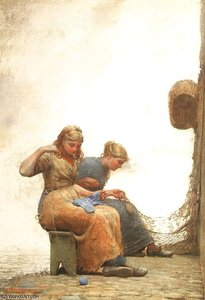
Several paintings stand out as particularly representative of Wishart’s artistic achievements. “Mending Their Nets,” a poignant depiction of Highland fishermen repairing their gear after a day at sea, is perhaps his most famous work. The painting captures not just the physical labor involved but also the quiet dignity and resilience of these men. The muted palette and careful attention to detail convey a sense of timelessness, suggesting that this scene has been repeated countless times over generations.
Other notable works include “A Highland River,” which showcases his signature ability to capture the shimmering effects of sunlight on water, and numerous studies of winter landscapes – scenes of snow-covered hillsides and frozen lochs. Throughout his career, Wishart consistently returned to these themes: the relationship between man and nature, the passage of time, and the enduring beauty of the Scottish Highlands. He wasn’t simply painting landscapes; he was exploring the very essence of his homeland.
While Wishart never achieved widespread fame during his lifetime, his work has since been recognized as a significant contribution to British watercolor painting. His influence can be seen in the works of later artists who sought to capture the spirit of the Highlands – particularly those associated with the Scottish Colourist movement. His emphasis on light and color, combined with his deeply personal connection to his subject matter, set him apart from many of his contemporaries.
Today, Peter Wishart’s paintings are treasured for their beauty, their emotional depth, and their evocative portrayal of a vanishing world. They offer a powerful reminder of the enduring appeal of the Scottish Highlands and the artistic vision of an artist who dedicated his life to capturing its essence on canvas. His work continues to resonate with viewers, inviting them to contemplate the relationship between humanity and nature – a theme that remains as relevant today as it was in the 19th century.
1846 - 1932
Fortæl os om dit projekt, og vores kunsteksperter vil give dig 3 personlige kunstforslag.
Vi kuraterer 3 valgmuligheder kun til dig – Gratis!