


 WatercolorWallArtAbstract Expressionism
 1939Modern
 25.0 x 18.0 cm
Håndmalet olie på lærred i din valgte størrelse og ramme, udført efter bestilling af vores kunstnere. ( Køb print Køb billede)





























Vælg mellem vores forudindstillede størrelser, der matcher kunstværkets originale proportioner.

Du kan indtaste dine egne mål for at passe til en bestemt ramme eller plads. Hvis den valgte størrelse ikke stemmer overens med det originale billedes proportioner, vil vi enten beskære kunstværket eller udvide maleriet med yderligere håndmalede elementer. En digital skitse sendes til din godkendelse, før produktionen påbegyndes.
Bemærk venligst, at forhåndsvisningen på skærmen ikke afspejler den faktiske beskæring eller udvidelse. Kun skitsen vil nøjagtigt vise den endelige komposition.
Selvom specialmål er mulige, anbefaler vi at vælge en dimension fra den foruddefinerede liste for at bevare de originale proportioner.
Levering i hele verden () på 3/4 uger i stedet for de standard 5 uger. (7 september). Ingen kompromiser med kvaliteten.


Thru the Window
Størrelse på reproduktion
Before Mark Rothko became the titan of Abstract Expressionism, known for his vast, pulsating fields of color, he was a master of much more contained, narrative-driven explorations. In his 1939 watercolor masterpiece, Thru the Window, we encounter an artist standing at a profound crossroads between the figurative traditions of the past and the emotional abstraction of the future. This work is far more than a mere depiction of a scene; it is a carefully constructed meditation on the boundaries between the self and the external world. At first glance, the viewer is drawn into a space that feels both intimate and claustrophical, a window-like frame that captures a moment of quiet, psychological tension. The composition, with its vertical orientation and structured geometry, invites us to peer into a private sanctuary where the act of looking becomes an act of deep self-reflection.
The subject matter presents a hauntingly beautiful tableau: a man, clad in a coat and hat, gazes intently at his own reflection within a mirror. This internal dialogue is subtly interrupted by the presence of a female figure standing just outside the window's edge, an observer whose gaze creates a poignant juxtaposition between the interiority of the soul and the intrusion of the outside world. To the side, a splash of red from a stool provides a singular, grounding note of warmth amidst a palette of muted blues and earthy browns. This arrangement does not merely tell a story; it evokes a state of being—a sense of being watched, yet remaining lost in one's own contemplation.
What makes Thru the Window so captivating for the discerning collector is Rothko’s extraordinary command over his medium. Utilizing a delicate watercolor technique—likely enhanced with an egg tempera binder on parchment—Rothko achieves a luminous, ethereal quality that feels almost otherworldly. Through the skillful application of translucent washes, he creates a surface that seems to glow from within, a precursor to the light-filled canvases of his later career. The artist employs meticulous hatching and crosshatching to build texture, giving the flat planes of color a tactile, weathered quality reminiscent of an ancient illuminated manuscript.
This stylistic choice connects the work to a much older lineage of art history. By adopting the flattened perspective and precise line work characteristic of medieval illustrations, Rothko bypasses modern illusionistic depth in favor of a more symbolic, spiritualized space. The geometric rigidity of the window frame and the mirror serves to compress the scene, forcing the viewer’s focus onto the emotional weight of the figures rather than the physical reality of their environment. For an interior designer, this piece offers a sophisticated layer of intellectual depth; it is a work that commands attention through its subtle complexity and its ability to anchor a room with a sense of historical gravity and quiet mystery.
To possess a reproduction of Thru the Window is to invite a dialogue on the nature of perception into one's home. The symbolism embedded within the frame is rich and multi-layered: the mirror acts as a symbol of self-awareness and the often-distorted way we perceive our own identities, while the figure outside represents the inescapable presence of the "other"—the social, the external, and perhaps even the tempting or the threatening. There is an unsettling beauty in this tension, a quiet drama that unfolds within the confines of the window's edge.
For those seeking to curate a space filled with art that inspires profound thought, this piece serves as an ideal centerpiece. It bridges the gap between the decorative and the deeply intellectual. Its muted, sophisticated palette allows it to integrate seamlessly into contemporary minimalist decors or more classical, traditional settings, providing a focal point that is both visually soothing and intellectually stimulating. In every stroke of Rothko’s early hand, we find the seeds of a lifelong quest to express the inexpressible, making this artwork a timeless treasure for any serious collection.

1903 - 1970 , Latvian
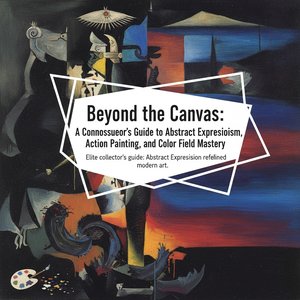
Unveil the visceral power of Abstract Expressionism. Our expert exploration delves into the transformative legacies of Pollock, Rothko, and De Kooning, offering discerning collectors a profound understanding of the New York School’s enduring mastery and historical impact.

 Se i fuld skala
 Del
Del Del
Del
 Detaljer

 Download
 Lignende værker
 Røntgenundersøgelse
 Diasshow
 Se mere







 Glasmulighed er kun tilgængelig i størrelser under 110 cm


