GRATIS KUNSTRÅDGIVNING

x
Bestil tryk Bestil trykBestil maleri Bestil maleri DelDel
DetaljerDetaljer Tilføj til favoritter Tilføj til favoritter DownloadDownload Lignende værkerLignende værker RøntgenRøntgen DiasshowDiasshow

Sextet

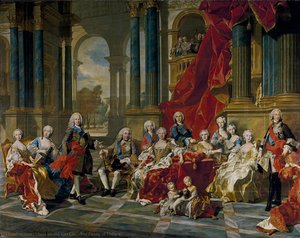
Experience the elegance of Louis Michel van Loo's 'Sextet' (1768). A Rococo masterpiece depicting musicians in a lavish setting, now housed at The Hermitage Museum. Hand-painted reproductions available.

Louis-Michel van Loo (1707-1771): French Rococo master & court painter to Spain and France. Celebrated for elegant portraits of royalty like Louis XV & Philip V.

Køb et højopløst, forbedret digitalt billede, der er langt bedre end online-forhåndsvisningen.

Hver fil er omhyggeligt forberedt af vores interne specialister ved hjælp af avancerede værktøjer og ekspertmæssig manuel retuschering. Vi sikrer, at hvert billede har enestående klarhed, præcis farvegengivelse og fine detaljer.

Den endelige fil leveres via e-mail inden for 72 timer og er optimeret til øjeblikkelig brug i professionelle, redaktionelle og trykte miljøer. Det er den samme kvalitet, som førende designstudier, forlag og gallerier har tillid til.

Digitalt billede

Download en højopløselig fil til personlig fremvisning, print og kreative projekter.

Samlet pris

$9.99

Inkluderet i alle ordrer på digitale billeder

Ekspert digital levering, garanteret

Når du vælger WahooArt.com, får du ikke blot et billede – du modtager et professionelt optimeret digitalt kunstværk, skabt med præcision og sikret med en tilfredshedsgaranti. Her er alt, hvad din ordre automatisk indeholder:

shipping_icon
Hurtig levering via e-mail

Din højkvalitets digitale billedfil vil blive sendt til din e-mail inden for 72 timer efter bestilling – klar til øjeblikkelig brug.

canvas_icon
AI-optimeret digital fil

Dit kunstværk optimeres professionelt ved hjælp af avancerede AI-værktøjer og manuel redigering, hvilket sikrer maksimal detaljegrad, klarhed og farvenøjagtighed.

insurance_icon
Gratis livslang genlevering

Har du ved en fejl slettet eller mistet din fil? Ingen bekymring – vi sender den igen til enhver tid, helt gratis.

tax_icon
Ingen importgebyrer – nogensinde

Nyd dit kunstværk med det samme uden told, afgifter eller leveringsgebyrer – digitale downloads er altid skattefrie.

color_icon
Garanteret farvenøjagtighed

Vi sikrer, at dit digitale billede gengiver de originale farver så præcist som muligt ved hjælp af professionelle værktøjer og farvestyring.

return_icon
60 dages tilfredshedsgaranti

Hvis du ikke er tilfreds med dit digitale billede, vil vi revidere det eller refundere 100% inden for 60 dage – uden spørgsmål.

guarantee_icon
100% Pengene tilbage-garanti

Ik tilfreds? Få fuld refusion inden for 60 dage efter modtagelse af din digitale fil – uden spørgsmål.

discount_icon
Mængderabat

Køb 3 billeder, spar 10% - Køb 5, spar 15% - Køb 10+, spar 20%. Ideelt til kreative projekter, gallerier og bureauer.

Beskrivelse af samlerobjektet

The painting Sextet by Louis Michel Van Loo is a remarkable work of art that showcases the artist's skill in capturing the essence of music and elegance. Created in 1768, this oil on canvas masterpiece measures 146 x 194 cm and is currently housed at the The Hermitage Museum in St. Petersburg, Russia.

Composition and Style

The composition of the painting is characterized by a sense of harmony and balance, with six individuals engaged in playing music. The use of color and light creates a sense of depth and atmosphere, highlighting the elegance of the performers and their surroundings. The style of the painting is typical of the Rococo period, with attention to detail evident in the clothing, musical instruments, and the room itself.

Historical Context

The Sextet painting is a reflection of the cultural and social values of the 18th century. Music was an essential part of the aristocratic lifestyle, and the painting depicts a moment of musical performance in a grand room with architectural features indicative of the Baroque or Rococo style. The painting is also significant because it showcases the artist's ability to capture the essence of everyday life, making it a valuable piece of art historical context.
  • The painting is executed in a realistic style, with attention to detail evident in the clothing and musical instruments.
  • The use of color and light creates a sense of depth and atmosphere, highlighting the elegance of the performers and their surroundings.
  • The painting is a reflection of the cultural and social values of the 18th century, showcasing the importance of music in aristocratic lifestyle.
For more information about Louis Michel Van Loo and his works, visit https://WahooArt.com/ADC/Art.nsf/O/8XZPYN/$File/Louis-Michel-Van-Loo-Sextet-2-.JPG and /art/list/?Filter=8XZPYN-Louis-Michel-Van-Loo-Sextet. You can also learn more about the The Hermitage Museum at /art/list/?Filter=A@D3CCW7-The-Hermitage-Museum-St-Petersburg-Russia.
The Sextet painting is a valuable piece of art that showcases the artist's skill in capturing the essence of music and elegance. With its rich historical context and beautiful composition, it is a must-see for anyone interested in art and history.

Lignende kunstværker


Kunstnerens biografi

A Legacy of Royal Portraits: The Life and Art of Louis-Michel van Loo

Born in Toulon, France, on March 2nd, 1707, Louis-Michel van Loo emerged from a distinguished lineage of artists. His father, Jean-Baptiste van Loo, served as his initial mentor, laying the foundation for a career that would see him become one of the most sought-after portraitists of the 18th century. This early training was supplemented by studies in Turin and Rome, cities brimming with artistic innovation and historical grandeur, where he absorbed the prevailing aesthetic currents. Even at this nascent stage, van Loo demonstrated exceptional talent, earning a prize from the prestigious Académie Royale de Peinture et de Sculpture in Paris in 1725 – a testament to his burgeoning skill and promise. This recognition propelled him onto a path that would lead to royal courts and enduring artistic acclaim.

From Rome to Madrid: Establishing a Royal Reputation

Van Loo’s artistic journey took a significant turn with travels alongside his uncle, Charles-André van Loo, to Rome in 1727. This period of immersion in the Roman art scene further refined his vision and technique. However, it was his appointment as court painter to King Philip V of Spain in Madrid in 1736 that truly cemented his position within the European artistic hierarchy. This wasn’t merely a professional opportunity; it was an entry into a world of power, prestige, and patronage. He quickly became instrumental in shaping the visual representation of the Spanish monarchy, crafting portraits designed to project authority and embody the splendor of the court. His skill didn't go unnoticed within the Spanish art community either, as he became a founding member of the Royal Academy of Fine Arts of San Fernando in Madrid in 1752, solidifying his influence and legacy within Spain’s artistic landscape. He skillfully navigated the demands of royal portraiture, balancing adherence to convention with an emerging personal style that emphasized both likeness and social standing.

Return to Paris and the Zenith of Rococo Portraiture

In 1753, van Loo returned to Paris, a city now eager to embrace his talents. He found himself in high demand among the French aristocracy, receiving commissions for portraits of King Louis XV and numerous other prominent figures. This period marked the full flowering of his artistic maturity. His style evolved into a refined expression of the Rococo aesthetic – characterized by elegance, grace, and meticulous attention to detail. Van Loo possessed an exceptional ability to capture not only the physical likeness of his sitters but also their social status and personality. He masterfully rendered textures—the shimmering silk of gowns, the sparkle of jewels, the delicate flush of skin—creating portraits that were both realistic and idealized. In 1765, he further ascended within the French art world by succeeding his uncle Charles-André as director of the École Royale des Élèves Protégés, a prestigious school dedicated to nurturing promising young artists. This appointment underscored his commitment to artistic education and his position as a leading figure in the French Academy.

Later Years and Enduring Influence

Van Loo continued to receive significant commissions throughout the latter part of his life. In 1766, he painted a striking portrait of Sebastião de Melo, Marquis of Pombal, the influential Portuguese statesman – a work that showcased his ability to capture both power and intellect. His family’s artistic legacy was further enriched by the accomplishments of his brothers, François van Loo and Charles-Amédée-Philippe van Loo, all contributing to a dynasty of talented painters. Louis-Michel van Loo passed away in Paris on March 20th, 1771, leaving behind a body of work that epitomized the height of Rococo portraiture. His paintings remain celebrated for their technical brilliance, artistic sensitivity, and ability to capture the opulence and sophistication of 18th-century European courts. His influence can be seen in the works of subsequent generations of portrait artists, who admired his skill in conveying both physical resemblance and social standing.

Artistic Style and Historical Significance

Van Loo’s artistic style is defined by its elegant compositions, refined brushwork, and flattering depictions of his subjects. He was a master of capturing the nuances of texture and light, creating portraits that possessed both realism and an air of aristocratic refinement. Influenced by artists like Hyacinthe Rigaud, he developed a distinctive approach to portraiture that emphasized not only likeness but also the projection of power and social status. His portraits frequently depict his subjects within elaborate settings, surrounded by symbols of their wealth and influence – reinforcing their position within the social hierarchy. Van Loo’s work played a crucial role in shaping the visual image of European royalty during the 18th century. These portraits weren't simply artistic representations; they were powerful tools for projecting authority, prestige, and legitimacy. He remains an important figure in the history of portraiture, celebrated for his technical skill, artistic sensitivity, and enduring ability to capture the essence of his subjects – a legacy that continues to resonate with art enthusiasts today.