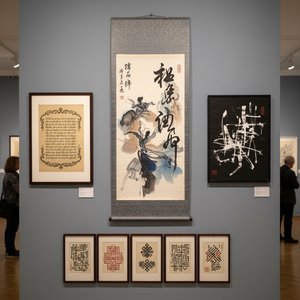
Kubo Shunman (窪俊満) – A Master of Elegant Ukiyo-e and Poetic Expression
Kubo Shunman (窪俊満; c. 1757 – 26 October 1820) stands as a singular figure in late Edo period Japanese art, recognized not merely for prolific output but for an unparalleled fusion of artistic skill and literary sensibility. He was born around 1757 with the surname Kubo (窪) or Kubota (窪田), though his given name remains Yasubei (易兵衛 or 安兵衛). Orphaned at a young age, Shunman’s formative years were marked by an apprenticeship under Katori Nahiko, a poet, kokugaku scholar, and painter who instilled in him the foundational principles of Nanga painting – a style characterized by its serene landscapes and meticulous observation of nature.
- Early Influences: Nahiko’s teachings profoundly shaped Shunman's artistic vision, emphasizing harmony between man and environment. This influence is evident in his earliest works, notably a votive plaque meticulously copied from Nahiko’s paintings.
- Formal Training: Recognizing the importance of mastering diverse artistic techniques, Shunman continued his studies under Kitao Shigemasa, a prominent ukiyo-e artist who championed the Kiyonaga style – renowned for its elongated figures and graceful poses.
Shunman’s career blossomed during the Tenmei (1781–1789) and Kansei (1789–1801) eras, a period marked by a stylistic trend known as *beni-girai* (“red-hating”), which deliberately avoided vibrant reds. Shunman embraced this aesthetic, producing stunning prints that showcased bold colors—primarily blues and greens—while adhering to the refined sensibilities of Kiyonaga’s bijin-ga portraits.
- Signature Style: Shunman's distinctive approach distinguished him from his contemporaries. He favored subtle hues and understated compositions, reflecting a deep appreciation for beauty and conveying an emotional resonance that transcended mere visual representation.
- Membership in Poetry Circles: Shunman actively participated in influential poetry circles like Bakuro-ren and Rokujuen, demonstrating his commitment to intellectual pursuits alongside artistic endeavors. He served as head of Bakuro-ren, fostering a vibrant community of writers and artists.
Perhaps Shunman’s most enduring legacy resides in his contribution to the collaborative art form of *surimono*. Unlike commercially produced prints, *surimono* were commissioned for special occasions—often commemorating births or anniversaries—and demanded exceptional craftsmanship. Shunman excelled in this demanding format, producing deluxe prints adorned with embossing (karazuri), metallic powders, and lavish pigments on premium paper. He collaborated closely with masters like Hokusai, Utamaro, and Eishi, incorporating his poetic verses into their designs – a testament to his belief that art and literature should coexist harmoniously.
- Notable Prints: Shunman’s prints from the Tenmei and Kansei eras are particularly celebrated for their elegance and artistic innovation. They exemplify his mastery of color palettes and compositional techniques, capturing fleeting moments of beauty with remarkable sensitivity.
- Legacy: Shunman's paintings—over 70 surviving examples—represent a cornerstone of Kitao School painting, showcasing his meticulous attention to detail and profound understanding of traditional aesthetics. He remains an inspiration for artists today who strive to achieve artistic excellence while honoring the spirit of Japanese cultural heritage.
His work continues to captivate collectors and scholars alike, securing Shunman’s place as one of Japan's most accomplished artists—a true embodiment of *mono no aware* – the poignant awareness of impermanence and beauty—and a pivotal figure in shaping the visual culture of the Edo period.



 Se i fuld skala
 Køb print
 Del
Del Del
Del
 Detaljer

 Download
 Lignende værker
 Røntgenundersøgelse
 Diasshow


 Se mere






































 Glasmulighed er kun tilgængelig i størrelser under 110 cm