GRATIS KUNSTRÅDGIVNING

x
Bestil tryk Bestil trykKøb højopløseligt billede Køb højopløseligt billede DelDel
DetailsDetails Tilføj til favoritter Tilføj til favoritter DownloadDownload Lignende værkerLignende værker X-RayX-Ray DiasshowDiasshow

Acrobat

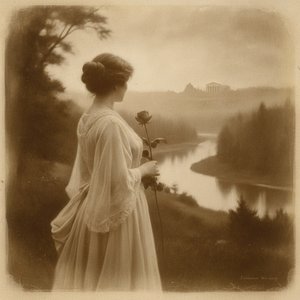
Vintage black & white photo by Karimeh Abboud (1893-1940) captures a dynamic acrobatic pose in Palestine. Early 20th-century portraiture, showcasing female artistry & nostalgic charm.

Discover Karimeh Abboud, a pioneering Palestinian photographer (1893-1940). Her evocative images capture daily life in Palestine & beyond, showcasing early female artistry.

Håndlavet oliereproduktion

Håndmalet olie på lærred i din valgte størrelse og ramme, udført efter bestilling af vores kunstnere.

Standard
custom
CM
INCH

Vælg mellem vores forudindstillede størrelser, der matcher kunstværkets originale proportioner.

bredde
højde

Du kan indtaste dine egne mål for at passe til en bestemt ramme eller plads. Hvis den valgte størrelse ikke stemmer overens med det originale billedes proportioner, vil vi enten beskære kunstværket eller udvide maleriet med yderligere håndmalede elementer. En digital skitse sendes til din godkendelse, før produktionen påbegyndes.
Bemærk venligst, at forhåndsvisningen på skærmen ikke afspejler den faktiske beskæring eller udvidelse. Kun skitsen vil nøjagtigt vise den endelige komposition.
Selvom specialmål er mulige, anbefaler vi at vælge en dimension fra den foruddefinerede liste for at bevare de originale proportioner.

Eksempler på hvad der kan ændres: Udskift ansigt med kundens eget foto; Tilføj kæledyr (f.eks. udskift kat med hund); Inkluder en skjult besked i baggrunden; Ændr baggrundslandskab eller elementer.
Efter bestilling vil WahooArt.com team sende en e-mail til kunden for at få instruktioner og levere et udkast til en skitse.

Levering i hele verden () på 3/4 uger i stedet for de standard 5 uger. (2 juli). Ingen kompromiser med kvaliteten.

why_choose_icon
Gratis ekspresforsendelse til hele verden
why_choose_icon
Lærred af linned i høj kvalitet
why_choose_icon
Fuld transportforsikring
why_choose_icon
Garanti for refusion af told og importafgifter
why_choose_icon
Garanti for præcis farvegengivelse
why_choose_icon
60 dages returret (kun ved fabrikationsfejl)
why_choose_icon
100% Tilfredshedsgaranti
why_choose_icon
Mængderabat tilgængelig

Samlet pris

-

reproduction

Acrobat

Reproduktionsmetode

Størrelse på reproduktion

-

Samlet pris

-


Kunstnerens biografi

Karimeh Abboud: A Pioneer of Palestinian Photography

Karimeh Abboud (1893-1940), a name perhaps less familiar than some of her contemporaries, stands as a pivotal figure in the early history of photography within Palestine. Born in Bethlehem amidst a landscape steeped in religious and cultural significance, she emerged not merely as a photographer but as a chronicler of daily life, a preserver of memory, and one of the first women to establish herself as a professional artist wielding the camera with remarkable skill and vision. Her work offers an intimate glimpse into Palestine during a period of immense social and political transformation – a time before the displacement that would forever alter the region’s identity. Abboud's legacy lies not just in her technical proficiency, but in her courageous independence and her dedication to capturing the essence of Palestinian society through a distinctly feminine lens.

Early Life and Artistic Beginnings

Karimeh Abboud’s story begins within a family deeply rooted in Bethlehem’s cultural fabric. Her father, Said Abbud, was a respected teacher and later pastor of the Lutheran Church, providing her with an education that valued both faith and intellectual curiosity. Her mother, Barbara Bader, also contributed to this environment of learning and artistic appreciation. It was in 1913, at the tender age of seventeen, that she received a camera as a birthday gift – an event that irrevocably altered the course of her life. Initially experimenting with portraits of family and friends, capturing the familiar landscapes of Bethlehem, Abboud quickly demonstrated a keen eye for composition and light. Her early photographs, marked by a remarkable sensitivity to detail and a nascent understanding of storytelling through image, were dated as far back as October 1919, establishing her as one of the earliest practitioners of photography in Palestine. This initial foray into the medium was further nurtured during her studies at the American University of Beirut, where she broadened her artistic horizons while simultaneously exploring the rich literary traditions of Arabic literature.

A Studio and a Vision: Nazareth and Beyond

Leaving Lebanon, Abboud established a home studio in Nazareth, a bustling city that served as a significant commercial and cultural center during this period. This move marked a transition from purely personal artistic expression to a professional career focused on serving the community. She catered to a diverse clientele – capturing weddings, family portraits, and documenting important social events. Notably, her work was stamped with both Arabic and English lettering: “Karimeh Abbud - Lady Photographer - كريمة عبود: مصورة شمس” (Karimeh Abboud – The Sun’s Photographer). This branding not only advertised her services but also subtly asserted her position as a skilled and respected artist within the local market. Beyond Nazareth, she ventured to other key Palestinian locations like Haifa, Jerusalem, and Tiberias, documenting public spaces and capturing the spirit of these diverse urban centers. Her travels were often undertaken with a keen eye for detail, resulting in evocative images that offer valuable insights into the daily lives of Palestinians during this era.

Hand-Painted Reproductions: Preserving the Image

A particularly innovative aspect of Abboud’s practice was her development of hand-painted reproductions of her studio photographs. Recognizing the fragility and potential for deterioration of early photographic prints, she began offering meticulously crafted copies in the mid-1930s. This technique not only ensured the longevity of her work but also elevated it to a level of artistic value, transforming them into treasured souvenirs and keepsakes. These reproductions were often presented as postcards, allowing her images to circulate widely throughout Palestine and beyond. This practice speaks volumes about Abboud’s foresight – anticipating the challenges of preserving visual history in an era before digital technology.

Legacy and Historical Significance

Karimeh Abboud's contribution to Palestinian art and cultural heritage is profound. She was one of the first women to gain recognition as a professional photographer in the Arab world, challenging traditional gender roles and demonstrating remarkable entrepreneurial spirit. Her photographs offer an invaluable visual record of Palestine during a period of significant social and political upheaval – a time marked by growing nationalist sentiment, British Mandate rule, and increasing tensions between Jewish and Palestinian communities. Her images capture not only the beauty of the landscape but also the everyday lives, customs, and traditions of the people who inhabited it. Today, her work is being rediscovered and celebrated, offering a vital window into a complex and often overlooked chapter of Middle Eastern history. The recent exhibition at the Eretz Israel Museum in Be’er Sheva, showcasing over 100 of her original photographs, underscores her enduring legacy as a pioneering artist and a true chronicler of Palestine. Her story serves as a reminder that even within the shadows of conflict, artistic expression can provide a powerful means of documenting, preserving, and celebrating cultural identity.
karimeh abboud

karimeh abboud

1893 - 1940 , Palestine

Kort om kunstneren

  • Artistic Movement Or Style: Early Arab photography
  • Artists Or Movements Influenced By This Artist: ['None documented']
  • Artists Who Influenced This Artist: ['Father (pastor)']
  • Date Of Birth: 1893-11-18
  • Date Of Death: 1940-04-27
  • Full Name: Karimeh Abboud
  • Nationality: Palestinian
  • Notable Artworks:
    • Baalbek photographs
    • Haifa street scenes
    • Nazareth portraits
  • Place Of Birth: Bethlehem, Palestine