Køb et højopløst, forbedret digitalt billede, der er langt bedre end online-forhåndsvisningen.
Hver fil er omhyggeligt forberedt af vores interne specialister ved hjælp af avancerede værktøjer og ekspertmæssig manuel retuschering. Vi sikrer, at hvert billede har enestående klarhed, præcis farvegengivelse og fine detaljer.
Den endelige fil leveres via e-mail inden for 72 timer og er optimeret til øjeblikkelig brug i professionelle, redaktionelle og trykte miljøer. Det er den samme kvalitet, som førende designstudier, forlag og gallerier har tillid til.
Download en højopløselig fil til personlig fremvisning, print og kreative projekter. ( Køb print Køb håndlavet maleri)
Når du vælger WahooArt.com, får du ikke blot et billede – du modtager et professionelt optimeret digitalt kunstværk, skabt med præcision og sikret med en tilfredshedsgaranti. Her er alt, hvad din ordre automatisk indeholder:

Din højkvalitets digitale billedfil vil blive sendt til din e-mail inden for 72 timer efter bestilling – klar til øjeblikkelig brug.

Dit kunstværk optimeres professionelt ved hjælp af avancerede AI-værktøjer og manuel redigering, hvilket sikrer maksimal detaljegrad, klarhed og farvenøjagtighed.

Har du ved en fejl slettet eller mistet din fil? Ingen bekymring – vi sender den igen til enhver tid, helt gratis.

Nyd dit kunstværk med det samme uden told, afgifter eller leveringsgebyrer – digitale downloads er altid skattefrie.

Vi sikrer, at dit digitale billede gengiver de originale farver så præcist som muligt ved hjælp af professionelle værktøjer og farvestyring.

Hvis du ikke er tilfreds med dit digitale billede, vil vi revidere det eller refundere 100% inden for 100 dage – uden spørgsmål.

Ik tilfreds? Få fuld refusion inden for 100 dage efter modtagelse af din digitale fil – uden spørgsmål.

Køb 3 billeder, spar 10% - Køb 5, spar 15% - Køb 10+, spar 20%. Ideelt til kreative projekter, gallerier og bureauer.
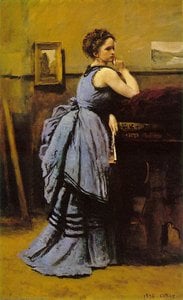
John George Brown's "The Harpist," painted in 1870, is more than just a portrait; it’s a carefully constructed tableau of Victorian sensibilities and burgeoning American artistic aspirations. This evocative work, depicting a woman lost in the delicate strains of two harps, immediately draws the viewer into a world of quiet contemplation and musical beauty. Brown, an English immigrant who established himself as a successful artist in America during this period, masterfully captures a mood – one of wistful reflection and perhaps even a touch of sadness – that resonates deeply with the era’s fascination with romanticism and the burgeoning interest in classical music.
Brown’s technique is characterized by meticulous detail and a refined understanding of light and shadow, hallmarks of his training in England and honed through years of observation within the American art market. He employs smooth brushwork and subtle gradations of tone to create a remarkably realistic depiction of the woman's features and clothing. The use of pink hues – both in the subject’s attire and the background – contributes significantly to the painting’s overall mood, evoking feelings of tenderness and serenity. The artist demonstrates a clear command of color theory, utilizing complementary colors (pink and green/brown) to create visual harmony and depth.
"The Harpist" reflects several key trends of the 1870s. The harp itself was a potent symbol of both ancient Greece and burgeoning Romantic musical movements, representing beauty, harmony, and emotional expression. The inclusion of the violin further emphasizes this connection to music. Furthermore, Brown’s work aligns with the Victorian fascination with childhood innocence and the portrayal of women as muses or artistic inspiration – a common theme in 19th-century art. The date of 1870 places the painting squarely within a period of significant social and economic change in America, marked by industrialization and urbanization, yet Brown’s work offers a poignant counterpoint to this rapid transformation, focusing on a moment of quiet beauty and introspection.
Ultimately, “The Harpist” transcends its technical merits to evoke a powerful emotional response. The painting's subdued palette, coupled with the subject’s contemplative pose, creates an atmosphere of profound stillness and melancholy. It is a work that invites viewers to pause, reflect, and perhaps even contemplate their own relationship with music and beauty. John George Brown’s legacy lies not only in his technical skill but also in his ability to capture fleeting moments of human emotion with sensitivity and grace – a quality that continues to resonate with audiences today. This hand-painted reproduction offers an exceptional opportunity to experience the full impact of this remarkable artwork.


1831 - 1913 , Storbritannien

 Se i fuld skala
 Del
Del Del
Del
 Detaljer

 Download
 Lignende værker
 Røntgenundersøgelse
 Diasshow


 Se mere