x
Håndmalet olie på lærred i din valgte størrelse og ramme, udført efter bestilling af vores kunstnere.
Vælg mellem vores forudindstillede størrelser, der matcher kunstværkets originale proportioner.
Du kan indtaste dine egne mål for at passe til en bestemt ramme eller plads. Hvis den valgte størrelse ikke stemmer overens med det originale billedes proportioner, vil vi enten beskære kunstværket eller udvide maleriet med yderligere håndmalede elementer. En digital skitse sendes til din godkendelse, før produktionen påbegyndes.
Bemærk venligst, at forhåndsvisningen på skærmen ikke afspejler den faktiske beskæring eller udvidelse. Kun skitsen vil nøjagtigt vise den endelige komposition.
Selvom specialmål er mulige, anbefaler vi at vælge en dimension fra den foruddefinerede liste for at bevare de originale proportioner.
Levering i hele verden () på 3/4 uger i stedet for de standard 5 uger. (4 juli). Ingen kompromiser med kvaliteten.
Le Diable au Moulin
Størrelse på reproduktion
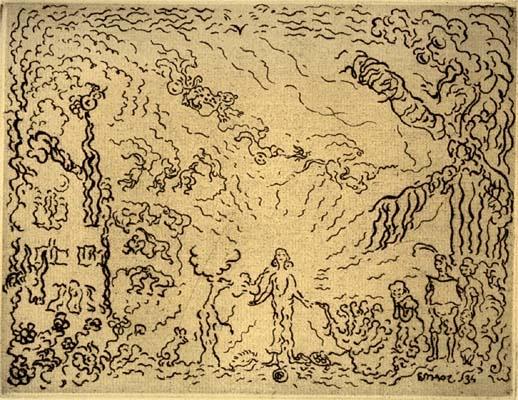
James Ensor's Le Diable au Moulin (The Devil at the Mill) is not merely a depiction of a scene; it’s an immersion. Painted in 1888, this unsettling work, now available as a meticulously crafted hand-painted reproduction from WahooArt.com, plunges the viewer into a world steeped in psychological unease and theatrical grotesqueness – a hallmark of Ensor's unique artistic vision. The painting captures a chaotic gathering at a mill, but it’s far removed from a simple rural tableau. Instead, it feels like a fever dream, a carnival of anxieties rendered with startling clarity and unsettling detail.
Ensor, born in Ostend, Belgium, in 1860, cultivated an intensely personal style deeply rooted in his childhood experiences. His parents operated a souvenir shop brimming with the paraphernalia of travel and celebration – masks, shells, and exotic objects that fueled his imagination and provided him with a rich visual lexicon. This fascination with disguise and spectacle would become central to his oeuvre, particularly evident in works like Le Diable au Moulin. The painting’s setting, a mill, is deliberately ambiguous; it's not a picturesque rural scene but rather a stage for the unfolding drama of human folly and perhaps even demonic influence.
Ensor’s masterful use of color and composition immediately establishes an atmosphere of disorientation. The palette is dominated by jarring contrasts – sickly greens, bruised purples, and unsettling yellows – creating a sense of visual discomfort. Figures are rendered with exaggerated features and distorted proportions, reflecting the psychological turmoil at play. Notice, for example, the central figure, partially obscured yet radiating an aura of menace; his posture suggests both defiance and vulnerability. The two birds in the sky, seemingly oblivious to the chaos below, add another layer of surrealism, hinting at a detachment from earthly concerns.
The masks themselves are crucial to understanding the painting’s symbolism. They represent not just concealment but also the performance of identity – the way we present ourselves to the world and the hidden anxieties that lie beneath the surface. Ensor's use of these theatrical devices is reminiscent of his earlier works, such as *The Scandalized Masks* (1883), where he explored the unsettling power of disguise and its potential for revealing uncomfortable truths. The presence of a devil figure, subtly integrated into the scene rather than overtly displayed, reinforces this theme of hidden darkness.
Le Diable au Moulin is widely considered to be a pivotal work in the development of Expressionism, predating many of the movement’s more well-known figures. Ensor's focus on subjective experience, emotional intensity, and distorted representation anticipates the core tenets of this artistic approach. The painting rejects academic realism in favor of conveying inner states—fear, anxiety, and a sense of impending doom—through bold color, exaggerated forms, and unsettling imagery.
Furthermore, Ensor’s work reflects the broader cultural anxieties of the late 19th century – a period marked by rapid industrialization, social upheaval, and a growing sense of alienation. The mill itself can be interpreted as a symbol of progress and modernity, but one that has become corrupted and menacing. It's a visual representation of the darker side of societal transformation.
WahooArt’s hand-painted reproductions capture the essence of Ensor’s genius with remarkable fidelity. Each brushstroke, each carefully chosen hue, faithfully recreates the painting’s unsettling atmosphere and complex symbolism. This isn't simply a print; it’s an experience—a chance to engage with one of the most challenging and rewarding works in modern art history. Whether you are an established collector, an enthusiastic admirer of Ensor’s work, or seeking a unique piece of art decoration for your home, Le Diable au Moulin offers a profound and unforgettable visual journey.
Explore the full detail and artistry of this captivating masterpiece at WahooArt.com today.
1860 - 1949 , Belgien
Fortæl os om dit projekt, og vores kunsteksperter vil give dig 3 personlige kunstforslag.
Vi kuraterer 3 valgmuligheder kun til dig – Gratis!