x
Giclée- eller lærredstryk i museumskvalitet med hurtig produktion og fleksible muligheder for finish.
Vælg mellem vores forudindstillede størrelser, der matcher kunstværkets originale proportioner.
Du kan indtaste dine egne mål for at passe til en specifik ramme eller et bestemt område. Hvis den valgte størrelse ikke stemmer overens med det originale billedes proportioner, vil vi enten beskære kunstværket eller udvide billedet med en spejlet eller ensfarvet kant. En digital mockup vil blive sendt til din godkendelse, før produktionen påbegyndes.
Bemærk venligst, at forhåndsvisningen på skærmen ikke afspejler den faktiske beskæring eller udvidelse. Kun mockuppen vil nøjagtigt vise den endelige komposition.
Selvom specialmål er tilgængelige, anbefaler vi at vælge et mål fra den foruddefinerede liste for at bevare de originale proportioner.
Verdensomspændende levering () på 2 uger i stedet for de sædvanlige 4/5 uger. (2 juli)
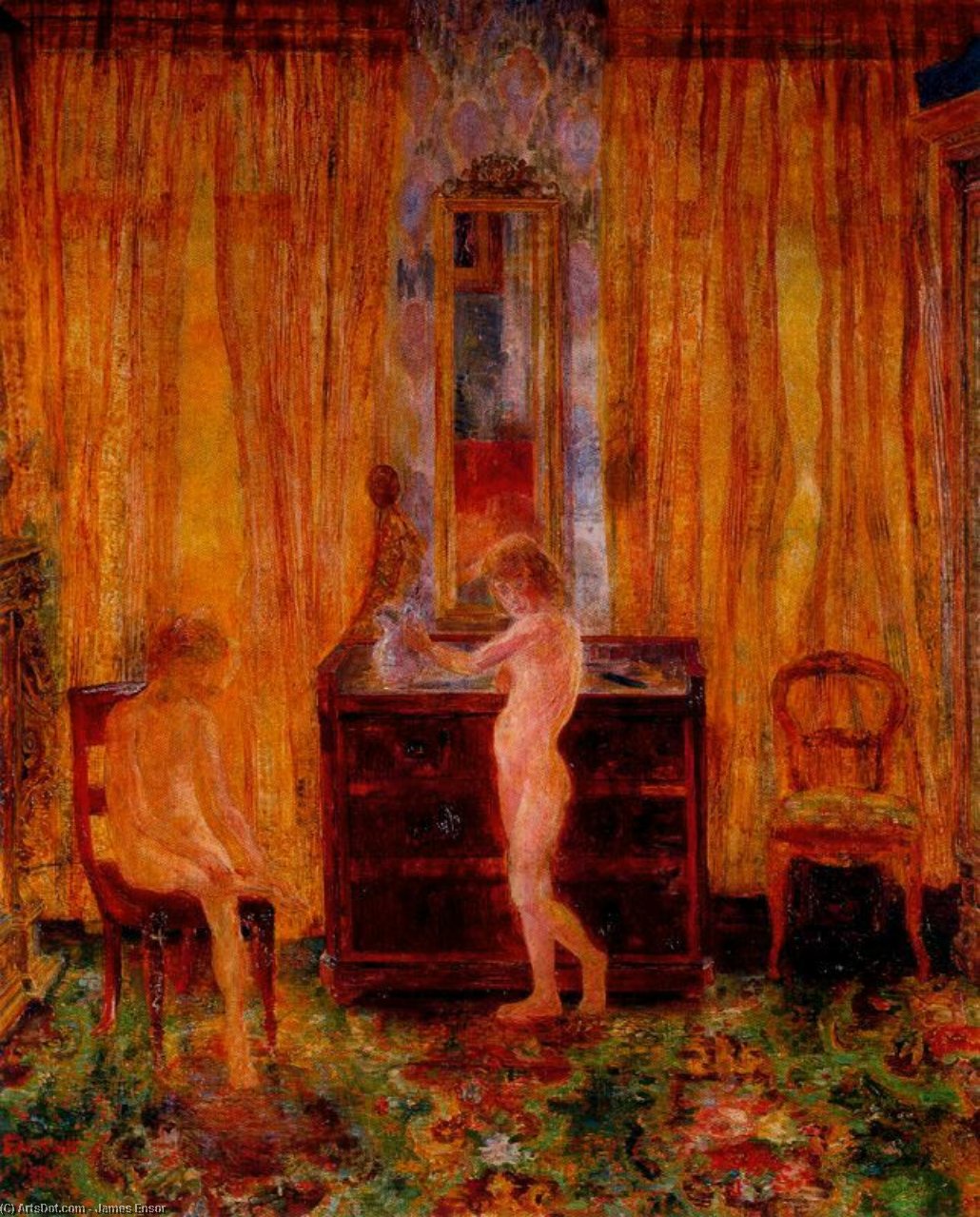
Children Washing
Størrelse på reproduktion
James Ensor’s “Children Washing,” completed in 1886, stands as a cornerstone of Belgian Expressionism and a testament to the artist's singular vision. More than just a depiction of two children engaged in morning ablutions—a seemingly simple domestic scene—the painting delves into profound psychological complexities and embodies Ensor’s characteristic preoccupation with unsettling imagery and emotional intensity.
Painted in oil on canvas, “Children Washing” immediately captivates viewers with its bold color palette dominated by yellows and muted greens. These hues aren't merely decorative; they contribute to the painting’s oppressive atmosphere, mirroring the anxieties of the era and reflecting Ensor’s masterful manipulation of tonal values.
Ensor employs a deliberately distorted perspective—a technique prevalent in Expressionist art—to heighten the emotional impact. The figures are rendered with simplified forms, emphasizing their vulnerability and stripping away any semblance of idealized beauty. Notably, the mirror reflects the children’s faces, creating a disconcerting symmetry that underscores the painting's thematic concerns about identity and perception.
Comparing “Children Washing” to works by Walt Kuhn—another influential Expressionist artist known for his use of jarring color combinations and fractured compositions—reveals Ensor’s kinship with fellow innovators who sought to convey inner turmoil through visual representation. Like Kuhn's "Apple Basket," Ensor utilizes distortion not merely as stylistic flourish but as a conduit for expressing psychological unease.
The painting’s interpretation remains open to debate among art historians, sparking discussions about its significance. Some argue that “Children Washing” represents an idealized portrayal of innocence—a fleeting moment of purity amidst the encroaching darkness of adulthood. Others contend that Ensor deliberately confronts viewers with uncomfortable truths about human nature, utilizing nudity as a symbol of vulnerability and exposing the anxieties inherent in confronting mortality.
Ensor’s stylistic choices resonate with broader artistic currents of his time, mirroring the influence of Vincent van Gogh—whose expressive brushstrokes and vibrant colors similarly aimed to capture emotional experience. The Expressionist movement's exploration of subjective feeling aligns perfectly with Ensor’s ambition to communicate profound psychological states through visual language.
To gain a deeper understanding of James Ensor and his artistic legacy, visitors can explore the Mu.ZEE museum in Ostend, Belgium—a repository of Belgian art spanning from 1830 onwards. This institution houses an impressive collection showcasing Ensor's oeuvre alongside other prominent artists of the period.
Furthermore, delving into the history of painting on Wikipedia offers valuable insights into the artistic context surrounding “Children Washing,” illuminating the broader intellectual and cultural landscape that shaped Ensor’s creative endeavors.
Finally, you can acquire a stunning hand-painted reproduction of “Children Washing” through WahooArt—allowing art enthusiasts to experience the beauty and emotional depth of this iconic masterpiece firsthand.
1860 - 1949 , Belgien
Fortæl os om dit projekt, og vores kunsteksperter vil give dig 3 personlige kunstforslag.
Vi kuraterer 3 valgmuligheder kun til dig – Gratis!