
GRATIS KUNSTRÅDGIVNING

x
Bestil maleri Bestil maleriKøb højopløseligt billede Køb højopløseligt billede DelDel
DetaljerDetaljer Tilføj til favoritter Tilføj til favoritter DownloadDownload Lignende værkerLignende værker RøntgenRøntgen DiasshowDiasshow

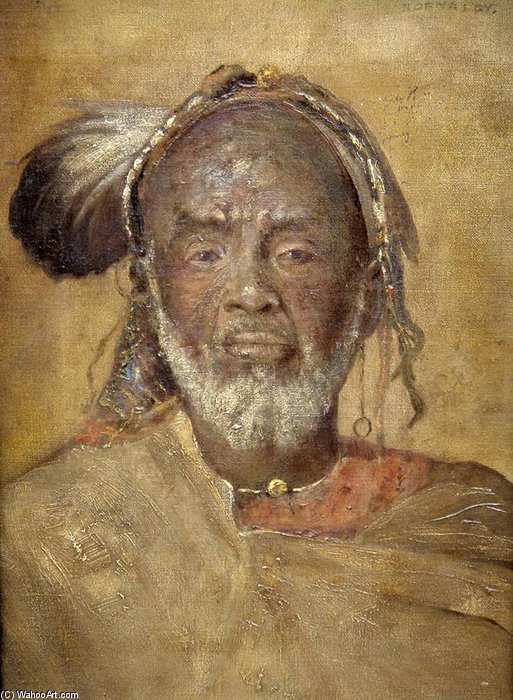
Chief

Gyula Tornai (1861-1928): Hungarian Orientalist painter famed for vibrant scenes of Morocco, Japan & India. Influenced by Makart, his works blend exoticism with wit and are featured in the Hungarian National Gallery.

Giclée / Kunsttryk

Giclée- eller lærredstryk i museumskvalitet med hurtig produktion og fleksible muligheder for finish.

Standard
custom
CM
INCH

Vælg mellem vores forudindstillede størrelser, der matcher kunstværkets originale proportioner.

bredde
højde

Du kan indtaste dine egne mål for at passe til en specifik ramme eller et bestemt område. Hvis den valgte størrelse ikke stemmer overens med det originale billedes proportioner, vil vi enten beskære kunstværket eller udvide billedet med en spejlet eller ensfarvet kant. En digital mockup vil blive sendt til din godkendelse, før produktionen påbegyndes.
Bemærk venligst, at forhåndsvisningen på skærmen ikke afspejler den faktiske beskæring eller udvidelse. Kun mockuppen vil nøjagtigt vise den endelige komposition.
Selvom specialmål er tilgængelige, anbefaler vi at vælge et mål fra den foruddefinerede liste for at bevare de originale proportioner.

Verdensomspændende levering () på 2 uger i stedet for de sædvanlige 4/5 uger. (4 juli)

why_choose_icon
Gratis ekspresforsendelse til hele verden
why_choose_icon
Lærred af linned i høj kvalitet
why_choose_icon
Fuld transportforsikring
why_choose_icon
Garanti for refusion af told og importafgifter
why_choose_icon
Garanti for præcis farvegengivelse
why_choose_icon
60 dages returret (kun ved fabrikationsfejl)
why_choose_icon
100% Tilfredshedsgaranti
why_choose_icon
Mængderabat tilgængelig

Samlet pris

-

reproduction

Chief

Giclée / Kunsttryk

Størrelse på reproduktion

-

Samlet pris

-


Kunstnerens biografi

Gyula Tornai: Life and Legacy

Early Life and Education

  • Born: 1861 in Görgö, Hungary (now Spišský Hrhov, Slovakia).
  • Gyula Tornai received his foundational art education at prestigious academies in Vienna and Munich.
  • He further honed his skills under the guidance of Hans Makart and Gyula Benczúr at Benczúr's Studios in Budapest. This period significantly shaped his early artistic style.
  • His initial works focused on popular, everyday themes, reflecting a traditional approach to genre painting.

Artistic Development and Influences

  • Early Style: Tornai’s early paintings were heavily influenced by Hans Makart's style – known as “Makartstil” in German – characterized by opulent detail and dramatic compositions.
  • Shift to Orientalism: Travel played a crucial role in his artistic evolution. Journeys to Spain, Algeria, and particularly Morocco sparked a profound shift towards Orientalist themes.
  • He spent ten years immersed in North African culture, including a year living in Tangiers (1890-1891), which deeply informed his depictions of street life, merchants, musicians, and harem scenes.

Travels to the Far East and Patronage

  • Expanding Horizons: In 1905, Tornai embarked on a transformative journey to the Far East, extending his Orientalist interests to India and Japan.
  • Count Okuma’s Patronage: Upon arriving in Japan, he painted a portrait of Count Okuma, the former Prime Minister, who became a significant patron. This patronage granted Tornai unprecedented access to Japanese society and culture.
  • This unique position allowed him to explore Buddhism and Shintoism in depth, enriching his artistic understanding and representation of Japanese life.
  • Notable Works from Japan: During his 16-month stay, he created paintings such as “A Japanese Princess Going to Church,” “Geisha,” “The Geisha House,” and “The Samurai Warrior.”

Recognition and Major Achievements

  • Exposition Universelle (1900): Tornai achieved international acclaim at the Exposition Universelle in Paris, winning a bronze medal for his work.
  • Exhibitions: His paintings were exhibited in Paris and London (1907), Budapest’s Műcsarnok (1909), and the National Salon (1917).
  • Posthumous Exhibition (1929): An exhibition of his legacies was organized by an auction hall following his death.
  • Critical Reception: Contemporary critics praised his works for their vibrant colors, appreciation of Eastern aesthetics, irony, humor and wit. His painting “The Connoisseurs” is a prime example of this unique approach.

Historical Significance and Legacy

  • Orientalist Contribution: Gyula Tornai’s work significantly contributed to the Orientalist movement, offering fresh perspectives on Eastern cultures through a European lens.
  • Hungarian National Gallery: Several of his paintings are now held in the Hungarian National Gallery, solidifying his place in Hungarian art history.
  • Unique Perspective: Tornai’s ability to blend exotic themes with humor and insightful observations set him apart from other Orientalist painters. He didn't merely depict the East; he offered a nuanced commentary on it.
  • Death: Gyula Tornai passed away in 1928, leaving behind a rich artistic legacy that continues to captivate audiences today.
Gyula Tornai

Gyula Tornai

1861 - 1928 , Hungary

Kort om kunstneren

  • Birth_Date: 1861
  • Birth_Place: Görgö, Hungary
  • Death_Date: 1928
  • Influenced_By: Hans Makart, Gyula Benczúr
  • Movement: Orientalism
  • Name: Gyula Tornai
  • Nationality: Hungarian
  • Notable_Works:
    • An Arms Merchant in Tangiers
    • The Connoisseurs
    • The Water-Pipe Smoker
    • A Musical Afternoon





































