En oprørers pensel: Livet og eftermælet efter Gustave Courbet
Født i den stille franske landsby Ornans i 1819, trådte Jean Désiré Gustave Courbet frem som en trodsig kraft mod sin tids etablerede kunstneriske normer. Hans historie er ikke blot en fortælling om maling og lærred; det er en beretning vævet sammen af sociale kommentarer, politisk overbevisning og en urokkelig dedikation til at skildre verden præcis, som han så den – uidealiseret, rå og dybt virkelighedsnær. Da han voksede op i en relativt velstående borgerlig familie, modtog Courbet opmuntring fra sin mor til at forfølge sine kunstneriske lyster, en næring der i sidste ende skulle antænde en revolution i kunstverdenen. Hans formelle uddannelse begyndte ved École des Beaux-Arts i Paris i 1839, men han fandt hurtigt sig selv i kamp med de akademiske konventioner og den romantiske idealisme, der herskede dér. Selvom han anerkendte indflydelser fra mestre som Eugène Delacroix og Théodore Géricault, banede Courbet sin egen vej – en vej, der prioriterede observation over fantasi og sandhed over tradition.
Realismens fødsel: En udfordring af kunstneriske konventioner
Courbets kunstneriske udvikling var præget af en bevidst afvisning af de herskende æstetiske standarder. Han var ikke interesseret i mytologiske fortællinger eller heroiske allegorier; hans blik var rettet mod det daglige liv hos almindelige mennesker, især dem, der levede et liv præget af hårdt arbejde og landlig eksistens. Denne forpligtelse til at skildre verden uden forskønnelse – det, der senere blev kendt som Realisme – mødte i begyndelsen foragt og hån fra kritikere, der var vant til mere polerede og idealiserede fremstillinger. Hans tidlige værker udforskede landskaber og portrætter, men skiftede hurtigt mod scener fra arbejderklassens liv, udført i en monumental skala, som traditionelt var forbeholdt historiske eller religiøse malerier. Dette bevidste valg var ikke blot stilistisk; det var et udsagn om den iboende værdighed og betydning af disse ofte oversete motiver.
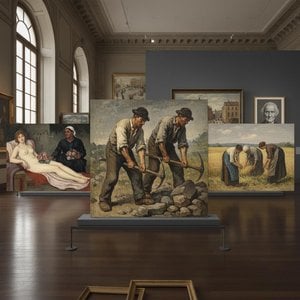
Stenknuserne, færdiggjort i 1849, men tragisk ødelagt under Anden Verdenskrig, eksemplificerede denne tilgang – en rå skildring af to arbejdere i hårdt slid, hvis ansigter er skjult af udmattelse og nød.
Dette maleri, sammen med andre som Begravelse i Ornans (1850), udfordrede selve definitionen af, hvad der udgjorde et "værdigt" motiv for den høje kunst.
Hovedværker og kunstnerisk filosofi
Begravelse i Ornans, et kolossalt lærred, der skildrer en provinsiel begravelse, vakte stor opsigt, da det blev udstillet i 1850-51. Værkets enorme størrelse – som normalt var forbeholdt storslåede historiemalerier – kombineret med dets urokkelige realisme og mangel på følelsesmæssig idealisering, chokerede publikum. Courbet portrætterede ikke de sørgende som noble eller dybt fortvivlede skikkelser; han præsenterede dem som almindelige mennesker, hvis ansigter var præget af en blanding af sorg, kedsomhed og resignation.
Denne ærlighed var revolutionær. Hans kunstneriske filosofi strakte sig ud over motivvalget til også at omfatte teknikken. Han foretrak en direkte impasto-stil – hvor malingen påføres tykt på lærredet – hvilket understregede selve mediets materialitet.
Malernes atelier (1855), et allegorisk værk, der afspejler hans kunstneriske overbevisninger og engagement i samtidens sociale spørgsmål, cementerede yderligere hans ry som en provokerende og uafhængig kunstner. Hans deltagelse i Salon des Refusés i 1863 – en udstilling af værker, der var blevet afvist af den officielle Salon – fastslog hans status som rebel og forkæmper for kunstnerisk frihed. Selv landskaber som
Udsigt fra Fontainebleau-skoven (1855) var gennemsyret af en følelse af realisme, der indfangede skovens naturlige skønhed uden at romantisere den.
Eftermæle og historisk betydning
Gustave Courbets indflydelse på efterfølgende kunstbevægelser er ubestridelig. Selvom han hentede inspiration fra tidligere mestre som Caravaggio for deres dramatiske realisme og brug af lys og skygge, rakte hans betydning langt ud over ren imitation. Han påvirkede impressionisterne og postimpressionisterne dybt ved at befri dem fra de traditionelle repræsentations begrænsninger og opmuntre dem til at udforske nye måder at se og skildre verden på. Hans fokus på social kommentar banede vejen for senere socialt engagerede kunstnere, der brugte deres arbejde som en platform for politisk aktivisme. Courbet var ikke blot en maler; han var en højlydt fortaler for kunstnerisk frihed og politisk forandring, og han deltog aktivt i de turbulente begivenheder i sin tid, herunder Pariserkommunen i 1871 – en involvering, der førte til en periode i eksil i Schweiz. Han døde i 1877 og efterlod sig et værk, der fortsat inspirerer og provokerer publikum den dag i dag.
- Pioner inden for realismen
- Udfordrede akademiske konventioner
- Påvirkede impressionismen og postimpressionismen
- Forkæmper for kunstnerisk frihed
Hans eftermæle er et vidnesbyrd om kunstens kraft til at udfordre, stille spørgsmålstegn og i sidste ende transformere vores forståelse af den verden, vi lever i.



 Se i fuld skala
 Switch to Print
 Del
Del Del
Del
 Detaljer

 Download
 Lignende værker
 Røntgenundersøgelse
 Diasshow
 Stats
Stats


 Se mere






































 Glasmulighed er kun tilgængelig i størrelser under 110 cm