


Giclée- eller lærredstryk i museumskvalitet med hurtig produktion og fleksible muligheder for finish. ( Køb håndlavet maleri Køb billede)





























Vælg mellem vores forudindstillede størrelser, der matcher kunstværkets originale proportioner.

Du kan indtaste dine egne mål for at passe til en specifik ramme eller et bestemt område. Hvis den valgte størrelse ikke stemmer overens med det originale billedes proportioner, vil vi enten beskære kunstværket eller udvide billedet med en spejlet eller ensfarvet kant. En digital mockup vil blive sendt til din godkendelse, før produktionen påbegyndes.
Bemærk venligst, at forhåndsvisningen på skærmen ikke afspejler den faktiske beskæring eller udvidelse. Kun mockuppen vil nøjagtigt vise den endelige komposition.
Selvom specialmål er tilgængelige, anbefaler vi at vælge et mål fra den foruddefinerede liste for at bevare de originale proportioner.
Verdensomspændende levering () på 2 uger i stedet for de sædvanlige 4/5 uger. (6 september)


LE CIRQUE
Størrelse på reproduktion
In the twilight of his brief but brilliant career, Georges Seurat captured something far more profound than a mere evening at the circus. Le Cirque is not simply a depiction of Parisian entertainment; it is a breathtaking meditation on the science of sight and the ephemeral nature of joy. As the eye wanders through this monumental Neo-Impressionist masterpiece, one is immediately drawn into a world where light does not merely fall upon objects but seems to vibrate from within them. The scene centers on a captivating tableau: a woman poised with grace atop a white horse, a focal point of strength and femininity amidst the swirling energy of the circus ring. This central figure acts as an anchor for the viewer, providing a moment of stillness before the eye is swept away by the surrounding spectacle of acrobats, performers, and a captivated crowd.
The atmosphere of the painting is thick with the electric excitement of late 19th-century Paris. Seurat masterfully recreates the sensory overload of the Circus Médrano, where the boundaries between reality and illusion begin to blur. There is a palpable sense of movement—the rhythmic trot of horses, the focused tension of performers, and the collective breath held by the spectators in the shadows. For the collector or interior designer, this piece offers more than just visual beauty; it provides an immersive emotional experience, bringing the vibrant, intellectual spirit of the Belle Époque into a contemporary space.
What distinguishes Le Cirque from the fleeting, spontaneous brushstrokes of his Impressionist predecessors is Seurat’s unwavering commitment to precision. He abandoned the traditional method of blending pigments on a palette, opting instead for the revolutionary technique known as Pointillism. Through the meticulous application of tiny, distinct dots of color, Seurat engaged in a complex dance with optical theory. By placing complementary hues side by even smaller points of pigment, he allowed the viewer's eye to perform the mixing process. This method, often referred to as Divisionism, creates an unparalleled luminosity, making the canvas appear to shimmer with an internal glow.
This technical rigor transforms the circus scene into a structured mosaic of light. When viewed closely, the painting reveals a disciplined architecture of color; when viewed from a distance, these individual fragments coalesce into a seamless, breathing reality. This interplay between the microscopic detail and the macroscopic impact makes the work an extraordinary subject for high-quality reproductions. A hand-painted version of this piece allows the subtle nuances of Seurat's color theory to shine, offering a sophisticated texture that adds depth and intellectual intrigue to any curated collection.
Beyond its technical brilliance, Le Cirque is rich with symbolic resonance. The white horse, often interpreted as a symbol of nobility and grace, serves as a counterpoint to the chaotic energy of the circus ring, representing a sense of enduring elegance amidst the fleeting spectacle of modern life. The circus itself acts as a metaphor for the theater of existence—a place where illusion is celebrated and where the boundaries of human capability are tested. Seurat captures the tension between the structured scientific approach of his technique and the inherently unpredictable nature of the subject matter.
As one of Seurat's final, unfinished works, there is a poignant, haunting quality to the painting. It stands as a testament to a life cut short, yet it radiates an enduring vitality that continues to inspire. For those seeking to adorn a space with art that speaks of both scientific intellect and raw human emotion, Le Cirque offers a timeless connection to the dawn of modern art. It is a piece that invites contemplation, rewards close inspection, and serves as a magnificent centerpiece for any environment dedicated to the appreciation of fine art history.


1859 - 1891 , Frankrig
Discover the mesmerizing world of Pointillism. Explore the revolutionary techniques of Georges Seurat, the science of optical color mixing, and the enduring legacy of Neo-Impressionism in this expert guide for classical art enthusiasts.

Explore the scientific brilliance of Seurat and Signac. Discover how Pointillism revolutionized color through optical mixing and light, offering a profound look into the Neo-Impressionist movement for true art connoisseurs and collectors.
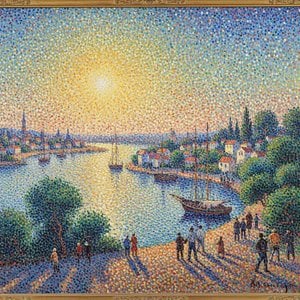
Embark on a sophisticated journey into the luminous world of Neo-Impressionism. Uncover the scientific brilliance of Pointillism, from Georges Seurat’s revolutionary color theory to the mesmerizing magic of the dot. An expert exploration for true art history enthusiasts.

Explore the vibrant evolution of Post-Impressionism. From Seurat's revolutionary Pointillism to the emotional depth of masters, discover how this movement redefined modern art history through color, structure, and unparalleled creative expression.

 Se i fuld skala
 Del
Del Del
Del
 Detaljer

 Download
 Lignende værker
 Røntgenundersøgelse
 Diasshow

 Se mere







 Glasmulighed er kun tilgængelig i størrelser under 110 cm


