


x


 Bestil tryk Bestil maleri
 Del
Del
 Detaljer
 Tilføj til favoritter
 Download
 Lignende værker
 Røntgen
 Diasshow
 Abstract Expressionism
 1992
1992 229.0 x 282.0 cm
Køb et højopløst, forbedret digitalt billede, der er langt bedre end online-forhåndsvisningen.
Hver fil er omhyggeligt forberedt af vores interne specialister ved hjælp af avancerede værktøjer og ekspertmæssig manuel retuschering. Vi sikrer, at hvert billede har enestående klarhed, præcis farvegengivelse og fine detaljer.
Den endelige fil leveres via e-mail inden for 72 timer og er optimeret til øjeblikkelig brug i professionelle, redaktionelle og trykte miljøer. Det er den samme kvalitet, som førende designstudier, forlag og gallerier har tillid til.
Download en højopløselig fil til personlig fremvisning, print og kreative projekter.
Når du vælger WahooArt.com, får du ikke blot et billede – du modtager et professionelt optimeret digitalt kunstværk, skabt med præcision og sikret med en tilfredshedsgaranti. Her er alt, hvad din ordre automatisk indeholder:

Din højkvalitets digitale billedfil vil blive sendt til din e-mail inden for 72 timer efter bestilling – klar til øjeblikkelig brug.

Dit kunstværk optimeres professionelt ved hjælp af avancerede AI-værktøjer og manuel redigering, hvilket sikrer maksimal detaljegrad, klarhed og farvenøjagtighed.

Har du ved en fejl slettet eller mistet din fil? Ingen bekymring – vi sender den igen til enhver tid, helt gratis.

Nyd dit kunstværk med det samme uden told, afgifter eller leveringsgebyrer – digitale downloads er altid skattefrie.

Vi sikrer, at dit digitale billede gengiver de originale farver så præcist som muligt ved hjælp af professionelle værktøjer og farvestyring.

Hvis du ikke er tilfreds med dit digitale billede, vil vi revidere det eller refundere 100% inden for 60 dage – uden spørgsmål.

Ik tilfreds? Få fuld refusion inden for 60 dage efter modtagelse af din digitale fil – uden spørgsmål.

Køb 3 billeder, spar 10% - Køb 5, spar 15% - Køb 10+, spar 20%. Ideelt til kreative projekter, gallerier og bureauer.


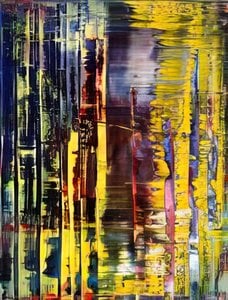


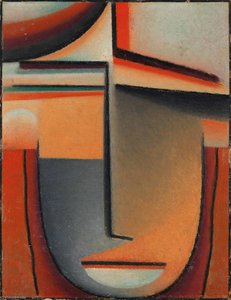

Gary Wragg, born in High Wycombe, Buckinghamshire in 1946, embarked on a journey of artistic exploration that would firmly establish him as a significant figure within British abstract painting. His formative years were steeped in the study of art, beginning at the High Wycombe School of Art from 1962 to 1966. This initial period provided a crucial grounding, but it was his subsequent move to London—and enrollment at both Camberwell School of Arts and Crafts (1966-1969) and the prestigious Slade School of Fine Art (1969-1971)—that truly ignited his artistic development. These institutions fostered a rigorous approach to technique and conceptual thinking, laying the groundwork for the large-scale abstract works that would become his signature.
A pivotal moment in Wragg’s early career came with a 1968 Rotary Travelling Gift to Italy and Lord Carron Prize, followed by the Boise Travelling Scholarship to America and Mexico in 1972. These experiences were transformative, exposing him to diverse cultural landscapes and broadening his artistic horizons. Crucially, these travels facilitated direct engagement with American art, notably through visits to Jack Tworkov in 1970 and 1974, and later, Willem de Kooning in New York in 1985. These encounters proved deeply influential, shaping his understanding of abstraction and its expressive potential.
Wragg’s artistic language evolved through a process of continuous experimentation and refinement. While rooted in the traditions of post-war abstraction, he sought to forge a distinctly personal visual vocabulary. His early works demonstrated a sensitivity to color and form, gradually moving towards larger canvases that prioritized spatial relationships and gestural mark-making. The influence of American Abstract Expressionism is palpable, yet Wragg never simply imitated; instead, he absorbed these lessons and translated them into a uniquely British sensibility.
The 1970s saw Wragg gaining recognition within the London art scene. A major Arts Council grant in 1975, followed by one from the London Arts Association in 1978, provided crucial support for his studio practice. His first solo show at the Acme Gallery in 1979 garnered positive reviews in publications like The Observer and New Statesman, establishing him as a rising talent. Throughout the 1980s and 1990s, he maintained a consistent exhibition schedule with galleries such as Nicola Jacobs and Flowers, solidifying his reputation among collectors and critics.
Beyond the direct impact of American Abstract Expressionists like Tworkov and de Kooning, Wragg’s work reveals a broader engagement with Eastern philosophy. His long-standing practice of Tai Chi Ch'uan—a Chinese martial art—became deeply intertwined with his painting process. The principles of balance, fluidity, and internal energy inherent in Tai Chi found expression in the dynamic compositions and gestural brushwork of his canvases.
As Sarah Kent observed in *Time Out* in 1983, Wragg’s large terracotta canvases possessed a unique quality: “Sketchy areas of black, white and grey create ambiguously transparent readings of space while chalk and paint lines suggest diagrammatic representations – perhaps of Tai Chi movements.” This observation highlights the symbiotic relationship between his artistic practice and his philosophical pursuits. He wasn't merely depicting abstract forms; he was attempting to visualize internal states and energetic flows.
Gary Wragg’s career has been marked by consistent critical acclaim and inclusion in significant group exhibitions, including *British Painting 1952–77* at the Royal Academy (1977) and the Sydney Biennale (1982). His work also appeared in the RA Summer Exhibition and the John Moores Exhibition in Liverpool on multiple occasions. Becoming a member of The London Group in 1990 further cemented his position within the British art establishment.
More recently, solo exhibitions at Clifford Chance, Alan Wheatley Art, and The Nine British Art have demonstrated continued interest in his work. A retrospective exhibition, *Motion & Stillness 1963-2018*, held at the Lanchester Research Gallery in Coventry (2019), offered a comprehensive overview of his artistic journey, tracing the evolution of his abstract language over decades.
Wragg’s historical significance lies in his ability to synthesize diverse influences—from American Abstract Expressionism to Eastern philosophy—into a uniquely personal and compelling body of work. He represents a vital strand within British abstraction, demonstrating a commitment to formal exploration and expressive power. His paintings are held in major public collections worldwide, including the Arts Council Collection and the Pompidou Centre in Paris, ensuring his legacy for generations to come.


Hold dig opdateret med de seneste kunstnyheder, eksklusive tilbud og indretningsideer.
Fortæl os om dit projekt, og vores kunsteksperter vil give dig 3 personlige kunstforslag.
Vi kuraterer 3 valgmuligheder kun til dig – Gratis!
 Del
Del

 Se mere


