Sælg her
x
Se i fuld skalaSe i fuld skala AR-forhåndsvisningAR-forhåndsvisning Køb print Køb printKøb billede Køb billede DelDel
DetaljerDetaljer Tilføj til favoritter Tilføj til favoritter DownloadDownload Lignende værkerLignende værker RøntgenundersøgelseRøntgenundersøgelse DiasshowDiasshow

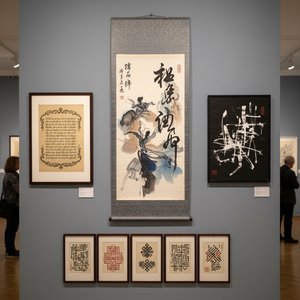
Buddhist Heart Sutra

Exquisite Buddhist Heart Sutra by Emperor Kōgon (1313-1364). Admire this monumental calligraphy scroll – a rare glimpse into Japanese imperial art & spiritual devotion. #BuddhistArt #JapaneseCalligraphy

Explore the art of Emperor Kōgon (1313-1364), a Japanese emperor known for Buddhist themes & innovative paintings. Discover his legacy through stunning works.

Håndlavet oliereproduktion

Håndmalet olie på lærred i din valgte størrelse og ramme, udført efter bestilling af vores kunstnere. (Køb print Køb printKøb billede Køb billede)

Standard
custom
CM
INCH

Vælg mellem vores forudindstillede størrelser, der matcher kunstværkets originale proportioner.

bredde
højde

Du kan indtaste dine egne mål for at passe til en bestemt ramme eller plads. Hvis den valgte størrelse ikke stemmer overens med det originale billedes proportioner, vil vi enten beskære kunstværket eller udvide maleriet med yderligere håndmalede elementer. En digital skitse sendes til din godkendelse, før produktionen påbegyndes.
Bemærk venligst, at forhåndsvisningen på skærmen ikke afspejler den faktiske beskæring eller udvidelse. Kun skitsen vil nøjagtigt vise den endelige komposition.
Selvom specialmål er mulige, anbefaler vi at vælge en dimension fra den foruddefinerede liste for at bevare de originale proportioner.

Eksempler på hvad der kan ændres: Udskift ansigt med kundens eget foto; Tilføj kæledyr (f.eks. udskift kat med hund); Inkluder en skjult besked i baggrunden; Ændr baggrundslandskab eller elementer.
Efter bestilling vil WahooArt.com team sende en e-mail til kunden for at få instruktioner og levere et udkast til en skitse.

Levering i hele verden () på 3/4 uger i stedet for de standard 5 uger. (24 august). Ingen kompromiser med kvaliteten.

why_choose_icon
Gratis ekspresforsendelse til hele verden
why_choose_icon
Lærred af linned i høj kvalitet
why_choose_icon
Fuld transportforsikring
why_choose_icon
Garanti for refusion af told og importafgifter
why_choose_icon
Garanti for præcis farvegengivelse
why_choose_icon
60 dages returret (kun ved fabrikationsfejl)
why_choose_icon
100% Tilfredshedsgaranti
why_choose_icon
Mængderabat tilgængelig

Samlet pris

$ 272

reproduction

Buddhist Heart Sutra

Reproduktionsmetode

Størrelse på reproduktion

-

Samlet pris

$ 272


Kunstnerens biografi

The Imperial Brush: The Spiritual Legacy of Emperor Kōgon

In the turbulent landscape of fourteenth-century Japan, amidst the political fragmentation of the Northern and Southern Courts, there emerged a figure whose influence transcended the mere boundaries of imperial governance. Emperor Kōgon (1313–1364) was not merely a sovereign navigating a period of profound instability; he was a visionary patron whose devotion to Buddhist iconography helped reshape the aesthetic soul of Northern Japan. Born into the prestigious Minamoto clan as Kazuhito, his early life was steeped in the traditions of the samurai, yet his spirit was irrevocably drawn toward the quietude of Buddhist scholarship and the meditative depths of philosophical inquiry. This unique intersection of martial lineage and spiritual intellect would become the cornerstone of his artistic legacy.

Kōgon’s ascension to the throne followed a period of intense succession crises, marking a decisive departure from the centralized authority of previous eras. While his political reign was brief, spanning only two years, the cultural ripples he created were immense. He viewed art not as a secular luxury, but as a vital instrument of spiritual reaffirmation and imperial legitimacy. By channeling his patronage toward the Mahayana traditions, he sought to bridge the gap between the earthly authority of the throne and the divine essence of the Buddha. His era witnessed an unprecedented surge in the creation of monumental works that utilized the sacred language of calligraphy and painting to communicate the eternal truths of the faith.

A Symphony of Ink and Devotion

The artistic output fostered under Kōgon’s influence is characterized by a profound synthesis of technical mastery and religious fervor. One of the most breathtaking examples of this era is the Buddhist Heart Sutra, an exquisite calligraphy scroll that serves as a rare window into the imperial devotion of the time. In these works, the brush does not merely record text; it performs a ritual. The flowing, rhythmic strokes of the characters are designed to guide the viewer through a meditative journey, mirroring the very essence of the sutra's teachings. This period saw a significant shift toward more elaborate and complex compositions, where the interplay of ink and void became a metaphor for the Buddhist concept of emptiness and form.

The techniques employed by the artists under his patronage were nothing short of revolutionary for the period. Drawing deep inspiration from the sophisticated landscape painting traditions of China, Japanese masters began to integrate more vibrant pigments and meticulous detailing into their work. This evolution brought about a new level of spiritual depth, as painters sought to capture:

  • The serene majesty of idealized Buddha figures that seemed to radiate light from within.
  • Meticulously rendered landscapes that functioned as spiritual microcosms.
  • A sophisticated use of color and texture to evoke the ephemeral nature of existence.
Through these advancements, the art of the Northern Court moved away from purely decorative functions toward a more profound, emotive engagement with the divine.

Historical Significance and Artistic Endurance

The historical significance of Emperor Kōgon lies in his ability to transform a period of political chaos into an era of artistic flourishing. While the Nanboku-chō period was defined by conflict between rival courts, Kōgon’s focus on Buddhist art provided a sense of cultural continuity and spiritual stability. He successfully utilized the medium of painting to assert a form of authority that was not dependent on military might, but on moral and religious prestige. His patronage laid the groundwork for future developments in Japanese Buddhist iconography, influencing the stylistic trajectory of much of the art produced in the centuries that followed.

Today, the legacy of Emperor Kōgon remains etched in the masterpieces that survived the fires of history. His contribution to the development of calligraphic scrolls and temple paintings continues to inspire scholars and art enthusiasts alike. To study his era is to witness a moment when the imperial brush was used to capture the infinite, turning the fleeting political struggles of a fractured nation into an enduring testament of faith and beauty. His life stands as a reminder that even in times of great upheaval, the pursuit of artistic excellence can create a lasting sanctuary for the human spirit.

emperor kōgon

emperor kōgon

1313 - 1364 , Japan

Kort om kunstneren

  • Artistic Movement Or Style: Buddhist Art
  • Date Of Birth: 1313
  • Full Name: Kazuhito
  • Nationality: Japanese
  • Notable Artworks: ['Buddhist Heart Sutra']
  • Place Of Birth: Japan