


Giclée- eller lærredstryk i museumskvalitet med hurtig produktion og fleksible muligheder for finish. ( Køb håndlavet maleri Køb billede)
Vælg mellem vores forudindstillede størrelser, der matcher kunstværkets originale proportioner.

Du kan indtaste dine egne mål for at passe til en specifik ramme eller et bestemt område. Hvis den valgte størrelse ikke stemmer overens med det originale billedes proportioner, vil vi enten beskære kunstværket eller udvide billedet med en spejlet eller ensfarvet kant. En digital mockup vil blive sendt til din godkendelse, før produktionen påbegyndes.
Bemærk venligst, at forhåndsvisningen på skærmen ikke afspejler den faktiske beskæring eller udvidelse. Kun mockuppen vil nøjagtigt vise den endelige komposition.
Selvom specialmål er tilgængelige, anbefaler vi at vælge et mål fra den foruddefinerede liste for at bevare de originale proportioner.
Verdensomspændende levering () på 2 uger i stedet for de sædvanlige 4/5 uger. (6 september)


Waste Paper Bags
Størrelse på reproduktion
El Anatsui’s “Waste Paper Bags,” created between 2004 and 2010, is a breathtaking installation that transforms discarded materials into a shimmering spectacle. This work exemplifies the artist’s signature style of repurposing everyday objects—in this case, waste paper bags—into large-scale sculptures that challenge perceptions of value, consumption, and cultural identity. The photograph captures the artwork within a modern gallery setting, showcasing its impressive scale and textural complexity.
“Waste Paper Bags” firmly resides within the realm of contemporary art, specifically installation art and what is often referred to as "Junk Art" or “Recycled Art.” Anatsui’s technique involves meticulously stitching together thousands of aluminum printing plates (often mistaken for paper bags in initial observation) using copper wire. This process creates a fluid, textile-like surface that drapes and folds, resembling woven fabric more than the rigid material from which it is constructed. The artist draws inspiration from traditional Ghanaian kente cloth weaving techniques, imbuing his work with a sense of cultural heritage while simultaneously pushing the boundaries of artistic expression. The resulting forms are amorphous and irregular, defying conventional sculptural norms.
The choice of waste paper bags as the primary material carries profound symbolic weight. It serves as a powerful commentary on consumer culture, environmental concerns, and the sheer volume of discarded materials in modern society. Anatsui’s transformation of these seemingly worthless objects into something beautiful and monumental highlights the potential for beauty to emerge from unexpected sources. The shimmering quality of the aluminum, reflecting light in captivating ways, evokes a sense of awe and wonder. The scale of the installation is deliberately overwhelming, prompting viewers to contemplate their own relationship with consumption and waste. It’s not merely about recycling; it's about reimagining value and finding artistry within the discarded.
El Anatsui (born 1944) is a Ghanaian sculptor renowned for his innovative use of recycled materials, particularly aluminum bottle caps. His work gained international recognition in the early 2000s and has been exhibited in major museums worldwide. Anatsui’s practice often explores themes of trade, migration, and cultural exchange, reflecting his own experiences living and working between Ghana and Nigeria. “Waste Paper Bags,” like much of his oeuvre, challenges traditional notions of sculpture by embracing fluidity, impermanence, and the inherent beauty of repurposed materials. His inclusion in the 2023 Time 100 list further solidifies his position as a globally influential artist.


1944 - , Ghana

Elevate your artistry with our expert guide to acrylic on paper. Master advanced techniques in texture, color theory, and layering to create professional-grade modern masterpieces. Perfect for art students seeking technical depth and creative excellence.

Elevate your artistic practice with our expert guide to mastering mixed media art. Discover professional techniques for layering, material integration, and creating structural depth to transform your creative vision into sophisticated, multi-dimensional masterpieces.
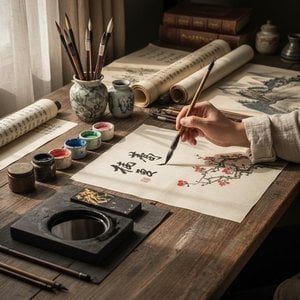
Embark on a sophisticated exploration of ink wash painting and Sumi-e. Uncover the profound historical lineages, Zen philosophies, and technical mastery behind this timeless medium in our authoritative guide for fine art enthusiasts.

 Se i fuld skala
 Del
Del Del
Del
 Detaljer

 Download
 Lignende værker
 Røntgenundersøgelse
 Diasshow

 Se mere




































 Glasmulighed er kun tilgængelig i størrelser under 110 cm


