Kunstnerens biografi
Giovanni Cimabue: Den Fiorentinske Morgengry – En Bro mellem Byzantium og Renæssancen
Giovanni Cimabue, født Cenni di Pepo omkring 1240 i Firenze, står som en monumentalt vigtig figur – en bro mellem de etablerede kunstneriske traditioner fra det byzantinske rige og de spirende innovationer, der skulle definere den italienske Renæssance. Hans liv, omend delvist skjult af tiden og romantiseret af berømte fortællinger – især dem skrevet af Giorgio Vasari århundreder senere – markerer et uomtvisteligt vendepunkt i vestlig kunsthistorie. Cimabue var ikke blot en maler; han var en modig innovator, der dristigt udfordrede kunstneriske konventioner og lagde grundlaget for de revolutionære ændringer, der snart skulle rase gennem Italien. Selv hans kælenavn, antageligt “okseøret” eller “brølende,” antyder en stærk vilje og måske en rebelsk ånd – kvaliteter tydeligt til stede i hans villighed til at eksperimentere med form og udtryk. Han repræsenterer et kritisk øjeblik, hvor kunst begyndte at skifte fokus fra udelukkende religiøse billeder mod noget mere humanistisk og følelsesmæssigt resonansfuldt.
Tidlige Indflydelser og Kunstnerisk Udvikling
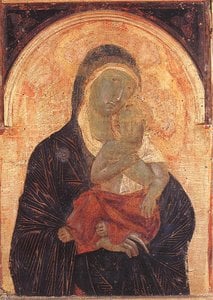
Cimabue blev i første omgang dybt involveret i den Italo-byzantinske stil, der var udbredt i Firenze, og hans tidlige værker fulgte derfor tæt på de etablerede æstetiske principper: flade figurer prydet med skimrende guld bladguld, symbolske frem for realistiske fremstillinger af rum og en dyb fokus på religiøs ikonografi. Alligevel begyndte der at spire en nærtidelig længsel efter naturalisme. Han var ikke tilfreds med blot at gengive eksisterende former; han søgte at indgyde sine malerier med en større følelse af liv og emotionel dybde. Den præcise karakter af hans tidlige træning forbliver debatteret, men det er sandsynligt, at han finpudsede sine færdigheder i florentinske værksteder, absorberede teknikkerne og indflydelserne på det tidspunkt, mens han samtidig udviklede sin egen unikke kunstneriske stemme. Den byzantinske stil, kendetappet ved sin formel og åndelige fokus, gav ham et solidt fundament, men Cimabue begyndte at subtilt introducere elementer, der ville forudskyde den kommende Renæssance – en større opmærksomhed på volumen, mere udtryksfulde ansigtsfunktioner og en spirende forståelse af rumlige forhold. Dette var ikke et pludseligt brud med traditionen, men snarere en gradvis udvikling, en delikat balancegang mellem at ære fortiden og omfavne nye muligheder.
Vigtige Arbejder og Kunstneriske Innovationer
Cimabues arv er cementeret gennem en række betagende værker, der viser hans udviklende stil. *Maestà* (Louvre), oprindeligt skabt til S. Francesco-kirken i Pisa, står som et af hans mest fejrede mesterværker. Denne monumentale altar scene udviser hans mesterskab i komposition og brug af farver, samtidig med at den antyder en afvikling fra strenge byzantinske konventioner. Figurerne er stadig præget af en vis formalitet, men de udviser en nyfundet følelse af volumen og tilstedeværelse. *Korsfæstelsen* (S. Domenico, Arezzo), dateret omkring 1270, er særligt betydningsfuld som et tidligt eksempel på hans afvigelse fra strenge byzantinske normer. Her er proportionerne mere realistiske, og den følelsesmæssige vægt af scenen er tydelig – en markant kontrast til de ofte-fjerne fremstillinger, der findes i tidligere religiøs kunst. Yderligere bevis for Cimabues innovative ånd kan ses i værker som *Korsfæstelsen* (Frick Collection), generelt tilskrevet hans værksted. Denne komplekse komposition viser en udviklet forståelse af perspektiv og rumlige forhold, hvilket fremhæver en stigende interesse for at skabe mere immersive og overbevisende scener. Hans bidrag var ikke begrænset til panelmalerier; Cimabue udmærkede sig også som mosaikkunstner, hvor han bidrog betydeligt til dekorationen af Firenze's katedral – selvom disse mosaikker desværre har lidt under forringelse over tid.
En Pivotal Lærer: Giotto og Udover
Måske er Cimabues mest vedvarende arv hans rolle som lærer af Giotto di Bondone. Selvom historiske beretninger varierer omkring den nøjagtige karakter af deres forhold, er det bredt accepteret, at Giotto modtog afgørende træning under Cimabues vejledning. Alligevel ville Giotto i sidste ende overgå sin mester med en endnu mere radikal omfavnelse af naturalisme og følelsesmæssig realisme. Det er et vidnesbyrd om Cimabues evne som lærer, at han fremmede sådan talent, selv velvidende, at det måske ville overskygge hans egne præstationer. Historien, ofte fortalt af Vasari, om Giotto legende at tegne en flue på Cimabues ansigt, taler for sig selv – et legende rivalisering, der i sidste ende pressede begge kunstnere til højere niveauer. Cimabues indflydelse spredte sig ud over Giotto og påvirkede mange andre kunstnere af perioden. Han udfordrede de kunstneriske normer i sin tid, demonstrerede, at kunst kunne være mere end blot religiøs symbolik; den kunne også afspejle menneskelige følelser og oplevelser. Hans villighed til at eksperimentere med form, proportion og udtryk banede vejen for Renæssancens innovationer og etablerede ham som en kritisk overgangsfigur i vestlig kunsthistorie.
Betydning og Arv
Cimabue døde i 1302 i Pisa, efterlod sig et værk, der fortsat fanger og inspirerer. Trods sine betydelige bidrag forbliver detaljer omkring hans senere liv sparsomme. Alligevel resonerer hans kunstneriske arv kraftfuldt gennem værkerne af hans elever og udviklingen af italiensk kunst. Han repræsenterer et kritisk øjeblik i udviklingen af vestlig maleri, der bevæger sig væk fra de stiliserede konventioner i den byzantinske æra mod en mere humanistisk og naturalistisk tilgang. Hans malerier er ikke blot historiske artefakter; de er vinduer ind i et kritisk øjeblik i kunsthistorien – en tid, hvor kunstnere begyndte at stille spørgsmålstegn ved etablerede normer og udforske nye muligheder. Han var en pioner, en visionær, der dristigt udfordrede status quo og lagde grundlaget for den kunstneriske glans, der skulle definere Renæssancen. **Cimabues arbejde minder os om, at selv inden for traditionen er der altid plads til innovation, og at ægte kunst ligger i modet til at bryde grænser og udforske nye horisonter.**



 Se i fuld skala
 Køb håndlavet maleri
 Del
Del Del
Del
 Detaljer

 Download
 Lignende værker
 Røntgenundersøgelse
 Diasshow
 Stats
Stats

 Se mere






































 Glasmulighed er kun tilgængelig i størrelser under 110 cm