


x

 Bestil tryk Bestil maleri
 Del
Del
 Detaljer
 Tilføj til favoritter
 Download
 Lignende værker
 Røntgen
 Diasshow
Køb et højopløst, forbedret digitalt billede, der er langt bedre end online-forhåndsvisningen.
Hver fil er omhyggeligt forberedt af vores interne specialister ved hjælp af avancerede værktøjer og ekspertmæssig manuel retuschering. Vi sikrer, at hvert billede har enestående klarhed, præcis farvegengivelse og fine detaljer.
Den endelige fil leveres via e-mail inden for 72 timer og er optimeret til øjeblikkelig brug i professionelle, redaktionelle og trykte miljøer. Det er den samme kvalitet, som førende designstudier, forlag og gallerier har tillid til.
Download en højopløselig fil til personlig fremvisning, print og kreative projekter.
Når du vælger WahooArt.com, får du ikke blot et billede – du modtager et professionelt optimeret digitalt kunstværk, skabt med præcision og sikret med en tilfredshedsgaranti. Her er alt, hvad din ordre automatisk indeholder:

Din højkvalitets digitale billedfil vil blive sendt til din e-mail inden for 72 timer efter bestilling – klar til øjeblikkelig brug.

Dit kunstværk optimeres professionelt ved hjælp af avancerede AI-værktøjer og manuel redigering, hvilket sikrer maksimal detaljegrad, klarhed og farvenøjagtighed.

Har du ved en fejl slettet eller mistet din fil? Ingen bekymring – vi sender den igen til enhver tid, helt gratis.

Nyd dit kunstværk med det samme uden told, afgifter eller leveringsgebyrer – digitale downloads er altid skattefrie.

Vi sikrer, at dit digitale billede gengiver de originale farver så præcist som muligt ved hjælp af professionelle værktøjer og farvestyring.

Hvis du ikke er tilfreds med dit digitale billede, vil vi revidere det eller refundere 100% inden for 60 dage – uden spørgsmål.

Ik tilfreds? Få fuld refusion inden for 60 dage efter modtagelse af din digitale fil – uden spørgsmål.

Køb 3 billeder, spar 10% - Køb 5, spar 15% - Køb 10+, spar 20%. Ideelt til kreative projekter, gallerier og bureauer.


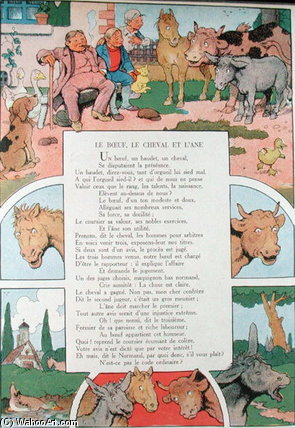
Born in La Roche-sur-Yon, Vendée, in 1864, Benjamin Rabier’s life was a quiet yet profoundly influential journey into the realms of illustration and early comic art. Initially trained as a bookkeeper, his artistic inclinations led him to pursue a career that would ultimately reshape children's literature and lay the groundwork for the burgeoning world of animal comics. Rabier wasn’t merely an artist; he was a meticulous observer of rural life, capturing its charm and simplicity with a distinctive, almost nostalgic style – a style deeply rooted in the traditions of French *image d’Epinal* prints but imbued with a uniquely personal vision.
His early career saw him working as a freelance illustrator for various publications, including newspapers like La Chronique Amusante and magazines such as Le Rire. Crucially, he found his breakthrough through collaboration with Caran d’Ache, a renowned colorist, who recognized Rabier's talent and helped him secure commissions. This partnership proved pivotal, allowing Rabier to hone his skills and establish a recognizable aesthetic. It was during this period that he created Tintin-Lutin (1898), a beloved character whose mischievous adventures quickly captured the hearts of young readers – an image that would later inspire Hergé’s iconic Tintin.
Rabier's most enduring legacy lies in his creation of Gédéon, a gentle goose who became the star of sixteen illustrated albums published between 1923 and 1939. This series showcased Rabier’s remarkable ability to breathe life into animals, imbuing them with human-like qualities and engaging narratives. The characters were rendered in a round, dynamic line – a stylistic hallmark that distinguished his work from the more rigid conventions of the time. Gédéon wasn't simply a children's story; it was a subtle commentary on rural life, exploring themes of friendship, kindness, and the beauty of the natural world.
Beyond Gédéon, Rabier contributed significantly to other popular publications like Le Roman de Renart, further solidifying his position as a leading figure in French illustration. His work during this period demonstrated an impressive versatility, encompassing both whimsical tales and more sophisticated narratives. He also embraced the emerging field of animation, collaborating with Émile Cohl on a series of animated shorts featuring his beloved characters – a pioneering effort that foreshadowed the development of early cartooning.
Rabier’s influence extended beyond the realm of children's literature. Perhaps most famously, he designed the iconic logo for La Vache Qui Rit (The Laughing Cow) cheese in 1923 – a simple yet instantly recognizable image that continues to grace dairy products worldwide. This demonstrates his ability to translate artistic vision into commercial success and highlights his understanding of visual communication.
Despite facing health challenges later in life, Rabier remained dedicated to his craft until his death in Faverolles, Indre, in 1939. His work is now recognized as a cornerstone of French illustration and a significant precursor to the development of comic books. Benjamin Rabier’s legacy isn't just about charming illustrations; it’s about capturing a specific moment in time – a nostalgic vision of rural France that continues to resonate with audiences today. His influence can be seen in the works of generations of artists, particularly Hergé, who acknowledged Rabier as a key inspiration for his own creation of Tintin.
Rabier’s distinctive style is characterized by several key elements: a round, dynamic line – often described as “circular” – that gives his illustrations a sense of movement and energy; a meticulous attention to detail in depicting rural landscapes and animal characters; and a gentle, almost sentimental tone that evokes a feeling of warmth and nostalgia. His use of color was also notable, employing bright, cheerful hues to create visually appealing and engaging images.
His work reflects the influence of *image d’Epinal*, a traditional style of French printmaking known for its charming illustrations of fairy tales and folk stories. However, Rabier infused this tradition with his own unique sensibility, creating works that are both familiar and refreshingly original. He was a master of capturing the essence of rural life – the simple pleasures, the everyday routines, and the beauty of the natural world.
Benjamin Rabier’s contribution to art history is multifaceted. He played a crucial role in popularizing illustration as a form of storytelling for children, paving the way for future generations of comic book artists. His work demonstrated the potential of visual narratives to engage young audiences and foster an appreciation for literature and art. Furthermore, his pioneering efforts in animation helped to establish the foundations of the medium, demonstrating its ability to bring illustrations to life.
Rabier’s legacy extends beyond France, influencing artists around the world. His work is a testament to the power of imagination, observation, and artistic skill – qualities that continue to inspire and delight audiences today. He remains a vital figure in the history of illustration and a beloved icon of French art.

1864 - 1939 , France


Hold dig opdateret med de seneste kunstnyheder, eksklusive tilbud og indretningsideer.
Fortæl os om dit projekt, og vores kunsteksperter vil give dig 3 personlige kunstforslag.
Vi kuraterer 3 valgmuligheder kun til dig – Gratis!
 Del
Del


 Se mere

