x
Håndmalet olie på lærred i din valgte størrelse og ramme, udført efter bestilling af vores kunstnere.
Vælg mellem vores forudindstillede størrelser, der matcher kunstværkets originale proportioner.
Du kan indtaste dine egne mål for at passe til en bestemt ramme eller plads. Hvis den valgte størrelse ikke stemmer overens med det originale billedes proportioner, vil vi enten beskære kunstværket eller udvide maleriet med yderligere håndmalede elementer. En digital skitse sendes til din godkendelse, før produktionen påbegyndes.
Bemærk venligst, at forhåndsvisningen på skærmen ikke afspejler den faktiske beskæring eller udvidelse. Kun skitsen vil nøjagtigt vise den endelige komposition.
Selvom specialmål er mulige, anbefaler vi at vælge en dimension fra den foruddefinerede liste for at bevare de originale proportioner.
Levering i hele verden () på 3/4 uger i stedet for de standard 5 uger. (2 juli). Ingen kompromiser med kvaliteten.
Large plate
Størrelse på reproduktion
In the delicate intersection of fine art and decorative mastery lies Basilio Cascella’s 1923 masterpiece, Large Plate. This evocative work transcends the boundaries of traditional canvas, presenting a serene woman’s visage rendered upon a vibrant blue plate accented with a sun-drenched yellow trim. To gaze upon this piece is to be drawn into an intimate encounter; the subject’s eyes, fixed with a gentle yet profound directness, seem to bridge the gap between the historical moment of its creation and the contemporary viewer. The composition utilizes the circularity of the plate to frame the face, creating a sense of wholeness and eternal beauty that resonates deeply within the soul.
The artistry of Cascella is rooted in the Verismo movement, a style dedicated to the unvarnished truth of life and character. In this particular work, we see his mastery of detail as he breathes life into the subject’s long, flowing hair and the subtle shimmer of her earrings. The interplay between the deep, oceanic blues of the ceramic surface and the warm, golden hues of the trim creates a chromatic harmony that is both soothing and visually stimulating. Every brushstroke serves to enhance the texture of the porcelain-like finish, making the painting feel less like a mere representation and more like a precious, tactile object of antiquity.

Created during the early 20th century, a period of profound transition in Italian art, this piece carries the legacy of Cascella’s training in Naples and Rome. Having been influenced by masters such as Domenico Morelli, Cascella brought a sense of narrative depth to even his most decorative works. The Large Plate is not merely an ornament; it is a window into the aesthetic sensibilities of 1923, where the charm of everyday objects was elevated through high-art technique. The way the light seems to dance across the blue glaze suggests a mastery over medium that few could replicate, turning a functional shape into a vessel for profound emotion.
For the discerning collector or interior designer, this artwork offers an unparalleled opportunity to introduce a sense of classical sophistication and warmth into a modern space. Its vibrant palette makes it a versatile centerpiece, capable of anchoring a room with its bold colors while providing a quiet, contemplative focal point in a more minimalist setting. Whether displayed as part of a curated gallery wall or as a standalone statement piece, this reproduction captures the timeless allure of Cascella’s vision—a marriage of soulful portraiture and exquisite decorative design that continues to inspire awe decades after its inception.
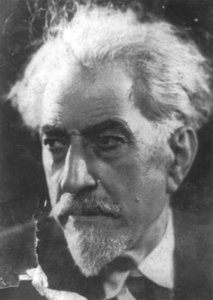
Basilio Cascella was born on October 1, 1860, in Pescara, Italy, to Francesco Paolo Cascella and Marianna Siciliano. His early life saw a family move to Ortona in 1870 where he completed his elementary education. Demonstrating artistic inclination from a young age, he attended the Artieri night school in Pescara and began an apprenticeship at the Luigi Salomone printing plant in 1874, copying prints and developing foundational skills. Despite his father’s desire for him to join the family tailoring business, Cascella pursued his passion for art.
In April 1875, Cascella moved to Rome, securing an apprenticeship in lithography at Luigi Salomone’s printing plant. He later settled in Naples in 1879, immersing himself in the artistic community and connecting with artists like Domenico Morelli and Francesco Paolo Michetti. This period marked his embrace of the Verismo style, characterized by realism and depictions of everyday life. His work was influenced by a diverse range of movements including the Italian Renaissance, Late Gothic art, and Neoclassicism.
Cascella’s career spanned from the late nineteenth to the mid-twentieth century. He worked across painting, graphic design, and illustration, even establishing a lithographic illustration factory in Milan. His work gained recognition through exhibitions at prestigious venues such as the National Artistic Exhibition of Turin (1884) and the Art Exhibition of Venice (1887), alongside notable artists like Giovanni Segantini and John Singer Sargent. He also exhibited in London (1888) and Palermo (1891).
Cascella’s artistic influence extended to his family; three of his sons – Tommaso Cascella, Michele Cascella, and Gioacchino Cascella – also became accomplished artists. He fostered a vibrant creative environment, becoming part of the Convento Michetti alongside figures like Gabriele D'Annunzio. In 1899, he founded the magazine “L’Illustrazione Abruzzo,” providing a platform for local writers and artists. Later publications included “L’illustrazione meridionale” and “La Grande Illustrazione”, featuring contributions from prominent Italian literary figures.
Basilio Cascella’s work provides valuable insight into Italian society and artistic trends during a period of significant change. His commitment to Verismo captured the essence of everyday life, while his diverse range of artistic endeavors demonstrated his versatility and dedication. He remains a notable figure in Italian art history, with his works displayed at institutions like the Museo Nazionale di Capodimonte in Naples and celebrated through the Basilio Cascella Civic Museum in Pescara. His legacy continues to inspire artists and scholars alike.
1860 - 1950 , Italy
Fortæl os om dit projekt, og vores kunsteksperter vil give dig 3 personlige kunstforslag.
Vi kuraterer 3 valgmuligheder kun til dig – Gratis!