


Håndmalet olie på lærred i din valgte størrelse og ramme, udført efter bestilling af vores kunstnere. ( Køb print Køb billede)





























Vælg mellem vores forudindstillede størrelser, der matcher kunstværkets originale proportioner.

Du kan indtaste dine egne mål for at passe til en bestemt ramme eller plads. Hvis den valgte størrelse ikke stemmer overens med det originale billedes proportioner, vil vi enten beskære kunstværket eller udvide maleriet med yderligere håndmalede elementer. En digital skitse sendes til din godkendelse, før produktionen påbegyndes.
Bemærk venligst, at forhåndsvisningen på skærmen ikke afspejler den faktiske beskæring eller udvidelse. Kun skitsen vil nøjagtigt vise den endelige komposition.
Selvom specialmål er mulige, anbefaler vi at vælge en dimension fra den foruddefinerede liste for at bevare de originale proportioner.
Levering i hele verden () på 3/4 uger i stedet for de standard 5 uger. (6 september). Ingen kompromiser med kvaliteten.


Presentation at the Temple
Størrelse på reproduktion
In the quiet, sacred halls of Andrea Mantegna’s Presentation at the Temple, time seems to suspend itself, inviting the viewer into a world where the divine meets the rediscovered grandeur of classical antiquity. Completed around 1460, this masterpiece is far more than a mere illustration of a biblical event; it is a profound dialogue between faith and the archaeological spirit of the Early Renaissance. As one gazes upon the serene tableau of Mary presenting the infant Jesus to the temple elders, there is an immediate sense of being transported to a moment where the weight of history and the lightness of grace converge. Mantegna, a painter whose very soul was forged in the study of Roman ruins, does not simply paint a scene; he reconstructs a lost era, breathing life into stone-like figures and architectural majesty that resonate with an almost tactile reality.
The true brilliance of this work lies in Mantegna’s revolutionary command of linear perspective, a technique that fundamentally reshaped the trajectory of Western art. Through a meticulous application of mathematical order, he creates an illusion of depth so profound that the temple walls seem to recede into an infinite, sacred space. This is not merely a stylistic flourish but a reflection of the humanist conviction that the natural and divine worlds are governed by a singular, harmonious logic. The figures themselves possess a remarkable sculptural quality, appearing as if carved from fine marble rather than rendered in tempera. Their heavy, dignified forms and the sharp, clear light that defines their features lend the composition a monumental presence, making it an ideal centerpiece for any collection that seeks to evoke strength, stability, and intellectual depth.
Beyond its technical prowess, the painting is a tapestry of subtle, evocative symbolism designed to stir the spirit. Every object placed within the frame serves a higher purpose: a book representing the permanence of divine law, a bowl signifying the virtue of humility, and delicate vases that whisper of purity and grace. For the discerning collector or interior designer, these elements offer a rich layer of narrative depth, allowing the artwork to act as a focal point of contemplation within a sophisticated space. To possess a reproduction of such a piece is to invite a sense of timelessness into one's surroundings—a way to anchor a modern room with the profound dignity of the Italian Renaissance and the enduring beauty of Mantegna’s visionary hand.


1431 - 1506 , Italien
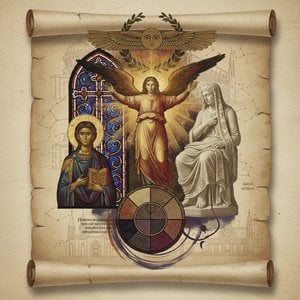
Explore the profound impact of spiritual themes in fine art. From Renaissance iconography to Baroque drama, discover how sacred symbolism and divine visions have shaped art history through a scholarly and reflective lens.

Explore the profound power of religious symbolism in art history. From Renaissance masterpieces to sacred iconography, uncover the hidden meanings behind divine details in a deep dive into classical art excellence.

Immerse yourself in the sacred grandeur of Baroque church interiors. Explore museum-quality, hand-painted oil reproductions and bespoke religious art commissions. From breathtaking frescoes to dramatic altarpieces, we bring historical majesty to your luxury space with unmatched expertise.
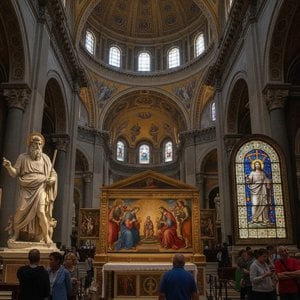
Explore the profound beauty of sacred art through a curated journey of masterpieces. From Renaissance iconography to Baroque drama, discover how history's greatest artists captured the divine presence in timeless works of spiritual transcendence.

 Se i fuld skala
 Del
Del Del
Del
 Detaljer

 Download
 Lignende værker
 Røntgenundersøgelse
 Diasshow

 Se mere







 Glasmulighed er kun tilgængelig i størrelser under 110 cm


