Køb et højopløst, forbedret digitalt billede, der er langt bedre end online-forhåndsvisningen.
Hver fil er omhyggeligt forberedt af vores interne specialister ved hjælp af avancerede værktøjer og ekspertmæssig manuel retuschering. Vi sikrer, at hvert billede har enestående klarhed, præcis farvegengivelse og fine detaljer.
Den endelige fil leveres via e-mail inden for 72 timer og er optimeret til øjeblikkelig brug i professionelle, redaktionelle og trykte miljøer. Det er den samme kvalitet, som førende designstudier, forlag og gallerier har tillid til.
Download en højopløselig fil til personlig fremvisning, print og kreative projekter. ( Køb print Køb håndlavet maleri)
Når du vælger WahooArt.com, får du ikke blot et billede – du modtager et professionelt optimeret digitalt kunstværk, skabt med præcision og sikret med en tilfredshedsgaranti. Her er alt, hvad din ordre automatisk indeholder:

Din højkvalitets digitale billedfil vil blive sendt til din e-mail inden for 72 timer efter bestilling – klar til øjeblikkelig brug.

Dit kunstværk optimeres professionelt ved hjælp af avancerede AI-værktøjer og manuel redigering, hvilket sikrer maksimal detaljegrad, klarhed og farvenøjagtighed.

Har du ved en fejl slettet eller mistet din fil? Ingen bekymring – vi sender den igen til enhver tid, helt gratis.

Nyd dit kunstværk med det samme uden told, afgifter eller leveringsgebyrer – digitale downloads er altid skattefrie.

Vi sikrer, at dit digitale billede gengiver de originale farver så præcist som muligt ved hjælp af professionelle værktøjer og farvestyring.

Hvis du ikke er tilfreds med dit digitale billede, vil vi revidere det eller refundere 100% inden for 100 dage – uden spørgsmål.

Ik tilfreds? Få fuld refusion inden for 100 dage efter modtagelse af din digitale fil – uden spørgsmål.

Køb 3 billeder, spar 10% - Køb 5, spar 15% - Køb 10+, spar 20%. Ideelt til kreative projekter, gallerier og bureauer.
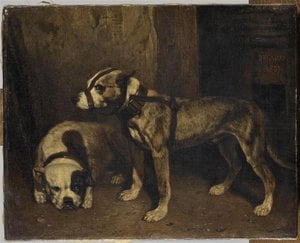
Alexandre Gabriel Decamps' "Chenil. Valet de chiens" (1850s) offers a captivating glimpse into the quiet rhythms of 19th-century rural France, rendered with a remarkable sensitivity to light, texture, and the unspoken bonds between man and animal. This evocative painting isn’t merely a depiction of a dog handler tending his charges; it's a carefully constructed tableau brimming with symbolic resonance and a palpable sense of timelessness. Decamps, a pivotal figure in the burgeoning field of Orientalism, used this work to explore themes of labor, companionship, and the profound connection between humanity and the natural world – elements that resonated deeply within his artistic vision.
Decamps’ style is immediately recognizable as a masterful blend of Realism and Romanticism. He eschewed the rigid academic conventions of his time, favoring instead a looser, more painterly approach. Notice how he captures the roughness of the weathered stone structure – short, broken lines suggest its age and solidity while simultaneously conveying a sense of organic growth. The composition itself is deliberately asymmetrical, drawing the eye through the scene with a subtle yet effective balance. A simple bucket and hanging cloth on one side create visual interest, preventing the image from feeling static or overly formal. Decamps’ use of color is equally deliberate; the dominant earthy tones – browns, tans, greys, and muted greens – evoke a sense of groundedness and connection to the land.
Decamps' technical skill shines through in his masterful manipulation of texture. The rough surface of the stone walls is rendered with an almost tactile quality, inviting the viewer to reach out and feel its weathered grain. Similarly, the fur of the dogs – a mix of whites, greys, and subtle blues – appears incredibly realistic, each strand seemingly imbued with individual character. This attention to detail extends to the way he captures the diffused light filtering through the doorway, creating soft shadows that add depth and dimension to the scene. The lighting isn’t dramatic or theatrical; instead, it feels natural and honest, suggesting an overcast day or indirect sunlight – a subtle yet powerful choice that reinforces the painting's overall mood of quiet contemplation.
"Chenil" is more than just a portrait of a dog handler; it’s a meditation on the dignity of labor and the enduring power of companionship. The “chenil,” or dog handler, represents a figure deeply connected to the land and his animals – a symbol of rural resilience and self-sufficiency. The dogs themselves are not merely accessories to the scene; they are integral participants in this quiet drama, their attentive gazes suggesting a deep bond with their master. Decamps subtly imbues the painting with a sense of understated emotion—a feeling of mutual respect, loyalty, and shared experience that transcends words.
To understand “Chenil,” it’s crucial to consider Decamps' place within the broader context of 19th-century French art. He was a pioneer in depicting everyday life, particularly scenes from rural and working-class communities – a departure from the prevailing focus on grand historical narratives or idealized portraits. His work reflects a growing interest in documenting the realities of ordinary people, capturing their struggles, joys, and connections to nature. Decamps’ exploration of Orientalism, though evident in his broader oeuvre, is subtly present here, informing his approach to portraying foreign landscapes and customs with an observant eye and a nuanced understanding of cultural differences. This painting stands as a testament to Decamps' ability to transform the mundane into something profoundly beautiful and meaningful.


1803 - 1860 , Frankrig

 Se i fuld skala
 Del
Del Del
Del
 Detaljer

 Download
 Lignende værker
 Røntgenundersøgelse
 Diasshow

 Se mere