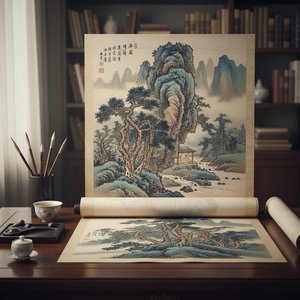
Wei-Lin Dao-Pei (Irin-Dohai): A Life of Zen and Art
- Born: Gushan, China (1615)
- Died: 1702
- Other Names: Irin-Dohai
Wei-Lin Dao-Pei, also known as Irin-Dohai, stands as a significant figure in the early Qing Dynasty, recognized both for his profound spiritual leadership within the Sōtō Zen school and for his distinctive artistic contributions. Born in 1615 in Gushan, Fujian province, China, he established a branch of the Sōtō Zen tradition and is particularly celebrated for his influential work, 'Excerpt from Xin-xin-ming.' His art reflects a deep commitment to meditative practice, intuitive understanding, and a pursuit of simplicity aimed at expressing the true nature of reality.
Early Life, Training, and Spiritual Development
While detailed records of Wei-Lin Dao-Pei’s early life remain scarce, it is known that he was raised within an artistic family, receiving traditional Chinese arts training from a young age. This foundation proved crucial as he later gravitated towards the Sōtō Zen school. The emphasis on meditation and intuitive insight central to this tradition profoundly shaped his worldview and subsequently influenced his artistic expression. His dedication led him to become a respected monk and leader within the Sōtō Zen community, establishing his own branch and guiding numerous followers.
Artistic Style and Key Contributions
Wei-Lin Dao-Pei’s artistic style is inextricably linked to his spiritual practice as a Sōtō Zen monk. His paintings are characterized by delicate brushwork and a focus on capturing the essence of a subject rather than merely its outward appearance. This approach reflects the Zen emphasis on direct experience and intuitive understanding. 'Excerpt from Xin-xin-ming' exemplifies this style, showcasing a profound simplicity and depth of meaning. His work often incorporates bold colors and intricate patterns, demonstrating a mastery of traditional Chinese painting techniques while imbuing them with a unique spiritual sensibility.
Influences and Legacy
Wei-Lin Dao-Pei’s artistic legacy extends beyond his individual works. He represents a significant intersection between Zen Buddhism and Chinese art, demonstrating how meditative practice can inform and enrich creative expression. His influence is evident in the work of later artists who sought to integrate spiritual depth with traditional techniques. The Long Museum West Bund in Shanghai has prominently featured several of his paintings, including 'A Poem to a Friend,' further solidifying his recognition within the contemporary art world. His biography and artistic style are also discussed on Wikipedia and WahooArt.com, highlighting his enduring relevance to scholars and enthusiasts alike.
Further Exploration
- Excerpt from Xin-xin-ming: View the Artwork
- Wei-Lin Dao-Pei Artist Page: Learn More About the Artist
- WahooArt.com Entry: Read a Detailed Biography (German)