Soji Adesina: A Visionary of Memory and Identity
Born in Lagos, Nigeria, in 1981, Soji Adesina is a compelling contemporary artist whose work delves into the complexities of memory, identity, globalization, and conflict. His practice, rooted deeply within Nigerian culture yet reaching outwards to engage with universal themes, has quickly established him as a significant voice in both African and international art scenes. Adesina’s journey began with a Higher National Diploma in Painting from Yaba College of Technology, Lagos – an institution renowned for nurturing artistic talent – providing him with a foundational understanding of technique and visual language that he would later radically transform.
Central to Adesina's artistic vision is a deliberate interrogation of the self. He doesn’t simply depict subjects; he excavates them, layering narratives and challenging conventional representations. His work frequently features figures rendered in abstracted hues, prompting viewers to confront fundamental questions about perception – particularly the often-overlooked “color of skin.” This exploration extends beyond mere aesthetics, serving as a gateway to broader inquiries into culture, colonialism, and the enduring legacy of historical power dynamics.
A Distinctive Impasto Technique
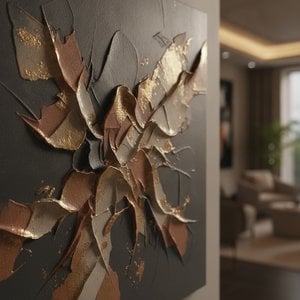
What immediately distinguishes Adesina’s work is his unique application of paint. He has developed a highly distinctive impasto technique – building up layers of thick, textured paint to create surfaces that are both visually arresting and deeply tactile. This isn't merely decorative; it’s a deliberate strategy for conveying emotion and meaning. He describes this process as an exploration, constantly experimenting with materials and pushing the boundaries of what painting can achieve. Adesina’s early influences included artists like Frank Frazetta and Mike Omoighe, but he quickly forged his own path, incorporating elements of Wangechi Mutu and Egin Schieles into his distinctive style.
The physicality of his technique mirrors the intensity of the themes he explores. Figures appear involved, sometimes deconstructed, occasionally afflicted, and at other times brazenly confident – reflecting a complex interplay of vulnerability and strength. This deliberate distortion and exaggeration is not simply stylistic; it’s a means of amplifying the emotional weight of his subjects.
Themes of Globalization and Conflict
Adesina's work consistently grapples with the forces shaping contemporary society, particularly the impact of globalization and conflict. He employs irony, metaphor, and paradox to dissect how these dynamics influence radicalization, statehood, migration, and sexuality. His paintings aren’t simply representations; they are critical commentaries on the world around us, prompting viewers to consider the often-uncomfortable truths beneath the surface.
He draws inspiration from a wide range of sources – historical events, social issues, and personal experiences – weaving them together into layered narratives that demand engagement. His exploration of memory is particularly potent, suggesting that our understanding of the present is inextricably linked to the past. Adesina’s work has been collected by private individuals, art enthusiasts, and corporate organizations both in Nigeria and abroad, a testament to its growing recognition within the art world.
Recognition and Exhibitions
Soji Adesina's artistic journey has been marked by significant exhibitions both within Nigeria and internationally. He has showcased his work in major cities such as New York, Paris, London, and São Paulo, solidifying his position as a rising star on the global art scene. His commitment to pushing boundaries and exploring complex themes ensures that he will continue to be a vital voice in contemporary art for years to come.
His work is held in esteemed private and corporate collections worldwide, reflecting its enduring appeal and critical acclaim. Adesina’s ongoing exploration of identity, memory, and the human condition promises to yield further compelling works that resonate with audiences across cultures.
Otázky a odpovědi
Kde mohu vidět barevný profil děl umělce Soji Adesina?
Použití barev v dílech umělce Soji Adesina uvedených na tato webová stránka můžete prozkoumat na stránce Genom palety tohoto umělce.
Jak najdu všechna díla umělce Soji Adesina v určitém médiu?
Díla umělce Soji Adesina si můžete prohlédnout podle použité techniky na jeho stránce Podle techniky.
V jakém historickém období působil/a Soji Adesina?
Soji Adesina působil v období Contemporary. Toto období historicky vymezuje uměleckou činnost tohoto autora.