Seymour Drumlevitch: A Legacy of Faith and Observation
Seymour Drumlevitch’s artistic journey began in Indiana, where he cultivated a profound appreciation for both religious iconography and meticulous architectural studies—a duality that would define his distinctive style. While biographical details remain sparse, Drumlevitch's unwavering dedication to capturing the essence of sacred narratives and translating complex spatial relationships onto canvas speaks volumes about his artistic vision.
Indiana’s landscape instilled in him an early fascination with the grandeur of Romanesque churches and Byzantine mosaics—influences that fostered a meticulous attention to detail and a deep understanding of symbolic representation. This formative period shaped Drumlevitch's artistic sensibilities, equipping him with the foundational skills necessary for his subsequent explorations into art history and architectural design.
- The Development of His Style: Characterized by layered textures and subtle gradations of color, Drumlevitch’s technique evolved over time. He mastered the art of capturing light and shadow with remarkable accuracy, creating scenes that convey both emotional depth and intellectual precision.
Religious Paintings: Exploring Sacred Narratives Through Symbolism
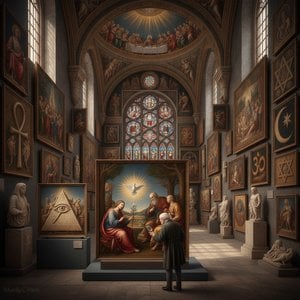
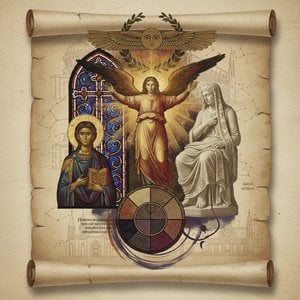
Drumlevitch's artistic focus centered on depicting biblical stories—particularly Torah artwork—with unwavering reverence. His canvases are populated with figures rendered in painstaking detail, illuminated by ethereal light sources that evoke the spiritual atmosphere of ancient synagogues and churches. Recurring motifs—such as doves symbolizing peace and olive branches representing divine blessing—underscored his commitment to conveying theological concepts through visual symbolism.
- Torah Artwork: Drumlevitch’s Torah artwork stands apart for its exceptional realism, capturing the solemn beauty of the Torah scrolls with breathtaking fidelity. He meticulously recreated the intricate calligraphy and illuminated parchment, transforming them into canvases that resonate with spiritual significance.
Architectural Studies: Translating Space onto Canvas
Beyond religious painting, Drumlevitch pursued architectural studies—primarily focusing on Indiana’s historic buildings. He produced detailed sketches and watercolors that captured the grandeur of structures like St. Meinrad Abbey and Cathedral Basilica of Vincennes—demonstrating his ability to distill complex spatial dimensions into simplified visual representations. His renderings prioritized capturing the essence of these places, emphasizing their architectural harmony and conveying a sense of solemn beauty.
- St. Meinrad Abbey: Drumlevitch’s depictions of St. Meinrad Abbey showcased his mastery of perspective and tonal harmony, conveying the abbey's imposing façade and serene interior with understated elegance.
Major Achievements & Historical Significance
Drumlevitch’s contribution to Indiana art history is notable for its quiet perseverance—a steadfast pursuit of artistic excellence that yielded remarkable results. His paintings continue to inspire admiration for their technical virtuosity and spiritual depth, serving as enduring reminders of the power of observation and the importance of conveying faith through visual expression. Although Drumlevitch's work remains largely unseen by the public, it represents a singular testament to Indiana’s artistic heritage—a legacy rooted in meticulous detail and profound contemplation.