early life and education
kadıasker mustafa izzet efendi, also known as seyyid mustafa, was a renowned ottoman composer, neyzen, poet, and statesman born in tosya, ottoman empire in 1801. his mother, of the rûmiyya branch of the kādiriyye order, sent him to istanbul for education after his father's death.career and contributions
mustafa izzet efendi's career spanned multiple disciplines, but he is best known for his calligraphy. he studied islamic theology, science, and music, becoming an accomplished ney player and singer. his time at the imperial court, where he learned sülüs and naskh scripts, certified by moustafa wâsif, laid the foundation for his future contributions.- he developed refined versions of sülüs and naskh scripts, building upon the work of hâfiz osman, celaleddin, and râkim.
- his calligraphic inscriptions can be found in public buildings and mosques, including hagia sophia and the washington monument.
- notable students include mehmet şefik, şefik bey, abdullah zuhdi effendi, muhsinzade abdullah bey, and hasan riza effendi.
artistic legacy
mustafa izzet efendi's artistic legacy extends beyond his calligraphy. he composed numerous songs, both religious and non-religious, and was a collector of manuscripts. his son, ata bey, continued to collect manuscripts after his passing.museums and collections
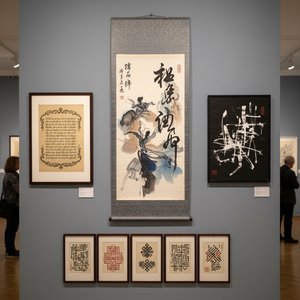
mustafa izzet efendi's work can be found in various museums, including the sakıp sabancı museum (istanbul, türkiye), which houses several of his calligraphic pieces. explore kadıasker mustafa izzet efendi's artworks on WahooArt.comreferences
Otázky a odpovědi
Jak najdu díla umělce Kadıasker Mustafa Izzet Efendi v určité barevné paletě?
Díla umělce Kadıasker Mustafa Izzet Efendi si můžete prohlédnout podle barevné palety na jeho stránce Podle palet.
Jak se umění umělce Kadıasker Mustafa Izzet Efendi v čase vyvíjelo?
Chronologický přehled tvorby umělce Kadıasker Mustafa Izzet Efendi naleznete na jeho stránce Kronika umělce, kde jsou díla uspořádána podle jejich vzniku v jednotlivých kapitolách.
Kde mohu vidět díla umělce Kadıasker Mustafa Izzet Efendi v chronologickém pořadí?
Prohlédněte si časovou osu děl umělce Kadıasker Mustafa Izzet Efendi: na stránce Chronologie děl jsou díla seřazena podle data jejich vzniku.