Early Life and Artistic Beginnings
David Wilkie Wynfield (c. 1837 – 26 May 1887) emerged from a lineage steeped in artistic tradition, his father serving as an Indian Army officer and Sophia May Burroughes his second wife—a woman herself connected to the art world through her familial ties to Sir David Wilkie RA. Born in London, Wynfield’s formative years were shaped by exposure to both military discipline and the vibrant intellectual currents of Victorian society. Notably, he was a nephew of Sir David Wilkie RA, whose legacy would profoundly influence Wynfield's artistic sensibilities. Recognizing his innate talent early on, Wynfield enrolled at James Mathew Leigh’s art school in Newman Street in 1856, marking the commencement of his formal artistic education—a pivotal step toward realizing his ambitions as a painter.The St John’s Wood Clique and Romantic Vision
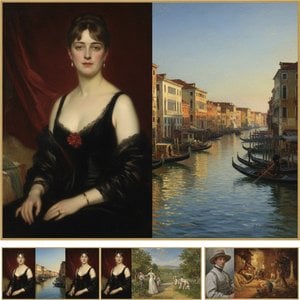
Wynfield swiftly joined the celebrated St John's Wood Clique, an influential group of artists who championed historical narratives and embraced romantic themes. This collective fostered a spirit of experimentation and collaboration, propelling Wynfield to explore landscapes and portraits set against the backdrop of medieval and Renaissance Europe. His paintings frequently depicted idealized figures engaged in dramatic scenes—a stylistic choice reflecting the broader artistic sensibilities of his time. The Clique’s commitment to capturing emotion and grandeur established Wynfield as a participant in a movement that sought to elevate art beyond mere representation, aiming instead for an immersive experience of beauty and imagination.Photography: Pioneering Shallow Focus
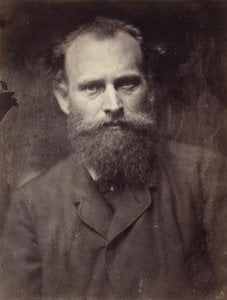
A transformative encounter with photography captivated Wynfield during the 1860s, sparking his fascination with this emerging medium. Recognizing its potential to emulate the painterly effects of Old Masters—a technique he meticulously honed—Wynfield developed a distinctive shallow-focus portrait photography method. This innovation wasn’t merely a technical accomplishment; it represented a conceptual leap—a deliberate effort to fuse artistic vision with photographic precision. Wynfield generously shared his expertise with Julia Margaret Cameron, who acknowledged him as her primary inspiration, cementing his role as a catalyst for change within the art world. The resulting portraits captured not only likeness but also an elusive quality of mood and atmosphere—a testament to Wynfield’s mastery of both disciplines.Notable Achievements and Legacy
Wynfield's photographic endeavors gained considerable acclaim, culminating in the publication of *The Studio*, a groundbreaking book showcasing his portraits alongside those of fellow artists like Cameron and Millais. Although initial sales proved underwhelming—perhaps due to Wynfield’s reluctance to revisit the project—the book nevertheless secured its place as an emblem of Victorian artistic innovation. Furthermore, Wynfield's unwavering support for contemporary artists extended beyond his photographic work; he served on the committee of the Dudley Gallery in Piccadilly, fostering a thriving environment for artistic discourse and creativity. His enduring influence can be discerned in Cameron’s oeuvre—a testament to Wynfield’s ability to inspire and propel artistic progress. David Wilkie Wynfield remains an artist whose pioneering approach to portraiture continues to resonate with scholars and enthusiasts alike, securing his place as a cornerstone of Victorian art history.Otázky a odpovědi
Kde mohu vidět všechna umělecká díla autora David Wilkie Wynfield?
Veškerá díla umělce David Wilkie Wynfield na tento web lze prohlédnout na jeho stránce Všechna umělecká díla.
Pod jakými dalšími jmény je David Wilkie Wynfield známý/á?
David Wilkie Wynfield je známý/á také pod jmény Wynfield.
Existuje chronologický přehled tvorby umělce David Wilkie Wynfield?
Kronika umělce David Wilkie Wynfield je časová osa ovládaná skrolováním, která představuje díla umělce v chronologickém pořadí, rozdělená do kapitol podle období jeho kariéry.