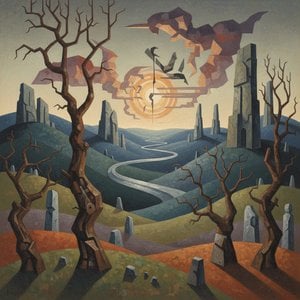
Arnold Topp: A Landscape of Shadows
Arnold Topp’s artistic journey began in Germany, nurtured by a fascination with the Romantic tradition and its exploration of emotion and sublime beauty. Unlike many artists of his era who sought to capture idealized visions of nature, Topp consistently confronted darkness—both literal and metaphorical—within his canvases. This unwavering dedication to portraying psychological depth alongside visual grandeur distinguishes him from countless contemporaries and cemented his place as a singular voice within the artistic landscape of his time.
Early Influences: The Romantic Spirit
The profound impact of Caspar David Friedrich’s oeuvre on Topp’s aesthetic sensibilities cannot be overstated. Friedrich's masterful depictions of solitary figures dwarfed by monumental landscapes instilled in Topp a fervent desire to convey not merely visual grandeur but also the complex tapestry of human emotion—fear, awe, and contemplation intertwined—within his canvases. This influence manifested itself most notably in Topp’s recurring motifs: desolate plains punctuated by towering mountains, conveying an unsettling stillness that mirrored Friedrich's own exploration of the sublime.
Technique: Impasto and Emotional Resonance
Topp honed his skills in oil painting with meticulous precision, favoring a technique known as impasto—a deliberate layering of pigment onto the canvas—to create textured surfaces that seemed to pulsate with inner energy. This painstaking process allowed him to capture subtle nuances of light and atmosphere—the bruised hues of twilight skies reflecting upon snow-capped peaks—transforming visual representations into conduits for emotional experience. The resulting canvases bore witness to Topp’s unwavering commitment to conveying psychological depth alongside aesthetic beauty, a hallmark of his distinctive artistic vision.
Recurring Themes: Confrontation with Darkness
Topp's oeuvre centers around landscapes imbued with an unsettling stillness—a deliberate antithesis to the idealized vistas championed by Romantic artists. Mountains loom ominously against bruised skies; forests conceal hidden dangers; bodies of water reflect distorted images of reality—scenes designed to provoke contemplation and confront viewers with existential anxieties. These depictions weren’t merely aesthetically pleasing; they represented a profound engagement with the darker aspects of human experience, mirroring Topp's own preoccupation with psychological introspection and solidifying his reputation as an artist capable of conveying unsettling truths through visual storytelling.
Notable Achievements: Collaborative Visions
Topp’s artistic legacy extends beyond individual canvases—most notably into his collaborative project with filmmaker Werner Herzog—titled “ZWEI WELTEN” (“Two Worlds”). This ambitious undertaking captured the desolate grandeur of Patagonia, mirroring Topp's artistic preoccupation with confronting darkness within seemingly serene environments. The film’s haunting imagery and evocative soundtrack served as a testament to Topp’s ability to translate psychological complexity into compelling cinematic narratives—a feat that cemented his place among Germany’s most influential artists of the 20th century.
Historical Significance: Beyond Convention
Arnold Topp stands apart from many of his contemporaries by rejecting conventional artistic conventions and prioritizing conveying psychological depth alongside visual splendor. His unwavering commitment to exploring the shadowed recesses of human experience—fear, awe, contemplation—distinguishes him from countless artists who sought only idealized representations of nature. Topp’s enduring legacy resides in the profound contemplation he provoked within viewers and fellow artists alike, reminding us that true beauty can be found not only in idealized visions but also in confronting the unsettling realities of existence.