Zhu Wei’s ‘Sweet Life, No.21’: A Portrait of Contemplation in the Heart of Chinese Ink
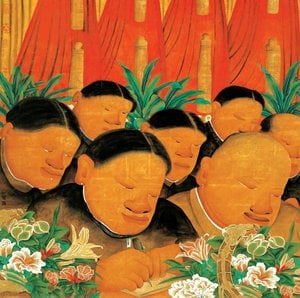
Zhu Wei's “Sweet Life, No.21” is more than a simple depiction of a man amidst nature; it’s a carefully constructed meditation on identity, observation, and the subtle tensions within contemporary China. Executed with Zhu Wei’s signature mastery of ink wash painting – a technique honed over decades and deeply rooted in centuries of Chinese artistic tradition – this piece invites viewers into a world where the natural and the human intertwine, prompting reflection on the complexities of modern life.
- Subject Matter: The central figure, a man dressed in a purple shirt and white collar, is presented with an almost unnerving directness. His crossed arms and gaze towards the viewer establish an immediate connection, inviting us to share his moment of quiet contemplation.
- Composition: The carefully arranged birds and fish are not merely decorative elements; they contribute significantly to the painting’s narrative. Their placement – some close, others distant – creates a sense of depth and movement, mirroring the flow of life itself.
Technique and Style: Echoes of Tradition, Voices of Modernity
Zhu Wei's style is characterized by a remarkable balance between reverence for traditional Chinese ink wash painting (Shui-mo hua) and a distinctly contemporary sensibility. He employs the classic ‘qinbiye’ technique – a meticulous layering of thin washes of ink – to achieve incredible tonal variations and atmospheric effects. This painstaking process, inherited from generations of Chinese artists, is evident in the subtle gradations of color and the delicate rendering of form. The painting's vibrant palette, achieved through masterful control of black ink diluted with rice wash, elevates the work beyond a simple monochrome study, imbuing it with a luminous quality.
- Qinbiye Technique: Zhu Wei’s signature use of ‘qinbiye,’ layering thin washes of ink, creates depth and luminosity.
- Ink Wash Tradition: The painting adheres to the core principles of Chinese ink wash painting – balance, harmony, and a focus on capturing the essence of the subject rather than photographic realism.
Symbolism and Historical Context
"Sweet Life, No.21" was created during a pivotal period in China’s history – the aftermath of the Tiananmen Square protests in 1989. While Zhu Wei avoids overt political statements, his work subtly reflects the anxieties and uncertainties of that era. The man's contemplative posture can be interpreted as a response to the social and political upheaval, suggesting a yearning for peace and stability amidst chaos. The inclusion of birds and fish – often symbols of freedom and prosperity in Chinese art – further reinforces this interpretation. The painting’s creation coincided with Zhu Wei’s transition from producing propaganda art for the military to exploring more personal themes, marking a significant shift in his artistic trajectory.
Emotional Impact and Artistic Value
This artwork possesses a profound emotional resonance. The man's direct gaze compels us to confront our own perceptions of beauty, tranquility, and the human condition. The vibrant colors and intricate details invite prolonged viewing, encouraging contemplation and offering a moment of respite from the demands of daily life. “Sweet Life, No.21” is not just a beautiful painting; it’s a powerful statement about art's ability to capture both the beauty and the complexities of human experience. Its size – 170 x 178 cm – ensures that it will make a significant impact in any interior space, serving as a focal point for conversation and reflection.



 Náhled
 Koupit ručně malovaný obraz
 Sdílet
 Sdílet
 Podrobnosti o díle

 Stáhnout
 Podobné položky
 Rentgenové snímky
 Slideshow
 Statistiky


 Zobrazit více






































 Skleněná varianta je dostupná pouze u rozměrů menších než 110 cm