


 CeramicsArts and Crafts
 1897
1897 46.0 x 15.0 cm
 Los Angeles County Museum of Art
Koupě vysoce rozlišeného, vylepšeného digitálního obrazu, který je mnohem kvalitnější než online náhled.
Každý soubor je pečlivě připraven našimi odborníky pomocí pokročilých nástrojů a expertní manuální retuše. Zajišťujeme, aby každý obraz disponoval výjimečnou ostrostí, přesnou barevnou věrností a jemnými detaily.
Finální soubor vám bude do 72 hodin zaslán e-mailem, optimalizovaný pro okamžité použití v profesionálním, redakčním i tiskovém prostředí. Nabízíme stejnou kvalitu, které důvěřují špičková designová studia, nakladatelství i galerie.
Stáhněte si soubor ve vysokém rozlišení pro osobní prohlížení, tisk a kreativní projekty. ( Koupit tisk Koupit ručně malovaný obraz)
Když si vyberete WahooArt.com, nezískáváte pouze obrázek – získáváte digitální umělecké dílo s profesionálně vylepšenými detaily, zpracované s precizností a podpořené zárukou za spokojenost. Zde je vše, co vaše objednávka automaticky obsahuje:

Váš digitální obraz ve vysokém rozlišení vám bude zaslán e-mailem do 72 hodin od objednávky – připraven k okamžitému použití.

Vaše umělecké dílo je profesionálně optimalizováno pomocí pokročilých nástrojů umělé inteligence a manuální úpravy, což zajišťuje maximální úroveň detailu, ostrosti a přesnosti barev.

Soubor jste omylem smazali nebo ztratili? Žádný problém – kdykoliv vám ho znovu zašleme zcela zdarma.

Užijte si své umělecké dílo okamžitě bez celních poplatků, daní nebo nákladů na dopravu – digitální stažení je vždy bez daňových povinností.

Pomocí profesionálních nástrojů a správy barev zajišťujeme, aby váš digitální obraz odrážel původní barvy co nejvěrněji.

Pokud nebudete s digitální fotografií spokojeni, provedeme její revizi nebo vám vrátíme 100% během 100 dnů – bez jakýchkoliv dotazů.

Nespokojeni? Získejte plnou částku zpět do 100 dní od přijetí vašeho digitálního souboru – bez jakýchkoliv dotazů.

Koupěte si 3 obrazy, ušetřete 10% - Koupěte si 5, ušetřete 15% - Koupěte si 10+, ušetřete 20%. Ideální pro kreativní projekty, galerie a agentury.
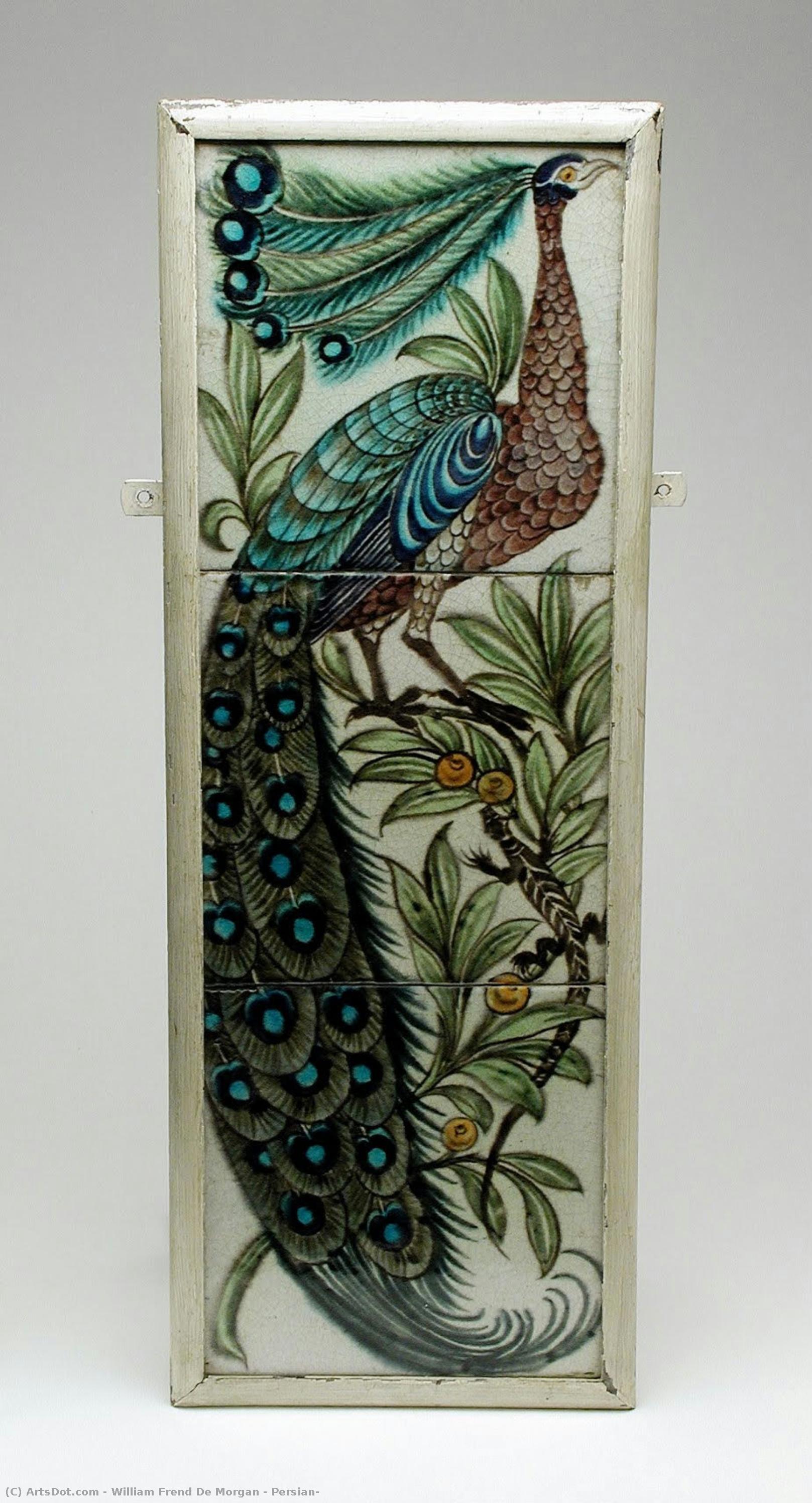
Within the rich tapestry of 19th-century decorative arts, few pieces possess the captivating blend of artistry and exoticism as William Frend De Morgan’s “Persian” tile panel. Created in 1888-1897 during his prolific period at Merton Abbey, this work transcends mere ornamentation; it's a portal to a reimagined East, infused with Victorian sensibilities and a profound understanding of ancient artistic traditions. More than just a decorative object, it’s a testament to De Morgan’s innovative spirit and his ability to synthesize diverse influences into a singularly beautiful whole.
The panel immediately draws the eye with its vibrant palette – deep blues reminiscent of Persian Iznik ware, punctuated by turquoise highlights, manganese purples hinting at ancient dyes, and the warm glow of Indian red. These colors aren’t simply applied; they are meticulously layered to create a luminous depth that seems to shift and shimmer in the light. The intricate design is dominated by stylized peacocks, their tails spread in an explosion of feathers, each feather rendered with painstaking detail. Surrounding these majestic birds are delicate floral motifs – lotus blossoms, irises, and stylized leaves – all arranged within a complex geometric framework. This combination of natural forms and structured patterns speaks to De Morgan’s fascination with both the organic beauty of nature and the order inherent in ancient civilizations.
De Morgan's “Persian” panel is a product of its time, deeply rooted in the artistic currents of the late Victorian era. The Arts and Crafts movement, with its emphasis on handcrafted quality and rejection of mass-produced goods, provided the intellectual framework for his work. However, De Morgan’s inspiration extended far beyond England; he was profoundly influenced by the art and architecture of the Islamic world, particularly the exquisite ceramics of Persia (modern-day Iran). He meticulously studied examples of Iznik tiles – renowned for their vibrant colors and intricate designs – recognizing their potential to create a similar effect on English earthenware.
This fascination with the East wasn’t merely aesthetic; it reflected a broader cultural shift. The Victorian era witnessed a growing interest in Orientalism—a Western fascination with, and often romanticized depiction of, Eastern cultures. De Morgan skillfully navigated this trend, avoiding simplistic stereotypes and instead creating a nuanced representation that celebrated the beauty and sophistication of Persian art while firmly grounding it within his own artistic vision.
The creation of “Persian” involved a complex and demanding process. De Morgan’s studio employed a combination of traditional and innovative techniques. The tiles themselves were typically made from biscuit-fired earthenware, providing a sturdy base for the intricate decoration. The lustrous glaze—the hallmark of this piece—was achieved through a painstaking layering of colored oxides applied to the wet clay before firing. This process required immense skill and control, as even slight variations in temperature or humidity could dramatically affect the final result.
The use of multiple layers of color created an almost three-dimensional effect, with the colors seeming to float above the surface of the tile. The intricate detailing—the feathers of the peacocks, the delicate petals of the flowers—was achieved through a combination of hand-painting and stenciling. De Morgan’s assistants played a crucial role in this process, meticulously applying the pigments and ensuring that each element of the design was executed with precision.
William Frend De Morgan’s “Persian” tile panel stands as a remarkable achievement—a testament to his artistic vision, technical skill, and deep understanding of art history. It embodies the spirit of the Arts and Crafts movement while simultaneously celebrating the beauty and sophistication of Persian art. Today, reproductions of this iconic piece continue to captivate audiences with their vibrant colors, intricate designs, and evocative symbolism. It remains a powerful reminder of the enduring legacy of Victorian decorative arts and the transformative power of artistic inspiration.


1839 - 1917 , United Kingdom

 Sdílet
 Sdílet
 Podrobnosti o díle

 Stáhnout
 Podobné položky
 Slideshow
 Zobrazit více


![Vida De Miguel De Cervantes Saavedra (life Of Miguel De Cervantes Saavedra). Book V Of The Edition Of Don Quixote (biblioteca Nacional De España)\n\n[7] — Martín Fernández De Navarrete Y Ximénez De Tejada, Academic Art](/media/artworks/images-thumb/8c/b6/8cb67a4dd450447373a546c8dd039e57.jpg)


