Biografie umělce
William-Adolphe Bouguereau: Mistr Klasické Krásy a Detailu
William-Adolphe Bouguereau, narozený v La Rochelle roku 1825, byl umělec, jehož život se stal oslavou klasických ideálů a ohromujícího realismu. Od raného dětství ho umělecké vášně vedly do Paříže a prestižní École des Beaux-Arts, kde pod vedením Françoise Picquenota zdokonaloval své dovednosti, vstřebával lekce starších mistrů – především Rafaela a Titta. Tyto vlivy nebyly pouhým napodobenstvím; staly se základem pro jeho jedinečný umělecký pohled, charakterizovaný precizním detailem, zářivými barevnými paletami a neochvějným závazkem k zobrazování krásy ve své nejideálnější podobě. On nevytvářel jen to, co viděl, ale spíše to, co věřil, že je podstatně krásné, usilujíc o dokonalost, která rezonovala s estetickými zálibami jeho doby. Jeho díla jsou plná jemných detailů, od zjemněného oblouku ramene až po subtilní zarudnutí kůže a hluboký výraz očí – mistrovské ukázky anatomické přesnosti a citlivosti.
V architektuře akademické dokonalosti
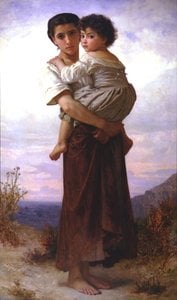
Bouguereauův umělecký styl je často popisován jako akademický realizmus, a to s dobrým důvodem. Vlastnil neporovnatelnou mistrovství v anatomii, světle a kompozici. Jeho plátna jsou obývána postavami zobrazenými s úžasnou přesností – jemný oblouk ramene, subtilní zarudnutí kůže, hluboký výraz oka. Ale jeho díla překračují pouhou technickou dovednost; jsou nasycená emocemi a narativní silou. Často zobrazoval mytologické scény, transformující starověké příběhy na živé, emocionálně rezonující okamžiky. *Zrození Venuše* (1879) není jen zobrazení bohyně vycházející z moře; je to oslava ženské gráce a éterické krásy. Podobně jako díla jako *Zenobia Nalezena Pastýři na Březích Araxe*, zachycují zranitelnost a patos s pozoruhodnou citlivostí. Kromě mytologie našel Bouguereau inspiraci i v každodenním životě – pastorky, dívky hrající si, matky objímající své děti. Tyto žánrové scény, ač zdánlivě jednoduché, jsou nabité pocitem důstojnosti a něhy, které je zvedají do sféry umění. *Faneuse (1869)* je toho dokonalým příkladem, kde zobrazuje mladou ženu v klidném kraji s nádhernou péčí o detail a atmosféru. Jeho oddanost zachycování nevinnosti se projevuje zejména v dílech jako *Dívka na koupeli*, kde jemné zobrazení kůže a světla vytváří skutečně fascinující obraz.
Vlivy a Inspirace
Bouguereau byl silně ovlivněn umělcem Rafaelem, který ho inspiroval svým důrazem na harmonii, proporce a lidskou krásu. Také Titta, s jeho znalostí anatomie a barvy, měl významný vliv na Bouguereauův styl. Jeho práce se také inspiruje díly slavných umělců jako Botticelli, Caravaggio a Rembrandt. V průběhu svého života se Bouguereau setkal s mnoha dalšími umělci, včetně Monet, Renoir a Degase, kteří ovlivnili jeho práci.
Rozvoj a Styl
Bouguereau začal malovat v raném věku a rychle si vybudoval pověst mistra detailu a realismu. Jeho díla jsou charakteristická precizním zobrazením lidského těla, jemnými barvami a harmonickou kompozicí. V průběhu let se jeho styl vyvíjel, ale vždy zůstal věrný základním principům akademického umění. Bouguereau byl známý svým pečlivým plánováním a nákladným použitím barev, aby dosáhl požadovaného efektu. Jeho práce jsou často popisovány jako "přehnaně krásné" nebo "idealizované", ale mnoho lidí je považuje za nádherné a působivé.
Dědictví a Hodnocení
Během svého života si Bouguereau užil obrovskou popularitu a kritické uznání. Byl oblíbeným umělcem Salonu, získal mnoho ocenění a objednávek. Jeho obrazy byly vyhledávány sběrateli a muzei po celém světě. Nicméně s nástupem modernismu v prvních letech 20. století byla jeho práce zanedbávána. Abstraktní formy a radikální experimenty umělců jako Picasso a Matisse se ostře protírali s jeho tradičním stylem, a on byl často odsouván do pozice sentimentálního akademika. Po desetiletí zůstala jeho jméno v ústraní, stínena avantgardními hnutími, která dominovala uměleckému světu. Nicméně příběh neskončil. V posledních letech se o jeho dílo obnovuje zájem. Umělci a sběratelé začínají uznávat jeho technickou brilanci a uměleckou integritu. Jeho obrazy jsou nyní oslavovány pro svou krásu, dovednost a emocionální hloubku. Tento objev není jen nostalgická touha po minulosti; je to uznání, že Bouguereau byl mistr řemesla, který si zaslouží místo mezi největšími umělci všech dob. Jeho vliv lze vidět i v současném figurálním malířství, kde umělci stále čerpají inspiraci z jeho mistrovství tvaru a světla.
Závěr
William-Adolphe Bouguereau byl jedním z nejvýznamnějších francouzských malířů 19. století. Jeho dílo je svědectvím o síle dovednosti, oddanosti a neochvějné víře v trvalou krásu klasických ideálů. Jeho obrazy jsou dodnes oslavovány pro svou krásu, dovednost a emocionální hloubku.



 Náhled
 Přepnout na tisk
 Sdílet
 Sdílet
 Podrobnosti o díle

 Stáhnout
 Podobné položky
 Rentgenové snímky
 Slideshow
 Statistiky


 Zobrazit více






































 Skleněná varianta je dostupná pouze u rozměrů menších než 110 cm