Biografie umělce
A Life Forged in Abstraction
Willem de Kooning, jméno synonymum pro syrovou energii a hluboké emocionální vyjádření abstrakce, se narodil v Rotterdame, Nizozemsko, v roce 1904. Jeho rané dětství bylo poznamenáno rodinným rozpadem – jeho rodiče se rozešli, když mu bylo pouhých pět let – což možná zakořenilo v něm pocit neustálého hledání, který by pronikal celou jeho uměleckou cestou. V patnácti letech ukončil formální školení a učnil se u obchodní umělecké firmy, čímž položil základy pro svou technickou zručnost, ale zároveň podněcoval touhu po překročení konvencí. Večerní kurzy na Academie van Beeldende Kunsten en Technische Wetenschappen v Rotterdame poskytly další základní školení, ale touha po něčem víc – po odvážnější, expresivnější řeči – ho nakonec vedla do Ameriky v roce 1926. Jeho příjezd nebyl jednoduchý; slavně se ukrýval na palubě lodi, čímž ztělesňoval ducha outsidera hledajícího nové obzory. New York City se stal jeho adoptovaným domovem a jeho pulzující, často drsná energie hluboce ovlivnila jeho vyvíjející se styl. Navštěvoval různé práce – malíř bytů, kovář – všechny při neustálém úsilí o prosazení své umělecké vize, absorboval město do své tvorby.
Od Městských Scén k Abstrakční Fury
De Kooningovy rané obrazy odrážely jeho přímé okolí: městské krajinky a portréty, které zachycovaly dynamiku New Yorku. Nicméně, tyto byly jen milníky směrem k hlubšímu prozkoumání tvarů a emocí. Klíčový okamžik představuje jeho spojení s Arshilem Gorkym, jehož vliv byl transformační. Gorky povzbuzoval de Kooninga k experimentování s abstrakcí, podporoval ochotu rozkládat tradiční reprezentaci ve prospěch něčeho hlubšího. 30. léta byla pro de Kooninga obdobím sociálního realismu a nástěnných maleb prostřednictvím WPA (Works Progress Administration), období, které zvládlo zlepšit jeho dovednosti, ale zároveň zdůraznilo omezení čistě reprezentativního umění. Hledal inspiraci u Stuarta Davise a Johna Gramama, umělců, kteří se snažili překročit hranice v jejich vlastní tvorbě. Tento proud vlivů postupně vedl k odklonu od doslovného zobrazení a směrem k stále více abstraktní slovníku. Nebyla to náhlá změna, ale pomalu probíhající proces – pečlivé rozebírání zavedených norem poháněné intelektuální zvědavostí a neochvějným úsilím o uměleckou pravdu.
Žena I: Ikona Abstraktního Expresionismu
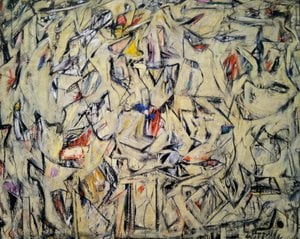
Po druhé světové válce se de Kooning stal klíčovou postavou rozvíjejícího se hnutí abstraktního expresionismu. Tato éra znamenala obrat, který culminoval v jeho ikonickém cyklu "Žena" (1950-1953). Tyto obrazy – včetně monumentální *Ženy I* – nejsou jen zobrazení ženských postav; jsou to syrové prozkoumávání femininity, sexuality a složitostí lidských emocí. Charakterizované agresivními štětcovými tahy, fragmentovanými tvary a rozporuplnou kombinací barev, cyklus "Žena" podněcoval tradiční vnímání krásy a reprezentace. Byly kontroverzní, dokonce šokující pro některé, ale jejich síla spočívala právě v odmítání konformity. De Kooning nebyl zainteresován na vytváření idealizovaných obrazů; hledal zachycení syrové, nedotčené podstaty svých subjektů. Kromě cyklu "Žena" díla jako *The Glazier* a *Excavation* dále demonstrovala jeho dynamický přístup k malbě, ukazující mistrné ovládání textury, barvy a kompozice. Nevzdával se chaosu ani nejistoty; spíše je přijímal jako nedílnou součást svého uměleckého jazyka.
Evoluce krajin a trvalá dedikace
V 60. letech prošla De Kooningova tvorba dalším významným vývojem. Zatímco abstrakce zůstala centrální součástí jeho díla, krajinné prvky začaly hrát důležitější roli, často zobrazené s jasnější paletou a volnějším, plynulejším štětcovým tahem. Pokračoval v neustálém experimentování po celý svůj život, prozkoumával různé techniky a materiály, nikdy nespokojený s tím, že by se usadil na svých úspěších. Pozdější díla demonstrují pozoruhodnou schopnost přetvářet sám sebe při zachování věrnosti svému základnímu uměleckému principu. Willem de Kooningův historický význam je nepopiratelný. Pomohl ustanovit New York City jako globální centrum pro umění, zpochybnil dominanci evropských tradic a vybojoval cestu pro budoucí generace umělců. Jeho dílo pokračuje inspirovat úžas a vyvolávat debaty, připomíná nám sílu abstrakce k vyjádření hlubokých emocionálních pravd. De Kooning zemřel v roce 1997 a zanechal za sebou rozsáhlé a vlivné dílo, které slouží jako svědectví jeho neochvějného závazku k umělecké inovacii a jeho trvalého dědictví jako jednoho z nejvýznamnějších amerických umělců 20. století.



 Náhled v interiéru
 Koupit ručně malovaný obraz
 Sdílet
 Sdílet
 Podrobnosti o díle
 Průvodce

 Stáhnout
 Podobné položky
 Rentgenové snímky
 Slideshow
 Statistiky


 Zobrazit více






































 Skleněná varianta je dostupná pouze u rozměrů menších než 110 cm