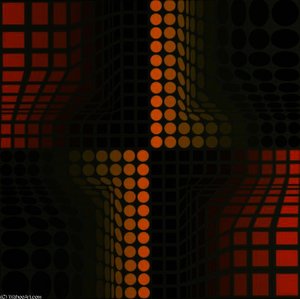
Ručně malovaná olejná barva na plátně ve vašem zvoleném rozměru i s rámem, vyrobená našimi umělci na zakázku. ( Koupit tisk Koupit obrázek)





























Vyberte si z našich přednastavených velikostí, které odpovídají původním proporcím díla.

Můžete zadat vlastní rozměry pro konkrétní rám nebo prostor. Pokud se vámi vybraná velikost neshoduje s proporcemi původního obrazu, dílo buď ořízneme, nebo jej doplníme ručně malovanými prvky. Před zahájením výroby vám bude zaslán digitální náhled ke schválení.
Upozorňujeme, že náhled na obrazovce neodpovídá skutečnému ořezu ani rozšíření. Pouze digitální náhled přesně zobrazí finální kompozici.
Ačkoliv je možné zvolit vlastní velikost, pro zachování původních proporcí doporučujeme vybrat rozměr z předdefinovaného seznamu.
Celosvětová doprava () za 3–4 týdny namísto standardních 5 týdnů. (6 září). Bez kompromisů v kvalitě.


Koska Mez
Rozměry reprodukce
Victor Vasarely's Koska Mez (Honeycomb), painted in 1962, is more than just a visual puzzle; it’s a profound meditation on the nature of perception itself. This vibrant artwork, dominated by a bold yellow square punctuated with countless meticulously placed circles, embodies the core tenets of Op Art – Optical Art – a movement that emerged in the mid-20th century and sought to stimulate optical illusions through geometric abstraction. Vasarely, a key figure in this revolutionary style, wasn’t simply interested in creating pretty pictures; he was driven by a desire to scientifically explore how our eyes and brains interpret visual information. The painting's deceptively simple composition immediately draws the viewer into a dynamic interplay of space and movement, challenging our assumptions about depth and perspective.
Understanding Koska Mez requires acknowledging its historical context. Vasarely’s artistic journey began with a formal medical education, a testament to the rigorous intellectualism that would later inform his work. However, a pivotal encounter with Sándor Bortnyik's ‘Műhely’ workshop – directly influenced by the Bauhaus school – fundamentally shifted his trajectory. The Bauhaus emphasized functional design and geometric abstraction, principles that resonated deeply with Vasarely’s burgeoning interest in visual dynamics. This training instilled within him a fascination with kinetic art—the idea that perception itself could be manipulated through carefully controlled optical effects. The influence of Piet Mondrian and other early abstract artists is also evident, but Vasarely pushed beyond mere representation to create works that actively engaged the viewer’s senses.
Vasarely's technique in Koska Mez is remarkably precise. Each circle, rendered with meticulous attention to detail, contributes to the overall illusion of depth and movement. The varying sizes and positions of the circles create a sense of recession, mimicking the way our eyes perceive distance. He employed a layering technique, applying paint in thin washes to build up the intensity of color and achieve the desired optical effect. This careful control over scale, color, and placement is what elevates the work beyond mere decoration; it’s a deliberate manipulation of visual perception. The use of bright yellow, a color associated with energy and optimism, further amplifies this dynamic quality.
While ostensibly abstract, Koska Mez can be interpreted as representing a microcosm – a ‘honeycomb’ suggesting order within apparent chaos. The repetition of the circles evokes a sense of infinity, mirroring the vastness of space and the complexities of the universe. The artwork's impact is profoundly engaging; it invites contemplation on our relationship with visual information and challenges us to question our own perceptions. Vasarely aimed not just to create an image but to trigger a visceral response – a feeling of movement, energy, and perhaps even a sense of wonder. This piece remains a powerful example of how art can be both intellectually stimulating and emotionally resonant.

1906 - 1997 , Chorvatsko

Explore the profound spiritual depth of geometric abstraction. From Malevich's Suprematism to modern masters, our expert guide reveals how pure form and color command presence in fine art collections.

Explore the mesmerizing world of Victor Vasarely. Discover how his Bauhaus-inspired Op Art masters the science of perception through geometric abstraction and vibrant color. A sophisticated guide for discerning art collectors seeking to understand the legacy of optical illusion.

 Náhled
 Sdílet
 Sdílet
 Podrobnosti o díle

 Stáhnout
 Podobné položky
 Rentgenové snímky
 Slideshow

 Zobrazit více







 Skleněná varianta je dostupná pouze u rozměrů menších než 110 cm