A Kaleidoscope of Perception: Exploring Victor Vasarely’s Abstract Composition 26
Victor Vasarely's "Abstract Composition 26" is more than just a colorful painting; it’s an invitation to question the very nature of visual perception. Born in Pécs, Croatia – then part of Austria-Hungary – in 1906, Vasarely embarked on a radical artistic journey, driven by a desire to translate mathematical principles into tangible forms. His early medical studies were abruptly abandoned in favor of exploring the captivating world of art, a decision that ultimately led him to become one of the foremost figures in Op Art and kinetic art, movements dedicated to manipulating visual illusions.
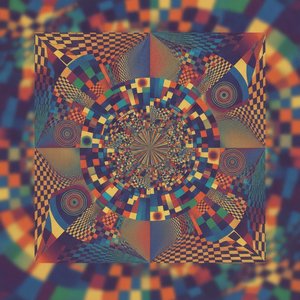
- Geometric Precision: The artwork’s core lies in its meticulously constructed geometric patterns. Circles, squares, triangles, and diamonds – fundamental shapes – are arranged with an almost obsessive precision, creating a dynamic interplay of color and form.
- Optical Illusions: Vasarely masterfully employs techniques to generate optical illusions, drawing the viewer into a mesmerizing dance of depth and movement. The arrangement isn’t static; it seems to shift and evolve as you observe it, mirroring the way our eyes naturally process visual information.
- Chromatic Harmony: A vibrant palette – red, yellow, purple, green, blue, orange, and black – is deployed with a considered eye for color theory. The juxtaposition of these hues amplifies the artwork’s energetic impact, contributing to its captivating allure.
The Birth of Op Art and Kinetic Vision
“Abstract Composition 26” represents a crucial moment in the development of Op Art (Optical Art), a movement that emerged in the mid-20th century. Influenced by the Bauhaus school’s emphasis on functional design and geometric abstraction, Vasarely sought to create art that directly stimulated the viewer's senses. He was fascinated by the way our brains interpret visual information – how we perceive depth, movement, and spatial relationships. This fascination led him to explore techniques like moiré patterns and forced perspective, pushing the boundaries of traditional painting.
Vasarely’s work anticipated developments in kinetic art, exploring the idea that perception itself is a dynamic process. His paintings aren't simply static images; they are invitations to actively engage with the artwork, manipulating your own visual experience.
Symbolism and Emotional Resonance
While Vasarely deliberately avoided overt symbolism in his work, the geometric patterns themselves can be interpreted as representing fundamental mathematical concepts – order, harmony, and infinity. The vibrant colors evoke a sense of energy, excitement, and perhaps even a touch of disorientation, mirroring the stimulating effect of optical illusions. The overall impression is one of controlled chaos, a beautiful paradox that reflects the complexities of human perception.
A Timeless Masterpiece – Perfect for Your Space
WahooArt offers meticulously crafted hand-painted reproductions of “Abstract Composition 26,” allowing you to bring this iconic artwork into your home or office. Each reproduction is created using traditional painting techniques, ensuring exceptional detail and color accuracy. Whether you’re an art collector, interior designer, or simply someone who appreciates striking visual experiences, this piece offers a unique opportunity to own a fragment of artistic history – a testament to Victor Vasarely's groundbreaking vision.
Otázky a odpovědi
Jsou barvy díla „Abstract Composition 26“ od Victor Vasarely živé, nebo tlumené?
Dílo „Abstract Composition 26“ od Victor Vasarely je zachyceno s Clear Color Presence saturací a Balanced intenzitou.
Jaké téma a atmosféru spojuje dílo „Abstract Composition 26“ od Victor Vasarely?
„Abstract Composition 26“ od Victor Vasarely zachycuje geometric abstraction, optical illusion, color field, kaleidoscope effect, victor vasarely, op art, dynamic composition v Calm náladě. Předmět a atmosféra dohromady definují toto dílo.
Jakým způsobem „Abstract Composition 26“ od Victor Vasarely propojuje Op Art s rodnou zemí umělce?
Dílo „Abstract Composition 26“ propojuje směr Op Art s Chorvatsko prostřednictvím rodného města svého tvůrce.



 Zobrazit v interiéru
 Objednat ručně malovanou reprodukci
 Odeslat
 Sdílet
 Podrobnosti
 Průvodce

 Stáhnout obrázek
 Podobné kousky
 Rentgenové snímky
 Slideshow
 Statistiky

 Přečíst si více






































 Skleněná varianta je dostupná pouze u rozměrů menších než 110 cm