BEZPLATNÉ UMĚLECKÉ PORADENSTVÍ

x
Koupit tisk Koupit tiskKoupit digitální obrázek Koupit digitální obrázek SdíletSdílet
PodrobnostiPodrobnosti Přidat do oblíbených Přidat do oblíbených StáhnoutStáhnout Podobné položkyPodobné položky Rentgenové snímkyRentgenové snímky SlideshowSlideshow

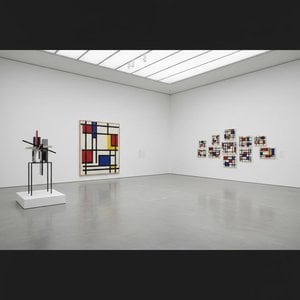
Simultaneous Counter Composition.

Experience Theo van Doesburg's vibrant 1930 abstract masterpiece, a geometric explosion of color and form; discover this iconic De Stijl vision for your collection.

Theo van Doesburg (1883-1931) – revoluční umělec, zakladatel De Stijl & Neoplasticismu. Jeho geometrické abstrakce a vliv na architekturu & design jsou nezapomenutelné.

Ručně malovaná olejová reprodukce

Ručně malovaná olejná barva na plátně ve vašem zvoleném rozměru i s rámem, vyrobená našimi umělci na zakázku.

Standard
custom
CM
INCH

Vyberte si z našich přednastavených velikostí, které odpovídají původním proporcím díla.

šířka
výška

Můžete zadat vlastní rozměry pro konkrétní rám nebo prostor. Pokud se vámi vybraná velikost neshoduje s proporcemi původního obrazu, dílo buď ořízneme, nebo jej doplníme ručně malovanými prvky. Před zahájením výroby vám bude zaslán digitální náhled ke schválení.
Upozorňujeme, že náhled na obrazovce neodpovídá skutečnému ořezu ani rozšíření. Pouze digitální náhled přesně zobrazí finální kompozici.
Ačkoliv je možné zvolit vlastní velikost, pro zachování původních proporcí doporučujeme vybrat rozměr z předdefinovaného seznamu.

Příklady možných změn: Nahrazení obličeje vlastní fotografií; Přidání domácího mazlíčka (např. nahrazení kočky psem); Vložení skrytého vzkazu do pozadí; Změna krajiny nebo prvků v pozadí.
Po přijetí objednávky vám tým WahooArt.com zašle e-mail s pokyny a poskytne náhledovou verzi.

Celosvětová doprava () za 3–4 týdny namísto standardních 5 týdnů. (2 červenec). Bez kompromisů v kvalitě.

why_choose_icon
Zdarma celosvětová expresní doprava
why_choose_icon
Vysoce kvalitní lněné plátno
why_choose_icon
Kompletní přepravní pojištění
why_choose_icon
Záruka vrácení celního poplatku
why_choose_icon
Záruka přesného barevného shodu
why_choose_icon
60denní lhůta pro vrácení zboží (pouze při vadách výroby)
why_choose_icon
100% garance vrácení peněz
why_choose_icon
Sleva při hromadné objednávce

Celková cena

-

reproduction

Simultaneous Counter Composition.

Technika reprodukce

Rozměry reprodukce

-

Celková cena za výběr

-

Základní informace

  • Subject or theme: Geometric composition
  • Movement: De Stijl
  • Artist: Theo van Doesburg
  • Dimensions: 50 x 49 cm
  • Artistic style: Abstract

Kvíz o umění

U každé otázky je pouze jedna správná odpověď.

Otázka 1:
What artistic movement is Theo van Doesburg most associated with?
Otázka 2:
What primary visual characteristic defines the composition of 'Simultaneous Counter Composition'?
Otázka 3:
In what year was 'Simultaneous Counter Composition' created?
Otázka 4:
The painting primarily utilizes which combination of colors, as described?
Otázka 5:
Theo van Doesburg's early artistic influences included styles reminiscent of which artist?

Popis díla

The Geometry of Inner Harmony: Exploring Theo van Doesburg's Abstraction

To stand before Theo van Doesburg’s Simultaneous Counter Composition is not merely to observe paint on canvas; it is to step into a meticulously constructed intellectual space where color and form engage in a vibrant, calculated dialogue. This piece, dating from 1930, stands as a powerful testament to the revolutionary spirit of De Stijl, the movement that sought to purify art down to its most essential geometric truths. Van Doesburg, an architect of abstraction, believed that true reality could be found not in the messy chaos of visible nature, but in the underlying harmony of pure lines and primary colors. The painting immediately envelops the viewer in a field of structured energy, inviting the eye to wander across its carefully balanced quadrants.

A Masterclass in Primary Structure

The composition itself is breathtaking in its deliberate organization. Divided into distinct yet interconnected sections—left, center, and right—the canvas pulses with a controlled chromatic symphony. We see the bold interplay of red, yellow, blue, black, and white, colors that carry immense symbolic weight within modernist thought. These hues are not simply placed side-by-side; they interact, their adjacency creating optical vibrations. The varying sizes and shapes of the squares suggest a dynamic tension, as if opposing forces—structure versus fluidity, chaos versus order—are locked in a perfect, silent negotiation. It is an exercise in visual equilibrium, where every seemingly arbitrary block contributes to the whole.

Historical Echoes: De Stijl's Vision

Understanding this work requires acknowledging its historical cradle: the fervor of Neoplasticism. Van Doesburg was instrumental in guiding art away from mere representation and toward a universal language built on abstraction. This painting embodies that quest for universal harmony, echoing the philosophical underpinnings of the early 20th century desire to rebuild culture after periods of immense upheaval. The rigid geometry is not a limitation, but rather an assertion of underlying cosmic order—a belief that even in the most abstract arrangement, there exists profound, discernible beauty and balance.

Bringing Geometric Vibrancy Home

For the collector or designer seeking to infuse a space with intellectual depth and vibrant energy, Simultaneous Counter Composition offers unparalleled impact. Its bold, graphic nature means it functions as both a striking piece of art and a powerful architectural accent. Reproducing this work allows one to bring the disciplined passion of early modernism into contemporary living. Imagine its clean lines juxtaposed against soft furnishings or rich wood tones; the painting acts as a brilliant focal point, demanding contemplation while simultaneously providing visual rest through its inherent balance.

Emotional Resonance and Technique

The emotional impact of this piece is one of exhilarating clarity. It feels both rigorously intellectual and deeply soulful. The technique, characterized by flat planes of color meeting at sharp, decisive edges, celebrates the purity of the painted surface. When considering a reproduction, note how the vibrancy of these primary colors—the way they seem to vibrate against each other—is crucial. Owning this piece is owning a conversation between structure and spirit, a vibrant reminder that even in apparent complexity, perfect harmony can be found.

Podobná umělecká díla


Biografie umělce

The Architect of Abstraction: A Life in Geometric Harmony

Theo van Doesburg, born Christian Emil Marie Küpper in 1883 in Utrecht, Netherlands, wasn’t merely a painter; he was a revolutionary force who fundamentally reshaped the very foundations of modern art. His journey began amidst the lingering echoes of Impressionism and Post-Impressionism, initially mirroring styles reminiscent of Vincent van Gogh – both in subject matter and emotional intensity. However, this early phase served as a crucial prelude, a necessary stepping stone toward the radical transformation that would define his enduring legacy. A pivotal moment arrived in 1913 with his encounter with Wassily Kandinsky’s *Rückblicke*. This text sparked within van Doesburg a profound realization: true artistic expression lay not in replicating the external world but in channeling an inner, spiritual reality through pure abstraction. It was this conviction that birthed Neoplasticism, more commonly known as De Stijl – a movement he founded and fiercely championed, becoming its most ardent advocate.

Forging a New Visual Language: The Principles of De Stijl

De Stijl wasn’t merely an artistic style; it was a comprehensive philosophical manifesto translated into visual form. Van Doesburg believed in stripping art down to its most essential elements – straight lines, right angles, and the primary colors of red, yellow, and blue, alongside black, white, and gray. This austere palette wasn't born from limitation but from a desire for universality—a belief that these fundamental forms resonated with an underlying cosmic order. He envisioned a *total* work of art, extending beyond the canvas to encompass architecture, design, and even everyday objects. Collaboration was key; van Doesburg worked closely with architects like J.J.P. Oud and Gerrit Rietveld, designing stained glass windows, furniture, and entire interiors that embodied the principles of De Stijl. His collaborations extended to fellow artists such as Piet Mondrian, with whom he co-founded the influential journal *De Stijl*, a platform for disseminating their ideas and attracting like-minded creatives. However, despite their shared origins, tensions arose between van Doesburg and Mondrian regarding the rigidity of Neoplasticism. Van Doesburg introduced “Elementarism” in 1926, advocating for diagonal lines and more dynamic compositions – a departure that ultimately led to a schism within the movement, revealing his restless spirit and constant pursuit of artistic evolution.

A Multifaceted Artistic Vision: Beyond Painting

While celebrated as a painter, van Doesburg’s artistic pursuits were remarkably diverse. He was a prolific writer, poet, and critic, using his pen to articulate the theoretical underpinnings of De Stijl and challenge conventional notions of art. His engagement with Dadaism in the early 1920s further broadened his artistic horizons, leading to experimental works that incorporated collage and typography. This period also saw him teaching at the Bauhaus, where he shared his ideas with a new generation of artists and designers. He wasn’t content to remain within the confines of traditional art forms; van Doesburg actively sought to integrate art into everyday life, believing it had the power to transform society. His designs for interiors and furniture weren't merely aesthetic exercises but attempts to create harmonious living spaces that reflected the principles of De Stijl. A prime example is his collaboration with Sophie Taeuber-Arp and Georges Vantongerloo on designing artist residences, showcasing a holistic approach to artistic creation – an attempt to build a world *in* the image of his ideals.

Key Influences and Developments

Van Doesburg’s artistic development was shaped by a confluence of influences. His early work echoes the expressive brushwork and emotional intensity of Vincent van Gogh, reflecting a deep connection with nature and human experience. However, this initial phase gave way to a profound shift in 1913 following his encounter with Kandinsky's *Rückblicke*, which ignited his interest in abstraction as a means of conveying spiritual truths. The impact of Futurism, with its celebration of dynamism and speed, also played a role in shaping his thinking, though he ultimately rejected its emphasis on representation. His engagement with Dadaism introduced him to the possibilities of collage and assemblage, while his time at the Bauhaus exposed him to innovative approaches to design and architecture. These diverse influences coalesced into the unique aesthetic of De Stijl, characterized by geometric abstraction, primary colors, and a commitment to universal harmony.

Legacy and Enduring Influence

Theo van Doesburg’s life was tragically cut short in 1931 at the age of 47, yet his impact on modern art remains profound. De Stijl, though relatively short-lived as a cohesive movement, exerted an enormous influence on subsequent artistic developments, including Bauhaus design, Minimalism, and Constructivism. His emphasis on geometric abstraction, pure color, and functionalism continues to resonate with artists and designers today. His work serves as a reminder that art is not merely about representation but about the exploration of fundamental forms and ideas. Van Doesburg’s legacy extends beyond his paintings and designs; it lies in his unwavering commitment to artistic innovation and his belief in the transformative power of abstraction. His vision of a unified, harmonious world – expressed through the language of De Stijl – continues to inspire those who seek to create a more beautiful and meaningful environment.
Theo van Doesburg

Theo van Doesburg

1883 - 1931 , Nizozemsko

Rychlé fakta

  • Artistic Movement Or Style: De Stijl, Neoplasticismus
  • Artists Or Movements Influenced By This Artist:
    • Bauhaus
    • Minimalismus
  • Artists Who Influenced This Artist:
    • Wassily Kandinsky
    • Vincent van Gogh
  • Date Of Birth: 30. srpna 1883
  • Date Of Death: 7. března 1931
  • Full Name: Christian Emil Marie Küpper
  • Nationality: Nizozemec
  • Notable Artworks:
    • Studie pro Simultánní...
    • Kompozice s červenou...
    • Tancující
  • Place Of Birth: Utrecht, Nizozemsko
Prozkoumejte umělecká díla uspořádaná podle témat, stylů a charakteristik.