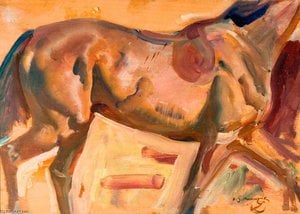
A Life Immersed in Equine Grace
Sir Alfred James Munnings, jméno neodmyslitelně spojené s živoucím zobrazením koní a romantickou krásou venkovského Anglie, zaujímá klíčovou pozici v 20. století britského umění. Narodil se roku 1878 v rozsádlých krajinách Suffolku a jeho život byl hluboce ovlivněn trvalým poutem k koní – poutem, které definovalo jeho umělecké vizi a přispělo k jeho pověsti. Munnings nezaznamenával jen to, co viděl; zachycoval pocit, atmosféru, svět na pokraji nevratelné proměny. Zachytával mizící způsob života, pečlivě pozorovaný portrét Anglie zasazený do tradice, lovu a rytmu venkova.
Od Venkovských Začátků k Uměleckému Rozvoji
Munningsův umělecký putování nezačalo v formálních končinách akademie, ale v praktickém světě Norwichského tiskařství. Tato učební zkušenost zdokonalila jeho dovednosti v designu a pozorování, přičemž mu zároveň umožnila studovat na Norwich School of Art. Jednalo se o formativní období, které v něm zavedlo disciplínu, která mu sloužila při navigaci výzvami založení se jako umělce. Raní vlivy zahrnovaly impresionisty ze školy Newlyn v Cornwall, kde přijali jejich závazek zachycovat světlo a atmosféru přímo z přírody. Toto ponoření do impresionistických technik položilo základy pro jeho charakteristický styl – volné štětoborce, živou paletu a hmatatelný pocit pohybu. Jeho rané díla často zobrazovala venkovské scény, zejména ty s kmeny a koňmi potulujícími se po Suffoltském kraji, nabité romantickou senzibilitou, která ukazovala jeho rostoucí mistrovství v barvě a světle. Tyto malby nebyly pouhými reprezentacemi; byly projevy hluboké lásky k zemi a jejím obyvatelům.
Válka, Rozpoznání a Ochránce Tradičního
První světová válka zásadně ovlivnila jak Munningsův umělecký pohled, tak jeho veřejný profil. I když byl na počátku shledán neschopným služby, sloužil jako oficiální válečný umělec s kanadskou kavalírní brigádou, dokumentoval klíčovou roli koní v konfliktu. Tato zkušenost ho přivedla tváří v tvář hrůzám války – utrpení, ztrátě a trvalému poutu mezi lidmi a zvířaty. Jeho obrazy z tohoto období nejsou glorifikacemi boje, ale dojemné odrazové zrcadly obětí a odolnosti, zachycující smutnou krásu uprostřed devastace. Po válce se Munningsova popularita a finanční zabezpečení prudce zvýšila. Dostával prestižní pověření, která mu umožnila koupit Castle House v Dedhamu, Essex – nemovitost, která se stala jak jeho domovem, tak ateliérem na zbytek svého života. Stal se žádaným portrétistou, zachycujícím podobnost a charakter prominentních osobností z aristokracie a závodního světa. Jeho schopnost vyjádřit nejen fyzickou podobnost, ale i povahu a spojení s lidským srdcem upevňovala jeho reputaci jako jednoho z nejlepších britských umělců. Munnings byl však také vášnivým obhájcem tradičních uměleckých hodnot.
Kontroverzní Hlas a Trvalé Závratí
Munningsův umělecký filozofie byla hluboce zakořeněna v tradici, a stal se hlasitým kritikem rozvíjejících se moderních proudů, které zpochybňovaly konvenční představy o umění. Jeho slavný – a často kontroverzní – rozhlasový projev z roku 1949 vedl k ostré kritice Cubismu a Surrealismu, který byl přednesen s typickou upřímností (a údajně poháněn alkoholem). I když jeho prohlášení vyvolala vztek zastánců moderního umění, zároveň rezonovaly s těmi, kteří si vážili reprezentativního malířství a trvalou sílu umělecké dovednosti. Nešlo jen o odpor ke změně z čistě teoretických důvodů; věřil v důležitost zachování uměleckých standardů a oslavy krásy ve svých tradičních formách. Tato víra se projevila v jeho zvolení prezidentem Royal Academy v roce 1944, pozici, kterou zastával až do roku 1949, upevňující tak svou pozici v britské umělecké elitě. Byl jmenován rytířem v roce 1944 a jmenován rytířským vikářem královské víry v roce 1947, což dále uznávalo jeho přínos národnímu kulturnímu životu.
Hlavní Úspěchy
- Prezident Royal Academy: Zvolen prezidentem Royal Academy v roce 1944, zastával tuto pozici až do roku 1949.
- Rytířské jmenování: Jmenován rytířem v roce 1944 a jmenován rytířským vikářem královské víry v roce 1947.
- Válečný umělec: Uznán za svou práci dokumentující kanadskou kavalírní brigádu během I. světové války.
- Sochařská díla: Vytvořil sochy, včetně sochy Edwarda Horner.
Jeho dědictví přetrvává nejen prostřednictvím mistrovských obrazů, ale také jako vášnivý obhájce umělecké tradice v rychle se modernizujícím světě.



 Zobrazit v interiéru
 Přepnout na tiskové verze
 Odeslat
 Sdílet
 Podrobnosti
 Průvodce

 Stáhnout obrázek
 Podobné kousky
 Rentgenové snímky
 Slideshow
 Statistiky


 Přečíst si více






































 Skleněná varianta je dostupná pouze u rozměrů menších než 110 cm