


Giclée nebo plátěný tisk muzeální kvality s rychlou výrobou a flexibilními možnostmi povrchové úpravy. ( Koupit ručně malovaný obraz Koupit obrázek)





























Vyberte si z našich přednastavených velikostí, které odpovídají původním proporcím díla.

Můžete zadat vlastní rozměry tak, aby výtvor odpovídal konkrétnímu rámu nebo prostoru. Pokud zvolená velikost nebude odpovídat poměru stran původního obrazu, dílo buď ořížeme, nebo obraz rozšíříme pomocí zrcadlového efektu či jednobarevného okraje. Před zahájením výroby vám bude zaslán digitální náhled k schválení.
Mějte prosím na paměti, že náhled na obrazovce neodráží skutečné oříznutí nebo rozšíření. Pouze digitální náhled přesně zobrazí finální kompozici.
Ačkoliv jsou k dispozici i vlastní rozměry, pro zachování původních proporcí doporučujeme vybrat si rozměr z předdefinovaného seznamu.
Celosvětové doručení () do 2 týdnů namísto standardních 4/5 týdnů. (6 září)


On the Path
Rozměry reprodukce
Pierre-Auguste Renoir, a luminary of the Impressionist movement, stands as an enduring symbol of capturing fleeting moments of beauty and emotion. His painting, ‘On The Path,’ isn’t merely a depiction of a stroll through woodland; it’s a distillation of Impressionism's core principles—a celebration of light, color, and atmosphere that continues to resonate with audiences today.
Composition and Technique Renoir meticulously crafted this scene, prioritizing balance and depth. The central figure – a man traversing a dirt road – anchors the composition, while surrounding trees and bushes subtly guide the viewer’s gaze outwards, fostering a sense of tranquility and immersion. Renoir's masterful use of oil on canvas allowed him to achieve remarkable textural richness and vibrancy, layering pigments to create an illusion of luminescence that surpasses mere representation.
Impressionist Influence Renoir’s artistic vision was undeniably shaped by his contemporaries, notably Claude Monet, who similarly pursued the Impressionist aesthetic. Consider Monet's ‘Pleasure Boats, Argenteuil,’ showcased on /art/list/?Filter=8XXRCU-Claude-Monet-Pleasure-Boats-Argenteuil-c-1872-3-(oil-on-canvas)—a piece that mirrors Renoir’s dedication to capturing the ephemeral qualities of light and color. This shared pursuit exemplifies the spirit of artistic experimentation prevalent during the era.
The late 19th century witnessed a seismic shift in artistic sensibilities, as Impressionism bravely confronted the conventions of academic painting. Artists like Renoir and Monet rejected idealized forms and meticulous detail, opting instead to portray life as it unfolded—often capturing transient effects of weather or time. The Musée Des Beaux-Arts Tourcoing in France, housing an impressive collection from this period – accessible on /art/list/?Filter=A@D3CEAD-Discover-the-Musee-Des-Beaux-Arts-Tourcoing-France – serves as a tangible reminder of the artistic fervor that defined the era.
At the heart of ‘On The Path’ lies Renoir's masterful manipulation of light and shadow—a technique central to Impressionist painting. He skillfully employs chiaroscuro, subtly modulating tonal values to sculpt form and create a palpable sense of depth. As documented on https://en.wikipedia.org/wiki/Light_in_painting, chiaroscuro has been a cornerstone of artistic expression throughout history, informing painters from Rembrandt to Caravaggio.
Beyond its technical brilliance, ‘On The Path’ carries profound symbolic weight. The solitary figure traversing the road represents contemplation and introspection amidst the grandeur of nature—a motif frequently explored by Impressionists seeking to convey feelings of serenity and wonder. Renoir's deliberate brushstrokes contribute to an emotional resonance that transcends mere visual observation, inviting viewers to contemplate themes of solitude, beauty, and connection with the natural world.
'On The Path’ by Pierre-Auguste Renoir stands as a testament to Impressionism's enduring legacy—a captivating portrayal of light, color, and atmosphere that continues to inspire artists and collectors alike. Its tranquil composition and masterful execution solidify its place as an unforgettable emblem of artistic achievement.


1841 - 1919 , Francie
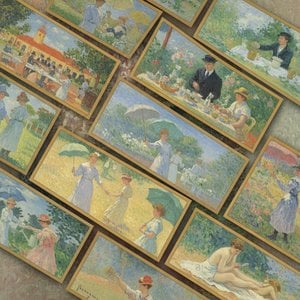
Objevte top 25 děl Pierre-Auguste Renoira – impresionistické ikony plné světla a radosti. Prozkoumejte příběhy slavných obrazů, techniky malby a inspirujte se pro váš domov s WahooArt.cz! Reprodukce obrazů nejvyšší kvality.

Prozkoumejte 10 ikonických impresionistických krajin od Monet, Renoir a dalších. Objevte příběhy umělců, techniky a barvy, které definovaly toto revoluční hnutí. Najděte dokonalý obraz pro váš interiér na WahooArt.cz

Explore the rich history of landscape art with WahooArt. Discover renowned artists, movements like Impressionism & Romanticism, and expert guidance for collecting timeless pieces. Find your perfect serene escape today!

Prozkoumejte 25 ikonických děl Paula Cézanna – průkopníka moderního umění a impresionismu. Obdivujte jeho still life, krajiny a portréty. Reprodukce obrazů v nejvyšší kvalitě na WahooArt.com. Inspirace pro váš interiér!

Explore the history of serene landscapes in art! Discover renowned artists like Monet & Munch, movements from Impressionism to Tonalism, and find the perfect piece to bring tranquility to your home. Expert insights at WahooArt.

 Náhled
 Sdílet
 Sdílet
 Podrobnosti o díle

 Stáhnout
 Podobné položky
 Rentgenové snímky
 Slideshow

 Zobrazit více







 Skleněná varianta je dostupná pouze u rozměrů menších než 110 cm


