Život a počátky malířské dráhy Augusta Renoira
Pierre-Auguste Renoir, zrozený v roce 1841 v poklidném francouzském městě Limoges, nebyl od útlého věku předurčen k roli jednoho z nejvýznamnějších představitelů impresionismu. Jeho cesta od skromných začátků jako malíře porcelánu až po slávu a uznání je příběhem nezdolné píle a hluboké umělecké vize. Rodinný přesun do Paříže, motivovaný snahou o lepší ekonomické podmínky, zásadně ovlivnil jeho citové i estetické vnímání světa. Rušný život velkoměsta, s jeho pulzující atmosférou a rozmanitými postavami, se stal nevyčerpatelným zdrojem inspirace pro jeho budoucí tvorbu. Mladý Renoir, nucený živit rodinu, našel útočiště v precizní práci malíře porcelánu – praktická nutnost, která však zároveň podnítila jeho touhu po uměleckém vyjádření. Časté návštěvy Louvru mu otevřely dveře do světa starých mistrů, kde studoval jejich techniky a rozvíjel cit pro krásu, který se stal charakteristickým rysem jeho stylu. Tato raná zkušenost v něm zažehla vášeň přesahující pouhé řemeslo – volání zachytit pomíjivé kvality světla a života na plátně. Následné studium v ateliéru Charlese Gleyra se ukázalo jako klíčový moment, kdy navázal celoživotní přátelství s budoucími impresionisty Claude Monetem, Alfredem Sisleym a Frédéricem Bazillem – setkání, které položilo základy nového uměleckého hnutí.
Od realismu k zářivým impresionistickým vizím
Umělecký vývoj Augusta Renoira byl fascinující proměnou ovlivněnou širokou škálou mistrů a vlivů. Zpočátku se přikláněl k realismu Gustava Courbeta a Édouarda Maneta, obdivoval jejich upřímnost a snahu o zobrazení současného života bez příkras. Skutečným zdrojem inspirace se však stali luminózní palety a smyslné formy Petra Paula Rubense a Jeana-Antoina Watteaua, které v jeho díle probudily hluboký cit pro krásu a sklon k zobrazování radostných a volnočasových scén. Tyto rané podněty se spojily, když Renoir začal formovat svůj jedinečný styl – charakterizovaný živými barvami, rozbitou malbou štětcem a zaměřením na zachycení prchavých efektů světla. Jeho účast v první impresionistické výstavě v roce 1874 znamenala zásadní zlomový bod, i když se setkala s kritikou ze strany tradičních uměleckých kruhů. Tento odvážný krok symbolizoval odmítnutí akademických konvencí a přijetí nové umělecké vize – snahy zachytit nejen to, co oko vidí, ale i to, jak se *cítí* prožívat daný okamžik. Obraz
Tanec na Moulin de la Galette (1876) je dokonalým příkladem tohoto přístupu, vtahuje diváka do živé atmosféry pařížského nočního života s jeho hrajícím světlem a radostnými postavami.
Zachycování pomíjivých okamžiků života: klíčová díla a témata
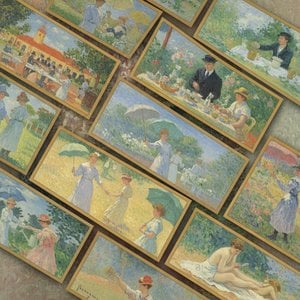
Dílo Augusta Renoira je oslavou prostých životních potěšení – intimních setkání, sluncem zalitých krajin a zářivé krásy lidského těla.
Oběd lodníků (1880-81) patří k jeho nejznámějším dílům, zobrazuje společenství lidí užívajících si klidné odpoledne na Seině. Obraz je mistrovským dílem zachycení světla a pohybu, s postavami zalitými teplým slunečním svitem a třpytícími se odrazy na vodě.
Po koupeli (1885-87) demonstruje Renoirovo výjimečné umění zobrazovat ženskou nahotu, zdůrazňuje jemné tóny pleti a ladné pózy. Jeho obrazy nejsou pouhými reprezentacemi reality; jsou plné tepla, intimity a radosti, které hluboce rezonují s diváky. Nezajímal se o velká historická vyprávění nebo dramatické alegorie; místo toho se soustředil na zachycení krásy přítomné v každodenním životě, povznášejíc obyčejné okamžiky na úroveň uměleckých děl.
Tanec v Bougivalu, další oslavované dílo, dokazuje jeho schopnost zachytit prchavé dojmy a atmosférické efekty, vytvářející pocit pohybu a spontánnosti.
Posun k formě a struktuře: pozdní léta a odkaz
V 90. letech 19. století prošel Renoirovo umění výraznou proměnou. I když nikdy zcela neopustil impresionistické kořeny, začal se posouvat směrem k sochařštějšímu a klasicističtějšímu přístupu, ovlivněnému cestami do Itálie a obnoveným zájmem o formu a strukturu. Tento posun byl částečně způsoben i fyzickými omezeními – artritida postupně omezovala jeho pohyblivost, což ho donutilo přizpůsobit svou techniku. Navzdory těmto výzvám Renoir pokračoval v malování s neochvějnou oddaností a vytvářel díla charakteristická plnějšími postavami a teplejší paletou barev. Jeho pozdní obrazy často odrážejí kontemplativnější náladu, přesto si zachovávají základní oslavu krásy, která definovala jeho ranější tvorbu. Kromě uměleckých úspěchů se Renoirovo dědictví rozšiřuje i prostřednictvím jeho rodiny; jeho syn Jean Renoir se stal renomovaným filmovým režisérem a nesl kreativního ducha do dalších generací. Pierre-Auguste Renoir zemřel v roce 1919, zanechal po sobě trvalé dílo, které neustále inspiruje a okouzluje publikum po celém světě. Zůstává jedním z nejmilovanějších umělců v dějinách umění, oslavován pro svou schopnost zachytit radost života a krásu lidské zkušenosti s bezkonkurenční citlivostí a grácií.
Trvalý vliv
- Renoirovo působení na další generace umělců je nepopiratelné. Jeho důraz na světlo, barvu a zachycení pomíjivých okamžiků připravil cestu mnoha moderním uměleckým směrům.
- Jeho oslava krásy a smyslnosti rezonuje s publikem dodnes a činí jeho dílo univerzálně přitažlivým.
- Hrál zásadní roli při etablování impresionismu jako významné síly v dějinách umění, zpochybňoval tradiční konvence a otevíral nové možnosti pro umělecké vyjádření.
- Trvalá popularita jeho obrazů – reprodukovaných na nesčetných plakátech, kalendářích a dalších reklamních předmětech – svědčí o nadčasovosti jeho díla.



 Náhled
 Switch to Print
 Sdílet
 Sdílet
 Podrobnosti o díle

 Stáhnout
 Podobné položky
 Rentgenové snímky
 Slideshow
 Stats
Stats

 Zobrazit více






































 Skleněná varianta je dostupná pouze u rozměrů menších než 110 cm