L'Ile Calypso od Philippe-Auguste Jeanron, ručně malovaná olejná reprodukce mistrovským umělcem
Náhled v interiéru Náhled v AR Přepnout na tisk Přepnout na digitální obraz Sdílet
Podrobnosti o díle Průvodce Přidat do oblíbených Stáhnout Podobné položky Rentgenové snímky Slideshow Otázky a odpovědi Presentation Statistiky

L'Ile Calypso Ručně malovaná reprodukce olejomalby

Admire 'L’Ile Calypso' by Philippe-Auguste Jeanron, a captivating 19th-century French painting. Explore genre scenes & republican ideals in this beautiful reproduction.

Discover Philippe-Auguste Jeanron, a 19th-century French painter & Louvre director. Explore his realist genre scenes depicting everyday life and republican ideals.

Ručně malovaná olejová reprodukce

Rukou malované olejné plátno v libovolném rozměru i s rámem, vyrobené našimi umělci na zakázku. ( Přepnout na tisk Přepnout na digitální obraz)

Corner sample of the P118B picture frame: tvarovaný polystyren, 5 cm wide and 3 cm thick
P118B Kč10
Corner sample of the P118H picture frame: tvarovaný polystyren, 5 cm wide and 3 cm thick
P118H Kč10
Corner sample of the P118W picture frame: tvarovaný polystyren, 5 cm wide and 3 cm thick
P118W Kč10
Corner sample of the P438Z picture frame: tvarovaný polystyren, 5.5 cm wide and 3.5 cm thick
P438Z Kč10
Corner sample of the P508JH picture frame: tvarovaný polystyren, 7 cm wide and 3.5 cm thick
P508JH Kč12
Corner sample of the P508YH picture frame: tvarovaný polystyren, 7 cm wide and 3.5 cm thick
P508YH Kč12
Corner sample of the P805H picture frame: tvarovaný polystyren, 5 cm wide and 3.5 cm thick
P805H Kč10
Corner sample of the P805Z picture frame: tvarovaný polystyren, 5 cm wide and 3.5 cm thick
P805Z Kč10
Corner sample of the P919BZ picture frame: tvarovaný polystyren, 7 cm wide and 3.5 cm thick
P919BZ Kč10
Corner sample of the P919G picture frame: tvarovaný polystyren, 7 cm wide and 3.5 cm thick
P919G Kč10
Corner sample of the P919XJ picture frame: tvarovaný polystyren, 7 cm wide and 3.5 cm thick
P919XJ Kč10
Corner sample of the P959ZH picture frame: tvarovaný polystyren, 5 cm wide and 3 cm thick
P959ZH Kč10
Corner sample of the P968JZ picture frame: tvarovaný polystyren, 6 cm wide and 4 cm thick
P968JZ Kč12
Corner sample of the W106C picture frame: masivní dřevo, 5 cm wide and 3 cm thick
W106C Kč8
Corner sample of the W218G picture frame: masivní dřevo, 5 cm wide and 3 cm thick
W218G Kč10
Corner sample of the W218JH picture frame: masivní dřevo, 5 cm wide and 3 cm thick
W218JH Kč8
Corner sample of the W218Y picture frame: masivní dřevo, 5 cm wide and 3 cm thick
W218Y Kč10
Corner sample of the W307PJ picture frame: masivní dřevo, 6 cm wide and 3 cm thick
W307PJ Kč10
Corner sample of the W316G picture frame: masivní dřevo, 6 cm wide and 3 cm thick
W316G Kč10
Corner sample of the W316PJ picture frame: masivní dřevo, 6 cm wide and 3 cm thick
W316PJ Kč8
Corner sample of the W316Y picture frame: masivní dřevo, 6 cm wide and 3 cm thick
W316Y Kč10
Corner sample of the W398PJ picture frame: masivní dřevo, 5 cm wide and 3 cm thick
W398PJ Kč8
Corner sample of the W4111J picture frame: masivní dřevo, 6.5 cm wide and 3.5 cm thick
W4111J Kč10
Corner sample of the W500HY picture frame: masivní dřevo, 7 cm wide and 5 cm thick
W500HY Kč15
Corner sample of the W500JH picture frame: masivní dřevo, 7 cm wide and 5 cm thick
W500JH Kč15
Corner sample of the W692G picture frame: masivní dřevo, 8 cm wide and 4 cm thick
W692G Kč12
Corner sample of the W849H picture frame: masivní dřevo, 5 cm wide and 3 cm thick
W849H Kč8
Corner sample of the W940BG picture frame: masivní dřevo, 7.5 cm wide and 4.5 cm thick
W940BG Kč15
Corner sample of the W953PJ picture frame: masivní dřevo, 6 cm wide and 3.5 cm thick
W953PJ Kč8

Standardní velikost
na zakázku
CM
INCH

Vyberte si z našich přednastavených velikostí, které odpovídají původním proporcím díla.

šířka
výška

Zadejte šířku a výšku, které potřebujete pro váš rám nebo stěnu. Protože se jedná o ruční malbu, při výběru jiného formátu může umělec kolem obrazu domalovat o něco více, nebo jej mírně oříznout — rozhodnete si vy. Před zahájením malby vám zašleme digitální náhled ke schválení. Obraz zobrazený na této stránce neodpovídá skutečnému výsledku — pouze digitální náhled jej zobrazuje.

Příklady možných změn: nahrazení obličeje fotografií zákazníka; přidání domácího mazlíčka (např. nahrazení kočky psem); vložení skrytého vzkazu do pozadí; změna krajiny nebo prvků v pozadí.
Po přijetí objednávky vám tým WahooArt.com zašle e-mail s pokyny a poskytne náhledovou verzi.

Celosvětová doprava () za 3–4 týdny namísto standardních 5 týdnů. (6 listopad). Bez kompromisů v kvalitě.

Zdarma celosvětová expresní doprava
Vysoce kvalitní lněné plátno
Kompletní pojištění přepravy
Záruka vrácení celního poplatku
Záruka věrného barevného souladu
100dení lhůta pro vrácení zboží (pouze při vadách výroby)
100% záruka vrácení peněz
Sleva při více objednávkách

Celková cena

Kč 8115

L'Ile Calypso

Technika reprodukce

Rozměry reprodukce

-

Celková cena za vybrané možnosti reprodukcí

Kč 8115


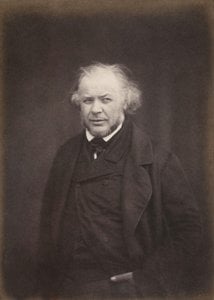
Biografie umělce

A Revolutionary Spirit on Canvas: The Life and Art of Philippe-Auguste Jeanron

Born in 1809 amidst the echoes of revolution, Philippe-Auguste Jeanron was a painter whose life and work were deeply intertwined with the political and social currents of 19th-century France. His origins themselves spoke to a lineage steeped in republican ideals; his grandfather had actively participated in the storming of the Bastille, instilling within the family a fervent belief in liberty and equality. This heritage profoundly shaped Jeanron’s artistic vision, guiding him toward a path that blended aesthetic skill with unwavering political conviction. He received his initial training under Xavier Sigalon, honing his skills in drawing and painting while simultaneously immersing himself in the intellectual ferment of Parisian society. His time at the Bourbon college brought him into contact with republican activists—including those associated with Philippe Buonarroti—further solidifying his commitment to progressive causes. Early artistic endeavors included meticulous study; he spent considerable time copying Veronese’s monumental “The Wedding at Cana” within the hallowed halls of the Louvre, and furthered his education at the Swiss Academy, laying a foundation for his future explorations in both style and subject matter.

From Rural Landscapes to Social Commentary

Jeanron's early career saw him fulfilling commissions for Parisian churches—Saint-Vincent-de-Paul and Saint-Louis-en-l'Ile among them—but it was the landscapes inspired by the Barbizon school that truly began to define his artistic voice. These works, imbued with a naturalistic sensibility, captured the beauty of the French countryside, foreshadowing his later focus on depicting the lives of those who inhabited it. However, Jeanron’s art wasn't merely about aesthetic representation; it was increasingly driven by his republican beliefs. He began to shift toward genre painting, portraying everyday life and social issues with a realism that challenged conventional artistic norms. His canvases became windows into the struggles and experiences of common people—the laborers, peasants, and ordinary citizens who formed the backbone of French society. This commitment to representing the lives of the marginalized set him apart from many of his contemporaries, establishing him as a precursor to the more overt social realism that would emerge later in the century. He wasn’t simply painting what he saw; he was making a statement about *who* deserved to be seen and remembered.

A Director's Vision: Democratizing the Louvre

The year 1848 marked a turning point, not only for France but also for Jeanron’s career. Following the February Revolution, he was appointed head of National Museums and Director of the Louvre—a position that allowed him to translate his ideals into tangible institutional change. He approached this role with a radical vision: to democratize access to art and culture. He prioritized the preservation and classification of the museum's vast collections, improving storage conditions and implementing innovative methods for their arrangement. Crucially, he championed the inclusion of workers in museum projects, believing that all members of society should have a stake in its cultural heritage. Jeanron actively sought to broaden the Louvre’s appeal by showcasing works by artists like Chardin and the Le Nain brothers—painters whose subjects resonated with the lives of ordinary people. He also provided support for contemporary artists such as Charles Jacque and Jean-François Millet, recognizing their potential to capture the spirit of the age. He clearly delineated the roles of the Louvre and the Musée du Luxembourg, reserving the latter for contemporary art while solidifying the Louvre’s position as a repository of historical masterpieces. His tenure was marked by a commitment to inclusivity and accessibility, transforming the Louvre from an elitist institution into a public space for learning and inspiration.

Legacy of a Republican Artist

Beyond his curatorial achievements, Jeanron continued to paint throughout his life, often returning to the landscapes and people of the Limousin region—the estate of Comborn having become his family home through marriage. These later works reflect a deep connection to the land and its inhabitants, capturing their dignity and resilience with sensitivity and skill. His commitment to republican ideals and social justice remained unwavering, influencing both his artistic output and his administrative decisions. Philippe-Auguste Jeanron’s legacy lies in his multifaceted contributions to French art and culture. He was not only a talented painter but also a visionary museum director who fundamentally reshaped the way art was presented and experienced. He commissioned Eugène Delacroix for a significant project within the Apollon gallery, demonstrating his respect for artistic collaboration and innovation. His work helped pave the way for the rise of realism in French art, challenging traditional hierarchies and promoting a more inclusive view of cultural heritage. He remains a compelling figure—a testament to the power of art to reflect, challenge, and ultimately transform society.

Notable Works

  • L’Ile Calypso: A captivating example of his genre scenes, showcasing his ability to capture everyday life with nuance and detail.
  • Paysans Limousins: Illustrates his deep connection to the rural landscapes and people of the Limousin region.
  • Autoportrait: Offers a glimpse into the man behind the art, revealing a determined and thoughtful individual.
Jeanron’s life serves as a reminder that art is not created in a vacuum; it is shaped by the historical, political, and social forces of its time. His story is one of artistic integrity, unwavering conviction, and a profound belief in the power of art to create a more just and equitable world.
Philippe-Auguste Jeanron

Philippe-Auguste Jeanron

1877 - 1877 , France

Rychlé informace o umělci

  • Full Name: Philippe-Auguste Jeanron
  • Nationality: French
  • Date Of Birth: 1877
  • Date Of Death: 1877
  • Place Of Birth: Château Comborn, France
  • Notable Artworks:
    • L’Ile Calypso
    • PAYSANS LIMOUSINS
    • Autoportrait
  • Artistic Movement Or Style: Realism, Genre painting
  • Artists Who Influenced This Artist:
    • Xavier Sigalon
    • Veronese
  • Artists Or Movements Influenced By This Artist:
    • Charles Jacque
    • Jean-François Millet