


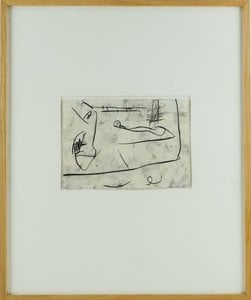
 1992
1992 22.0 x 30.0 cm
 Culturgest - Fundação Caixa Geral de Depósitos
Koupě vysoce rozlišeného, vylepšeného digitálního obrazu, který je mnohem kvalitnější než online náhled.
Každý soubor je pečlivě připraven našimi odborníky pomocí pokročilých nástrojů a expertní manuální retuše. Zajišťujeme, aby každý obraz disponoval výjimečnou ostrostí, přesnou barevnou věrností a jemnými detaily.
Finální soubor vám bude do 72 hodin zaslán e-mailem, optimalizovaný pro okamžité použití v profesionálním, redakčním i tiskovém prostředí. Nabízíme stejnou kvalitu, které důvěřují špičková designová studia, nakladatelství i galerie.
Stáhněte si soubor ve vysokém rozlišení pro osobní prohlížení, tisk a kreativní projekty. ( Koupit tisk Koupit ručně malovaný obraz)
Když si vyberete WahooArt.com, nezískáváte pouze obrázek – získáváte digitální umělecké dílo s profesionálně vylepšenými detaily, zpracované s precizností a podpořené zárukou za spokojenost. Zde je vše, co vaše objednávka automaticky obsahuje:

Váš digitální obraz ve vysokém rozlišení vám bude zaslán e-mailem do 72 hodin od objednávky – připraven k okamžitému použití.

Vaše umělecké dílo je profesionálně optimalizováno pomocí pokročilých nástrojů umělé inteligence a manuální úpravy, což zajišťuje maximální úroveň detailu, ostrosti a přesnosti barev.

Soubor jste omylem smazali nebo ztratili? Žádný problém – kdykoliv vám ho znovu zašleme zcela zdarma.

Užijte si své umělecké dílo okamžitě bez celních poplatků, daní nebo nákladů na dopravu – digitální stažení je vždy bez daňových povinností.

Pomocí profesionálních nástrojů a správy barev zajišťujeme, aby váš digitální obraz odrážel původní barvy co nejvěrněji.

Pokud nebudete s digitální fotografií spokojeni, provedeme její revizi nebo vám vrátíme 100% během 100 dnů – bez jakýchkoliv dotazů.

Nespokojeni? Získejte plnou částku zpět do 100 dní od přijetí vašeho digitálního souboru – bez jakýchkoliv dotazů.

Koupěte si 3 obrazy, ušetřete 10% - Koupěte si 5, ušetřete 15% - Koupěte si 10+, ušetřete 20%. Ideální pro kreativní projekty, galerie a agentury.

Born in Porto, Portugal, in 1963, Pedro Sousa Vieira’s artistic journey is one of relentless exploration and a profound engagement with the materiality of drawing. He isn't merely a drawer; he’s an investigator, pushing the boundaries of this seemingly simple medium to reveal complex layers of meaning and experience. His work, spanning drawing, painting, photography, sculpture, and installation art, reflects a deeply personal and often obsessive process – a dedication that has yielded over thirty thousand drawings, meticulously sifted down to a select three hundred, each imbued with a quiet intensity.
Vieira’s early life in Porto provided fertile ground for his artistic sensibility. While details of his upbringing remain somewhat private, the city's rich cultural heritage – its maritime history, its vibrant art scene, and its connection to Portugal’s past – undoubtedly shaped his perspective. He moved to Braga in the early 1990s, establishing a studio within a historic house, transforming it into a dedicated space for drawing. This environment—characterized by bare walls covered in charcoal sketches—became central to his creative process. As described in an article from Culturgest, the studio was “a small space for such work done obsessively from morning to night,” a testament to the demanding nature of his practice.
Central to understanding Vieira’s art is the nature of his drawing itself. He deliberately declines the verb "to draw," seeking instead to explore what emerges when drawing is divorced from conscious analysis. This approach, documented in a Google Arts & Culture piece, reveals a process driven by intuition and gesture—a deliberate abandonment of critical judgment. The resulting drawings are not simply representations but rather embodiments of an internal state, a distillation of experience captured through the slow, deliberate application of charcoal.
The technique is remarkably consistent: sheets of paper drawn on both sides, aged by time and the absorption of charcoal. This aging process isn’t considered detrimental; instead, it's embraced as integral to the work’s character. The subtle ghosting of previous drawings—the faint echoes of past iterations—creates a layered complexity, suggesting a continuous dialogue between the artist and his subject. As one observer noted, these drawings “are perhaps the most impressive set in a drawing-centred project carried out over recent years,” embodying a profound understanding of material and process.
While Vieira’s work resists easy categorization, certain influences are discernible. The influence of traditional charcoal drawing techniques is undeniable, yet he transcends mere replication. His work echoes the intensity of artists like João Queiroz and Ângelo de Sousa, both Portuguese masters known for their meticulous and deeply personal drawings. The collection at Culturgest, featuring a series of untitled works from the early 1990s, exemplifies this approach – a concentrated body of drawings that speak to a singular, almost meditative state.
Notable pieces include “Untitled” (1992), a work characterized by its dense layering and subtle shifts in tone. The sheer volume of his output—over thirty thousand drawings—suggests an ongoing exploration of form, texture, and the inherent qualities of charcoal. His work has been exhibited nationally and internationally, solidifying his position as a significant contemporary Portuguese artist.
Pedro Sousa Vieira’s dedication to drawing has garnered critical recognition throughout his career. He was awarded the 10th Amadeo de Souza-Cardoso Award in 2015, a prestigious prize recognizing excellence in Portuguese art. His work is held in prominent collections including Ar.Co, Caixa Geral de Depósitos, and Serralves Foundation, demonstrating its enduring value and significance within the broader context of contemporary visual arts.
Beyond his individual achievements, Vieira’s practice represents a powerful affirmation of drawing as a vital artistic medium—a means of exploring inner landscapes, capturing fleeting moments, and engaging with the fundamental materiality of art itself. His work invites viewers to slow down, observe closely, and contemplate the quiet power of charcoal on paper.
1963 - , Portugal

 Náhled
 Sdílet
 Sdílet
 Podrobnosti o díle

 Stáhnout
 Podobné položky
 Rentgenové snímky
 Slideshow
 Zobrazit více


