BEZPLATNÉ UMĚLECKÉ PORADENSTVÍ

x
Objednat reprodukci Objednat reprodukciKoupit digitální obrázek Koupit digitální obrázek SdíletSdílet
PodrobnostiPodrobnosti Přidat do oblíbených Přidat do oblíbených StáhnoutStáhnout Podobné položkyPodobné položky Rentgenové snímkyRentgenové snímky SlideshowSlideshow

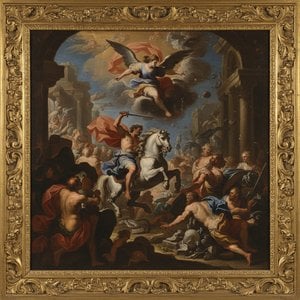
Self Portrait

Explore Nicolas Poussin's captivating 'Self Portrait' (1649), a masterpiece of classicism showcasing his workshop and artistic dedication. Admire its realism, symmetry, and influence on Ingres.

Objevte mistrovské barokní díla Nikolase Poussina – známé pro klidné krajinky a mytologické příběhy inspirované klasickou antickou kulturou. Najdete ikonické výtvarné dílo na WahooArt.

Giclée / Umělecký tisk

Giclée nebo plátěný tisk muzeální kvality s rychlou výrobou a flexibilními možnostmi povrchové úpravy.

P118B $10
P118H $10
P118W $10
P438Z $10
P508JH $12
P508YH $12
P805H $10
P805Z $10
P919BZ $10
P919G $10
P919XJ $10
P959ZH $10
P968JZ $12
W106C $8
W218G $10
W218JH $8
W218Y $10
W307PJ $10
W316G $10
W316PJ $8
W316Y $10
W398PJ $8
W4111J $10
W500HY $15
W500JH $15
W692G $12
W849H $8
W940BG $15
W953PJ $8

Standard
custom
CM
INCH

Vyberte si z našich přednastavených velikostí, které odpovídají původním proporcím díla.

šířka
výška

Můžete zadat vlastní rozměry tak, aby výtvor odpovídal konkrétnímu rámu nebo prostoru. Pokud zvolená velikost nebude odpovídat poměru stran původního obrazu, dílo buď ořížeme, nebo obraz rozšíříme pomocí zrcadlového efektu či jednobarevného okraje. Před zahájením výroby vám bude zaslán digitální náhled k schválení.
Mějte prosím na paměti, že náhled na obrazovce neodráží skutečné oříznutí nebo rozšíření. Pouze digitální náhled přesně zobrazí finální kompozici.
Ačkoliv jsou k dispozici i vlastní rozměry, pro zachování původních proporcí doporučujeme vybrat si rozměr z předdefinovaného seznamu.

Celosvětové doručení () do 2 týdnů namísto standardních 4/5 týdnů. (4 červenec)

why_choose_icon
Zdarma celosvětová expresní doprava
why_choose_icon
Vysoce kvalitní lněné plátno
why_choose_icon
Kompletní přepravní pojištění
why_choose_icon
Záruka vrácení celního poplatku
why_choose_icon
Záruka přesného barevného shodu
why_choose_icon
60denní lhůta pro vrácení zboží (pouze při vadách výroby)
why_choose_icon
100% garance vrácení peněz
why_choose_icon
Sleva při hromadné objednávce

Celková cena

-

reproduction

Self Portrait

Giclée / Umělecký tisk

Rozměry reprodukce

-

Celková cena za výběr

-

Základní informace

  • Dimensions: 78 x 65 cm
  • Medium: Oil on canvas
  • Title: Self Portrait
  • Influences: Winckelmann
  • Movement: Neoclassicism
  • Location: Musée du Louvre
  • Notable elements: Workshop setting

Kvíz o umění

U každé otázky je pouze jedna správná odpověď.

Otázka 1:
What is the primary artistic style exemplified by Nicolas Poussin’s ‘Self Portrait’?
Otázka 2:
In the painting, what symbolic objects surround Poussin, reflecting his profession and artistic dedication?
Otázka 3:
During which century did the artistic movement most closely associated with Poussin’s style – Neoclassicism – emerge?
Otázka 4:
The painting ‘Self Portrait’ is currently housed in which prestigious museum?
Otázka 5:
Which artist was significantly influenced by Poussin’s style and techniques?

Popis sběratelského kousku

The Introspective Eye: Unveiling Nicolas Poussin’s Self-Portrait

Nicolas Poussin, a name synonymous with the serene beauty of 17th-century French art, gifted us not only breathtaking landscapes and mythological scenes but also an intimate glimpse into his own creative soul – captured in his remarkably direct self-portrait. Completed around 1649 and now residing within the hallowed halls of the Musée du Louvre in Paris, this oil on canvas work transcends a simple likeness; it’s a profound meditation on art, mortality, and the artist's unwavering dedication to classical ideals. More than just a portrait, it’s a window into Poussin’s mind, revealing a man deeply engaged with his craft and profoundly aware of its significance.

The painting immediately draws the viewer in with its understated elegance. Poussin presents himself not as a grand figure, but as a thoughtful scholar seated at his workbench. Dressed in a rich, enveloping black robe – a deliberate choice echoing the formality and seriousness associated with classical antiquity – he’s bathed in soft light that illuminates his face and hands. His expression is one of quiet concentration, a subtle hint of melancholy mingling with an undeniable sense of purpose. He holds a quill pen poised above a sheet of paper, suggesting the ongoing process of creation, while an open book lies nearby, hinting at the vast reservoir of knowledge and inspiration fueling his artistic vision. The inclusion of these tools – the pen, the paper, the book – isn’t merely decorative; it's a deliberate statement about Poussin’s identity as a dedicated artist, deeply rooted in the traditions of learning and observation.

The Language of Classicism

Poussin’s self-portrait is a quintessential example of his mastery of classicism, a style that dominated European art during the 17th century. Rooted in the artistic principles of ancient Greece and Rome, classicism emphasized clarity, order, and harmony – qualities Poussin sought to embody in every brushstroke. Notice the meticulous attention to detail, the carefully rendered folds of his robe, the precise lines of his features, and the balanced composition of the scene. Unlike the dramatic, emotionally charged Baroque style prevalent at the time, Poussin’s work is characterized by a sense of restraint and intellectual rigor. The use of a limited color palette – primarily blacks, browns, and subtle shades of grey – further contributes to this atmosphere of calm contemplation.

The composition itself is carefully constructed, adhering to classical principles of symmetry and proportion. The arrangement of objects within the workshop—the pen, paper, book, and even Poussin’s own posture—creates a harmonious balance that reflects his artistic philosophy. This deliberate control over form and space speaks volumes about Poussin's commitment to achieving visual perfection, mirroring the ideals he admired in ancient Greek sculpture and architecture.

A Reflection on Mortality

Beyond its formal qualities, the self-portrait carries a poignant undercurrent of reflection on mortality. The presence of the sepulchral monument – a subtle “memento mori” or reminder of death – immediately draws attention to the fragility of human existence. Poussin’s expression, though seemingly serene, hints at an awareness of his own inevitable fate. The putti (cherubs) flanking the monument represent both innocence and the passage of time, adding another layer of complexity to the image. It's a quiet acknowledgment that even in the midst of creative endeavor, the artist is not immune to the universal human experience of loss and decay.

Poussin’s Legacy: A Bridge to Ingres

Nicolas Poussin’s self-portrait holds a significant place in art history, serving as a crucial bridge between the classical traditions of the past and the Neoclassical movement that emerged in the late 18th century. His work profoundly influenced Jean-Auguste-Dominique Ingres, a prominent Neoclassical painter who sought to revive the ideals of ancient Greek art. Ingres deeply admired Poussin’s meticulous technique, his emphasis on line, and his ability to evoke a sense of timeless beauty. Studying Poussin's self-portrait, one can readily see echoes of Ingres' own style—a similar restraint, a comparable focus on form, and a shared reverence for classical principles. The influence is undeniable, demonstrating the enduring power of Poussin’s artistic vision.

Today, WahooArt offers exquisite, hand-painted reproductions of Nicolas Poussin’s self-portrait, allowing you to bring this masterpiece into your own home or office. These meticulously crafted reproductions capture the essence of the original painting—its subtle nuances, its profound emotional depth, and its timeless beauty. Explore this iconic work alongside other stunning Poussin reproductions on our website: https://WahooArt.com.

Podobná umělecká díla


Biografie umělce

Nicolas Poussin – A Life Steeped in Classical Reverie

Nicolas Poussin, a name synonymous with the grandeur of French Baroque painting, was nonetheless a soul deeply rooted in Italian soil for much of his artistic life. Born in Les Andelys, Normandy, in June 1594, his early years remain somewhat veiled in mystery, yet they undoubtedly laid the foundation for a career that would become pivotal in shaping the classical tradition within French art. Though he briefly studied in Paris during the early 1610s, absorbing influences from lesser-known artists of the time, it was his journey to Rome in 1624 that truly ignited his artistic destiny. This wasn’t merely a geographical relocation; it was an immersion into the heart of antiquity, a pilgrimage to the very source of inspiration that would define his aesthetic vision. Poussin's initial forays into painting were marked by a sensuous quality reminiscent of Venetian masters like Titian, yet even in these early works, a nascent sense of order and intellectual rigor began to emerge—a foreshadowing of the style he would so masterfully refine.

Early Influences and Parisian Years

His formative years were spent honing his skills under Quentin Varin, a respected artist who instilled in him an appreciation for draughtsmanship and observation. Shortly thereafter, Poussin ventured into Paris, where he engaged with the artistic currents of the era—particularly those championed by Raphael and Giulio Romano—artists whose harmonious compositions and graceful forms would profoundly shape his subsequent style. The Parisian environment fostered intellectual curiosity and exposed him to humanist scholarship, influencing his worldview and fueling his desire for artistic excellence. During this period, Poussin produced a series of mythological drawings that showcased his burgeoning talent and demonstrated his commitment to capturing the beauty and dignity of classical ideals. These early works established a foundation for his later explorations of history and myth—themes he would revisit throughout his illustrious career.

The Roman Years: Forging a Classical Ideal

Rome proved to be more than just a studio for Poussin; it became his intellectual crucible. He found himself amidst a vibrant circle of scholars, archaeologists, and fellow artists, notably Cassiano dal Pozzo, whose profound understanding of classical antiquity profoundly influenced the artist’s approach. Dal Pozzo's dedication to meticulously documenting ancient remains instilled in Poussin a deep respect for historical accuracy and a desire to imbue his paintings with a sense of timelessness. This period saw Poussin move away from the flamboyant exuberance of some of his contemporaries, instead embracing a style characterized by clarity, balance, and a deliberate emphasis on linear composition. He meticulously studied Raphael’s works, absorbing their harmonious arrangements and graceful forms, while simultaneously drawing inspiration from ancient sculptures and literary sources like Ovid's *Metamorphoses*. His paintings began to populate with figures drawn from classical history and mythology, rendered not as mere decorative elements but as embodiments of moral virtues and philosophical ideals. He became acquainted with Cardinal Francesco Barberini, whose patronage provided him with invaluable support and access to a stimulating intellectual milieu.

Style and Technique: Classical Restraint Amidst Baroque Flourish

Poussin’s artistic style distinguished itself from the prevailing Baroque trends—characterized by dramatic emotion and opulent ornamentation—through its unwavering commitment to classical principles. He rejected excessive theatricality in favor of serene beauty, prioritizing compositional clarity and harmonious color palettes. His technique involved painstaking draughtsmanship, utilizing precise lines and subtle shading to create illusions of depth and perspective that mirrored the achievements of Renaissance masters. The artist’s meticulous attention to detail—evident in his depictions of drapery folds, facial expressions, and landscape vistas—reflected a profound understanding of artistic craftmanship. He skillfully blended influences from Venetian painters like Titian with the stylistic refinements of Raphael, resulting in an oeuvre marked by both sensuous richness and intellectual rigor.

Legacy: Shaping French Art and Beyond

Nicolas Poussin’s influence extended far beyond his own lifetime, establishing a cornerstone of French Classical painting. His unwavering devotion to classical ideals served as inspiration for subsequent generations of artists—Jacques-Louis David and Paul Cézanne among them—who acknowledged their debt to Poussin's stylistic precision and philosophical depth. He championed the pursuit of beauty and order, advocating for artistic training rooted in humanist scholarship and informed by a deep appreciation for antiquity. His enduring legacy resides not merely in his magnificent paintings but also in his contribution to shaping the intellectual landscape of France—a testament to an artist who transcended mere aesthetic achievement to become a symbol of cultural excellence. He remains one of the most revered figures in French art history, celebrated for his mastery of technique and his profound engagement with timeless themes.
Nikolás Poussin

Nikolás Poussin

1594 - 1665 , Francie

Rychlé fakta

  • Artistic Movement Or Style: Baroko, Klasicismus
  • Artists Or Movements Influenced By This Artist: ['Jacques-Louis David']
  • Artists Who Influenced This Artist:
    • Raphael
    • Titian
  • Date Of Birth: Les Andelys, Francie
  • Date Of Death: Řím, Italie
  • Full Name: Nicolas Poussin
  • Nationality: Francouzský
  • Notable Artworks:
    • Mrtvý Němcův
    • Sedm Sakramentů Série
    • Římanská cesta
  • Place Of Birth: Francie
Prozkoumejte umělecká díla uspořádaná podle témat, stylů a charakteristik.