Umělecké dílo zobrazené na této stránce je chráněno autorským zákonem, což znamená, že nemůžeme legálně vytvářet ani prodávat jeho identickou reprodukci. Tato ochrana je vymáhána na základě mezinárodních dohod, jako například Berberská úmluva a národními zákony, včetně těch stanovených v Americký autorský zákon – Díl 17. Všechna práva vyhrazena.
Jako etická a právní alternativa nabízíme vlastní, ručně malovaná umělecká díla inspirovaná originálem. Naši zdatní a profesionální umělci si pečlivě studují styl, náladu a uměleckou podstatu originálu, aby vytvořili nové, jedinečné dílo, které vyvolává stejný pocit – přičemž zůstává samostatným originálním tvůrčím dílem.
Tato metoda je plně v souladu s autorským právem, protože nezahrnuje kopírování ani duplikování chráněného díla. Jde o kreativní reinterpretaci – nový obraz, který je inspirován originálem, ale není s ním identický.

Rukou malované olejné plátno v libovolném rozměru i s rámem, vyrobené našimi umělci na zakázku. ( Přepnout na tisk
Přepnout na digitální obraz)
Vyberte si z našich přednastavených velikostí, které odpovídají původním proporcím díla.
Zadejte šířku a výšku, které potřebujete pro váš rám nebo stěnu. Protože se jedná o ruční malbu, při výběru jiného formátu může umělec kolem obrazu domalovat o něco více, nebo jej mírně oříznout — rozhodnete si vy. Před zahájením malby vám zašleme digitální náhled ke schválení. Obraz zobrazený na této stránce neodpovídá skutečnému výsledku — pouze digitální náhled jej zobrazuje.
Celosvětová doprava () za 3–4 týdny namísto standardních 5 týdnů. (27 říjen). Bez kompromisů v kvalitě.
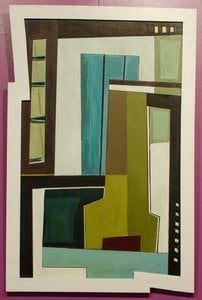
El Gran Ritmo
Rozměry reprodukce
The life of Martin Blaszko was a profound odyssey of displacement, cultural immersion, and artistic evolution. Born in Berlin in 1920, his early years were marked by the shifting borders of a turbulent Europe. As his family moved from Germany to Poland in 1933, and subsequently to France in 19SB8, Blaszko was exposed to a tapestry of diverse environments that would later inform the rhythmic complexity of his work. This nomadic childhood instilled in him a unique perspective, one where identity was not tied to a single landscape but rather to the universal language of form and movement. The eventual migration to Argentina in 1939 provided a new horizon for his creative spirit, allowing him to settle into a period of intense artistic development that would eventually define his place in the annals of modern abstraction.
Blaszko’s artistic language is characterized by a masterful command of geometric abstraction and a deep preoccupation with the concept of order. His work often exists in a delicate balance between the monumental and the intimate. While his sculptures may possess a grandeur that commands the space around them, they are frequently built upon a foundation of precise, calculated movements that suggest a hidden, internal harmony. This duality is perhaps his greatest achievement; he managed to capture the kinetic energy of the modern world within the stillness of static objects. His paintings and sculptures serve as monuments to structural integrity, where every line and plane is a deliberate contribution to a larger, cohesive whole.
Throughout his prolific career, Blaszko remained deeply influenced by the prevailing abstract movements of the 20th century, yet he maintained a signature voice that was entirely his own. His ability to translate complex emotional states into structured, abstract compositions allowed him to transcend mere decoration, reaching instead for a deeper, more primal resonance. The significance of his work lies in this ability to find harmony within complexity—to take the fragmented experiences of a life lived across continents and synthesize them into works that feel both timeless and structurally rigorous.
The legacy of Martin Blaszko continues to resonate through the art world, serving as an inspiration for those who seek to explore the boundaries of shape and space. His contributions can be summarized through several key pillars of his artistic identity:
Though he passed away in Buenos Aires in 2011, Blaszko’s vision remains vibrant. His works stand as a testament to the power of perseverance and the capacity of the human spirit to find beauty and structure amidst the chaos of history.
1920 - 2011 , Germany